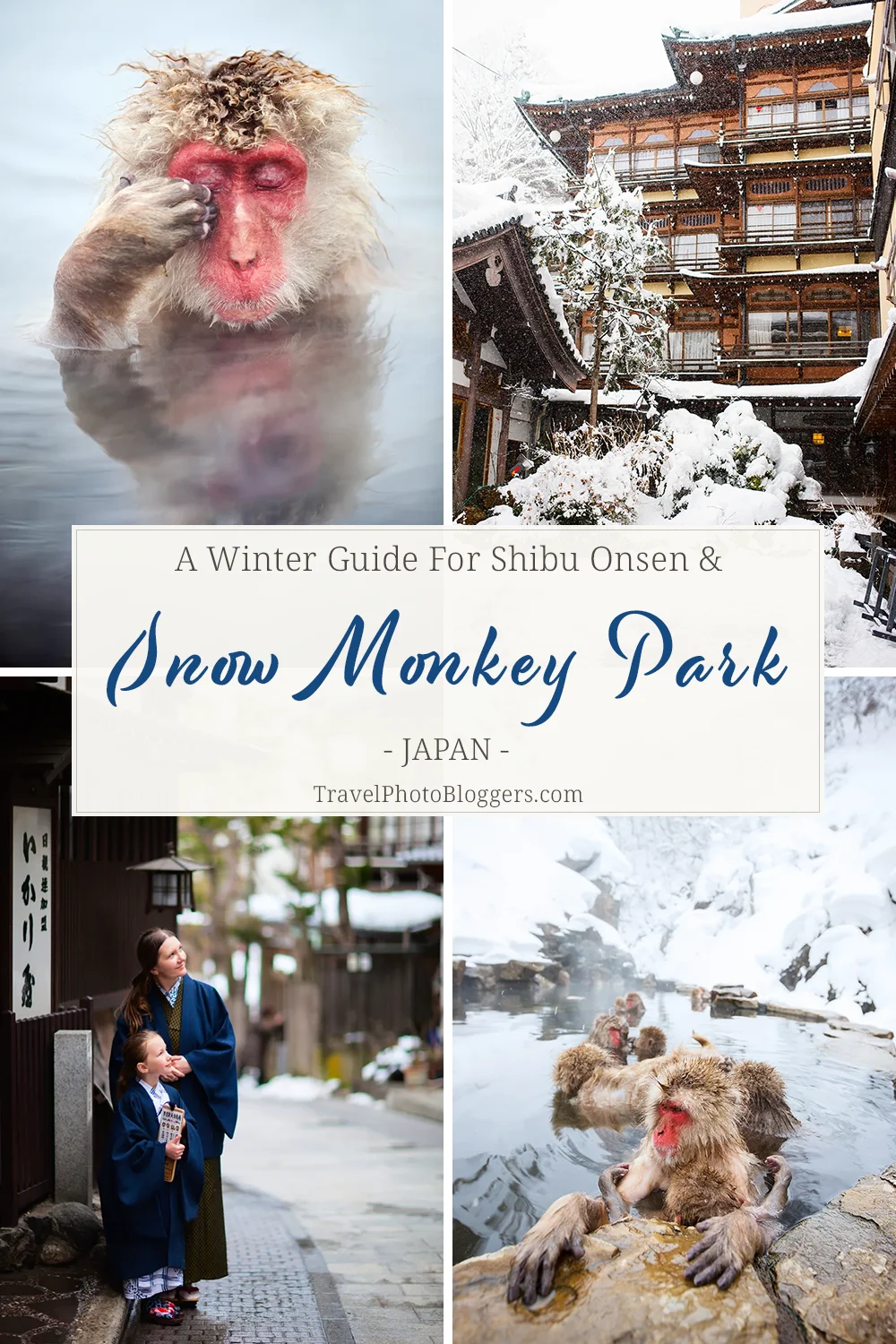
Jigokudani Snow Monkey Park: A Complete Winter Guide
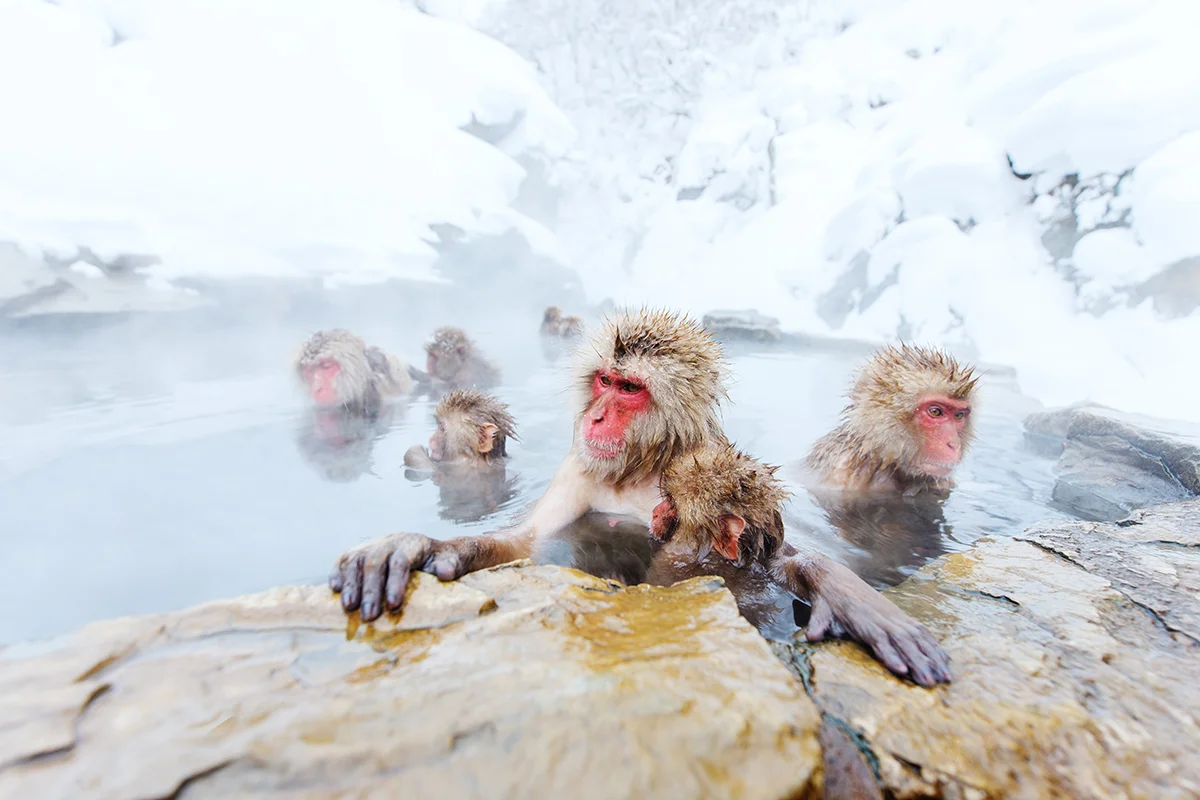
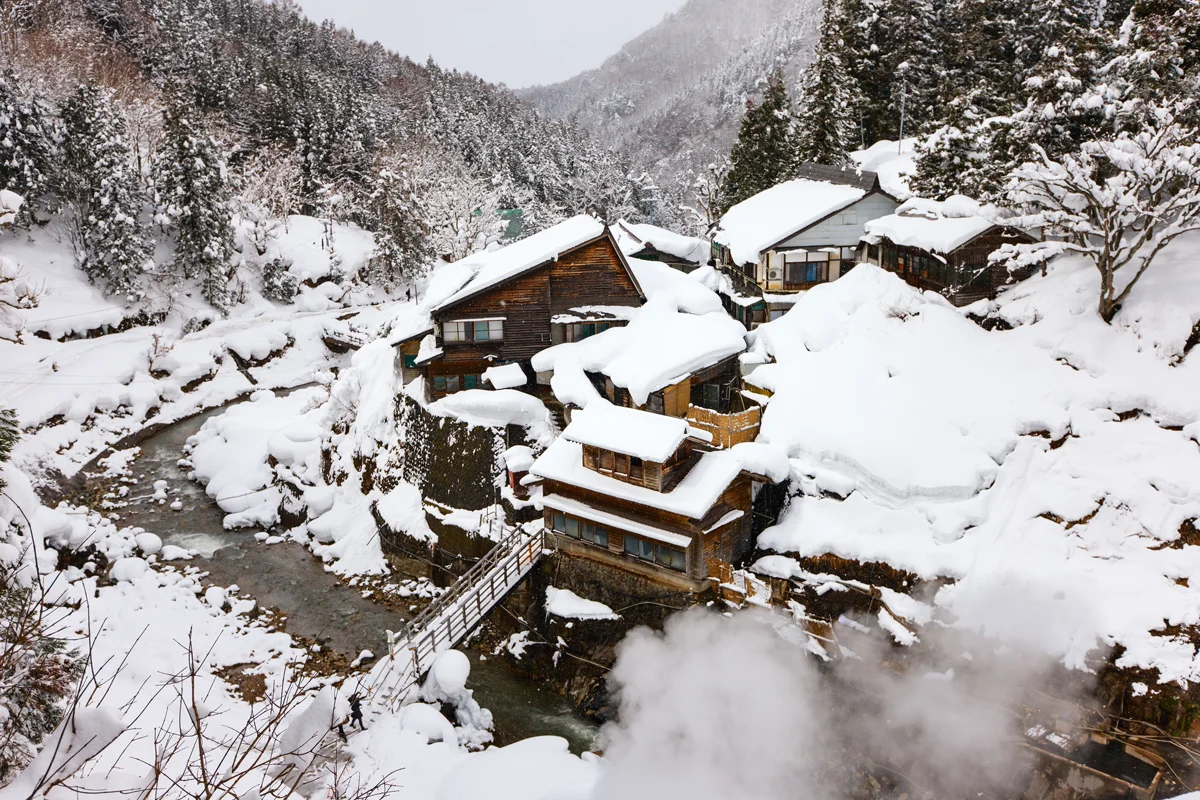
Jigokudani Snow Monkey Park in Nagano Prefecture is the only place in the world where you can watch wild Japanese macaques soak in a natural hot spring. Pairing it with the centuries-old hot spring village of Shibu Onsen, 5-10 minutes down the valley, turns the visit into one of Japan’s most atmospheric winter trips.
This Snow Monkey Park guide covers how to get there, when to go for the best chance of seeing the monkeys in the water, what to expect at the park, and where to stay in the nearby hot spring village of Shibu Onsen.
At a Glance
- Location: Jigokudani Yaen-koen (Snow Monkey Park) in Nagano Prefecture, Japan
- Where to stay: Ryokan in Shibu Onsen village, 5-10 minutes from the park trailhead
- Getting there: From Nagano Station, take the express bus or the local train
- Park opening hours: 8:30 AM to 5 PM April through October, 9 AM to 4 PM November through March
- Best time to visit: Mid-January through late February for monkeys in the pool surrounded by snow
- Key tip: Arrive at opening, the monkeys are most active early. Come on a weekday for a more peaceful experience.
Best Time to Visit the Snow Monkey Park
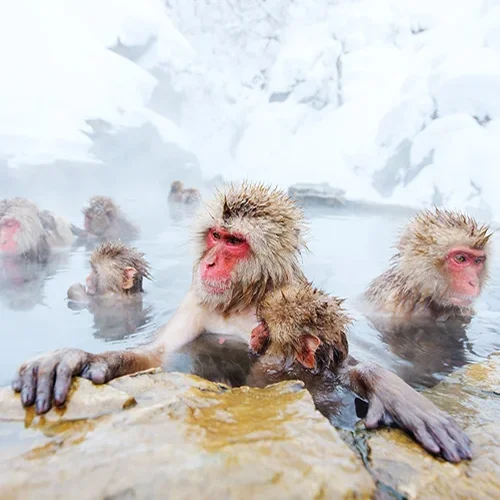
The monkeys are present in the area year-round, but they mostly use the hot spring to keep warm during the coldest months. The iconic image of snow-dusted monkeys half-submerged in steaming water is only reliable in deep winter. Aim for mid-January through late February. Snow cover in the valley is usually deepest in the second and third weeks of February.
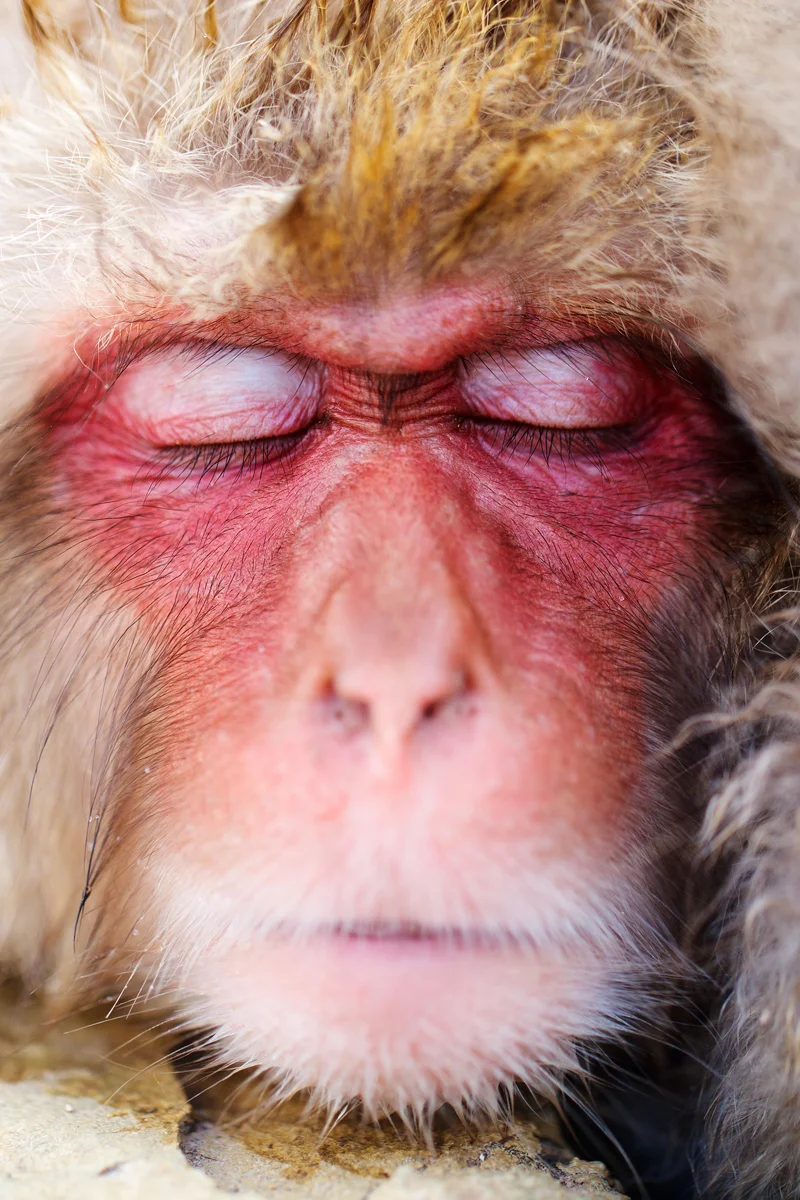
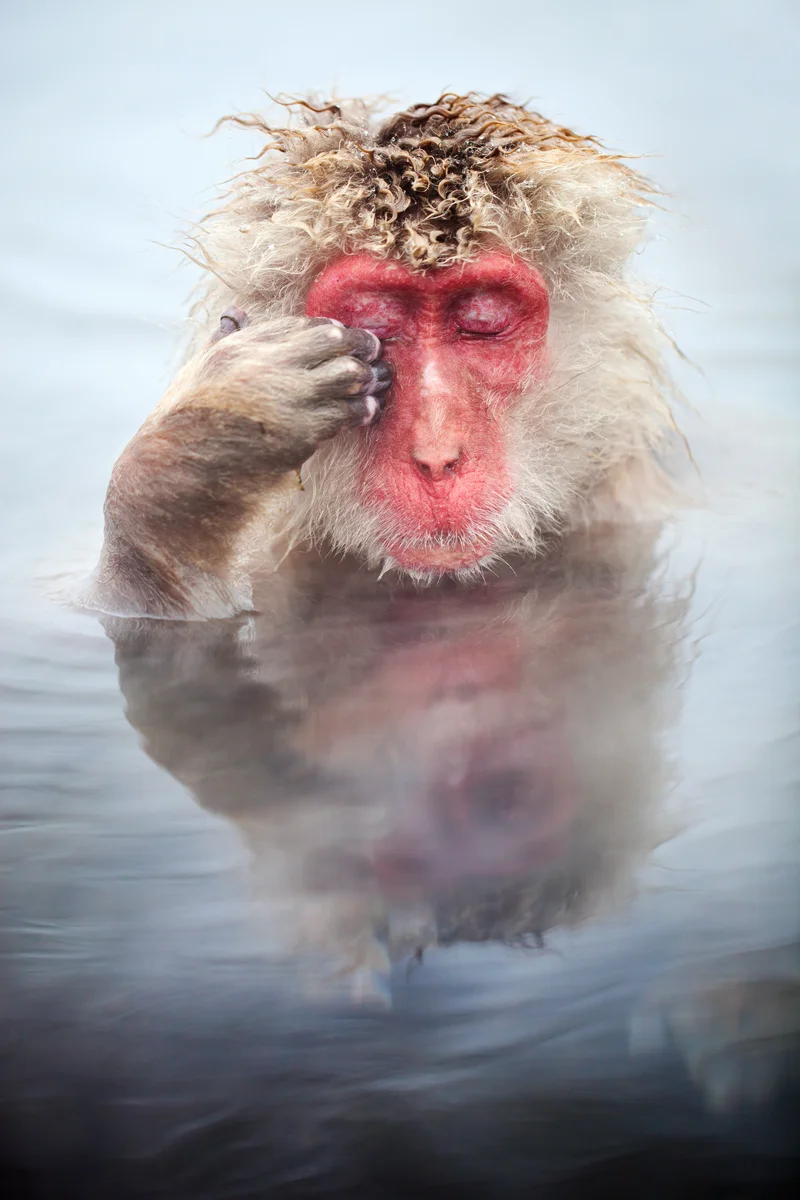
Daytime temperatures in winter average around -5 to 0°C (23 to 32°F), though it feels colder still in the forest around the park.
A few things to plan around:
- The park is open year-round with no set holidays, but hours may change, or it may close temporarily due to weather, trail safety, or monkey behavior.
- Heavy snow occasionally closes the access trail for a few hours. Staff clears it quickly, but it is worth building a small buffer into your schedule.
- Lunar New Year and public holiday periods can bring heavier crowds. Midweek visits are noticeably quieter.
Save now, enjoy later
Too busy right now? Save this gem to Pinterest for later.
How to Get to the Snow Monkey Park
To reach the snow monkeys, your first stop is Nagano Station. From Tokyo, the fastest route is the Hokuriku Shinkansen, about 1 hour 20 minutes.
From Nagano, the most direct option is the Nagaden Shiga Kogen Express Bus, departing from the East Exit at Bus Stop No. 23. It runs directly to the Snow Monkey Park bus stop in 45 to 50 minutes.
Alternatively, head to the underground Nagano Dentetsu Line and take the Snow Monkey Limited Express (~45 mins) or a local train (~70 mins) to Yudanaka Station. From there, continue by taxi or local bus to the Snow Monkey Park bus stop. This route is worth considering if the express bus times don’t align with your schedule, or if you’re heading to Shibu Onsen first, the historic hot spring town we’d recommend as a base.
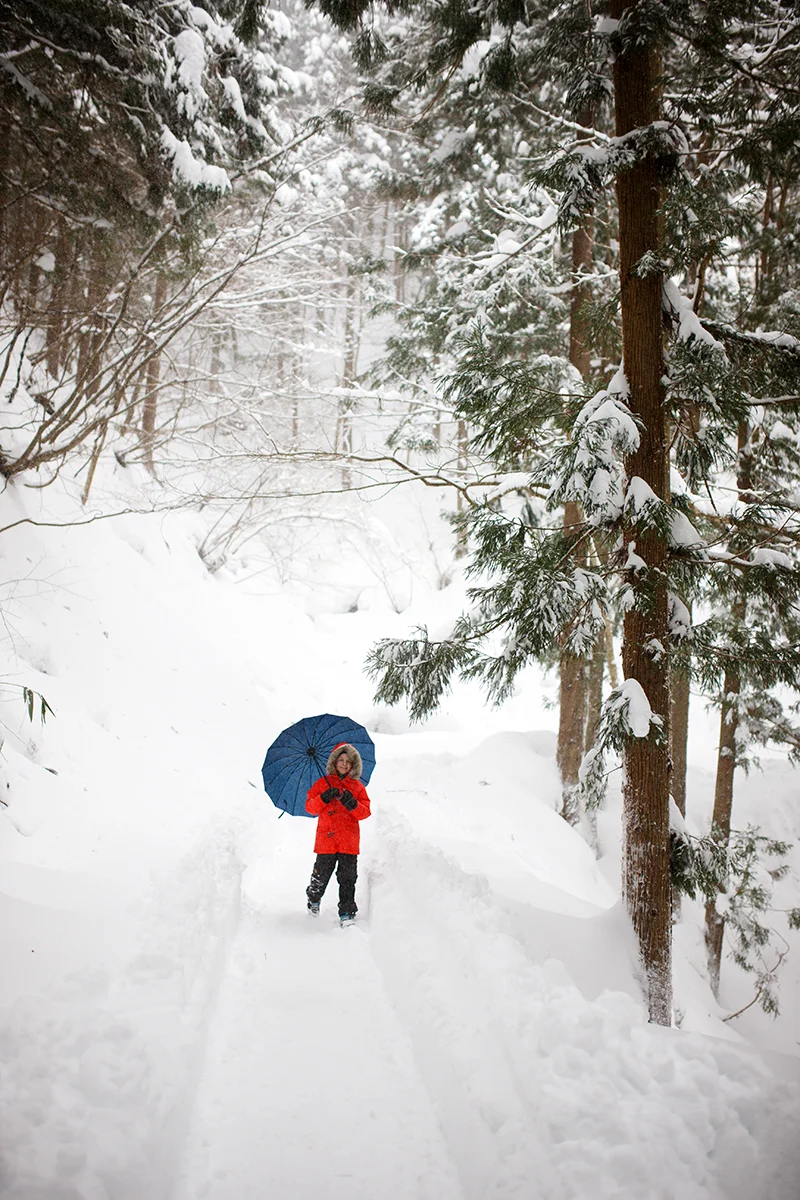
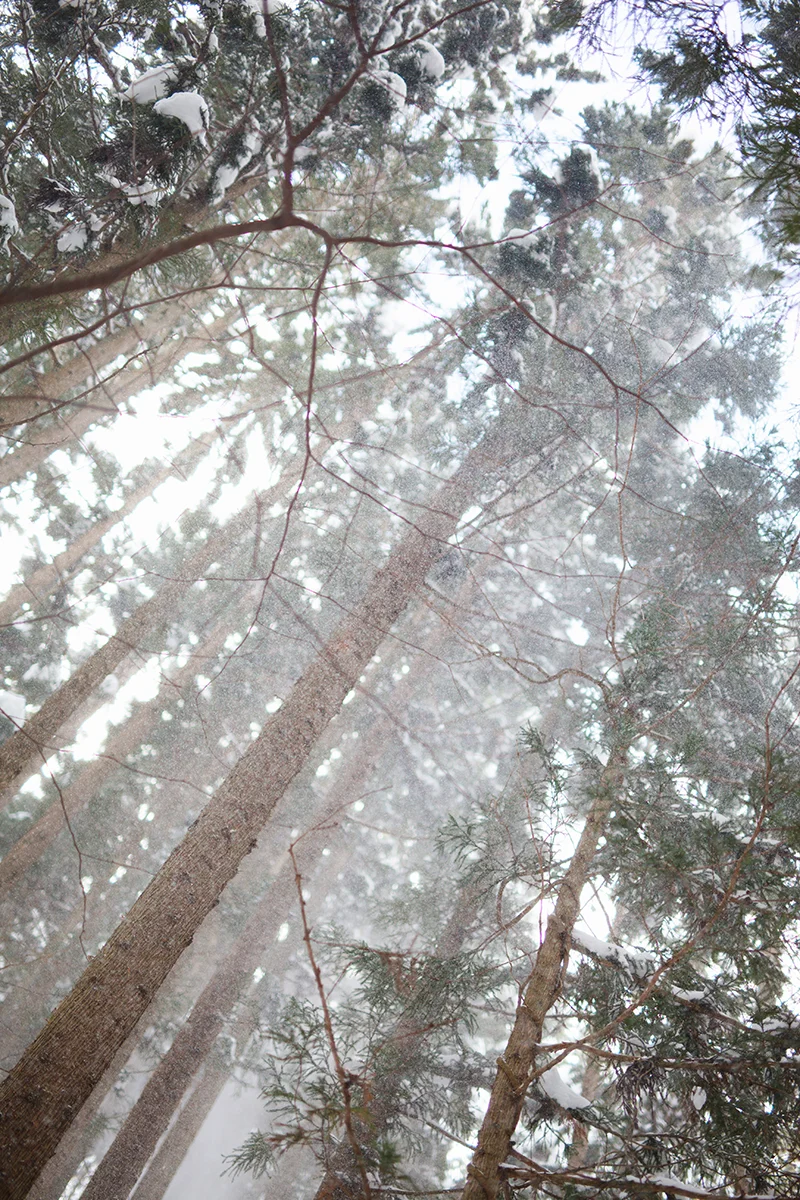
The Snow Monkey Park bus stop, also known as Kanbayashi Onsen, is the main transit hub for the park and sits about a 5-minute walk from the trail entrance. From there, a 1.6 km (1 mi) trail through a pine forest climbs gently to the monkey park. It takes around 35 minutes in winter on packed snow, a little quicker the rest of the year. The trail is beautiful but surprisingly icy and slippery during the winter. Shoes with a good grip are important. The small shop at the trailhead rents winter boots and jackets and sells crampons if you arrive without either.
Visiting the Snow Monkey Park
The park opens at 9 AM in winter and closes at 4 PM. Aim for an opening: the monkeys are most active early in the morning, tour groups don’t start arriving until around 10:30 AM, and the light is softer for photos. One important thing to remember is that the monkeys are wild animals, and they can come and go as they please. There is no guarantee of bathing on any given day. Cold and snowy mornings give you the best chance.
- Tickets are sold at the park entrance on the day of your visit, ¥800 for adults and ¥400 for children. From winter 2026–2027, online tickets will be available to purchase in advance for your chosen date. This guarantees entrance and lets you skip the ticket queue. If you’re traveling from Nagano Station, the Snow Monkey Pass bundles entrance with transportation.
- When staying in Shibu Onsen, allow a half-day, including travel, the trail, and time inside the park.
- Food is not allowed inside the park, but Enza Café at the trailhead serves Japanese and Western dishes (ramen, sushi, fried chicken), coffee, and craft beer, with indoor and outdoor seating. The cute marshmallow monkey soaking in the coffee is a fun touch.
- The park’s live camera gives you a preview of what’s waiting.
What to Expect Inside
The monkeys come down from the surrounding mountains each morning to soak in the park’s single onsen pool, a behavior unique to this troop. The bathing habit was first documented in the 1960s, when a young female macaque discovered a nearby ryokan’s outdoor onsen, and it spread through the troop. The park, whose name translates to “Hell Valley,” opened in 1964 to give them a pool of their own. Staff put out barley and apples each morning to bring the troop down, but whether they bathe on any given day is entirely up to them.
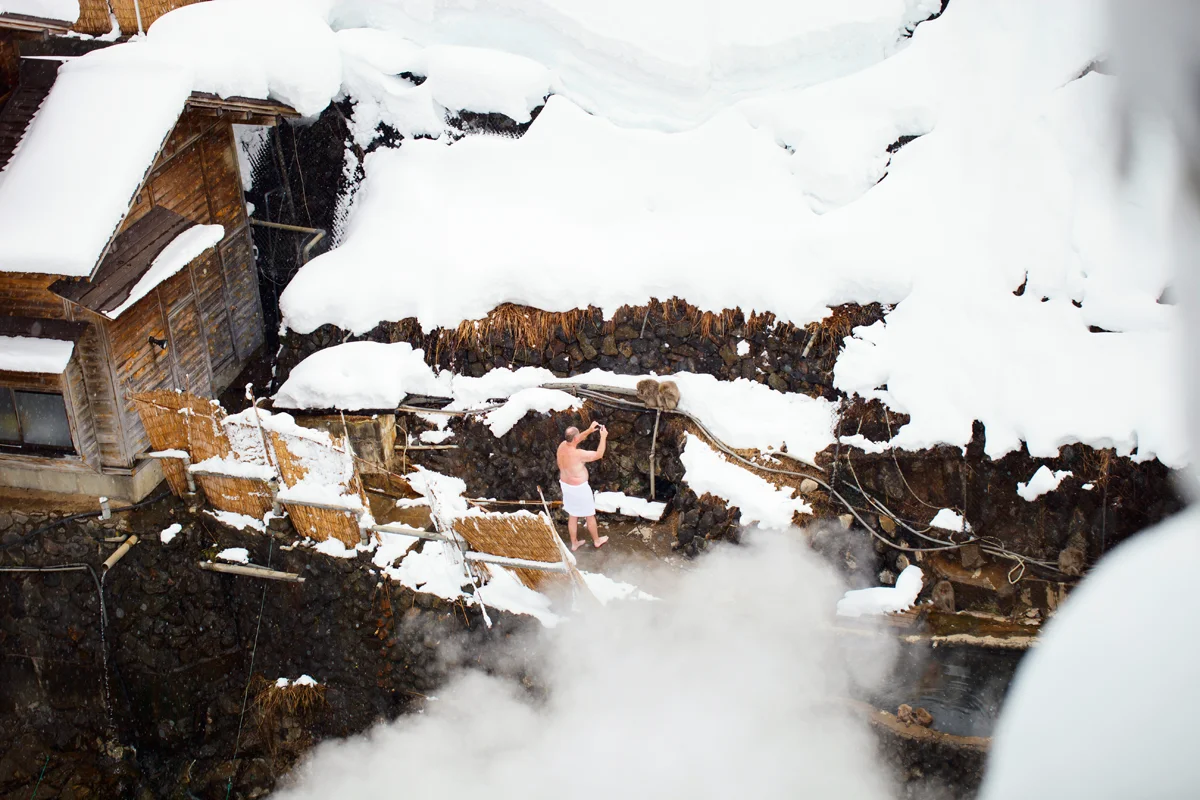
The park is small: a single onsen pool, a narrow path along the river, and a few observation points. You can stand within a meter or two of the monkeys, which is thrilling and slightly unnerving the first time. Park rules are clear: don’t touch them, don’t feed them, don’t make eye contact. Follow the rules, and they will ignore you completely.


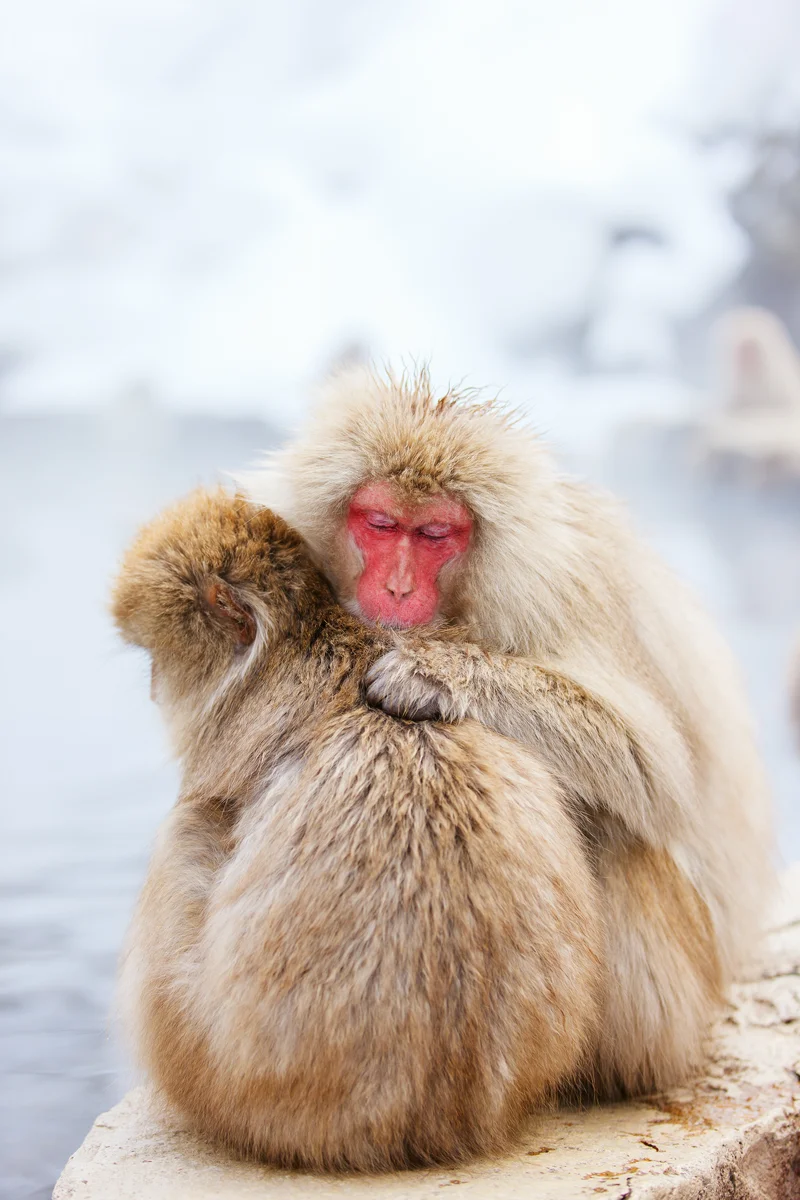
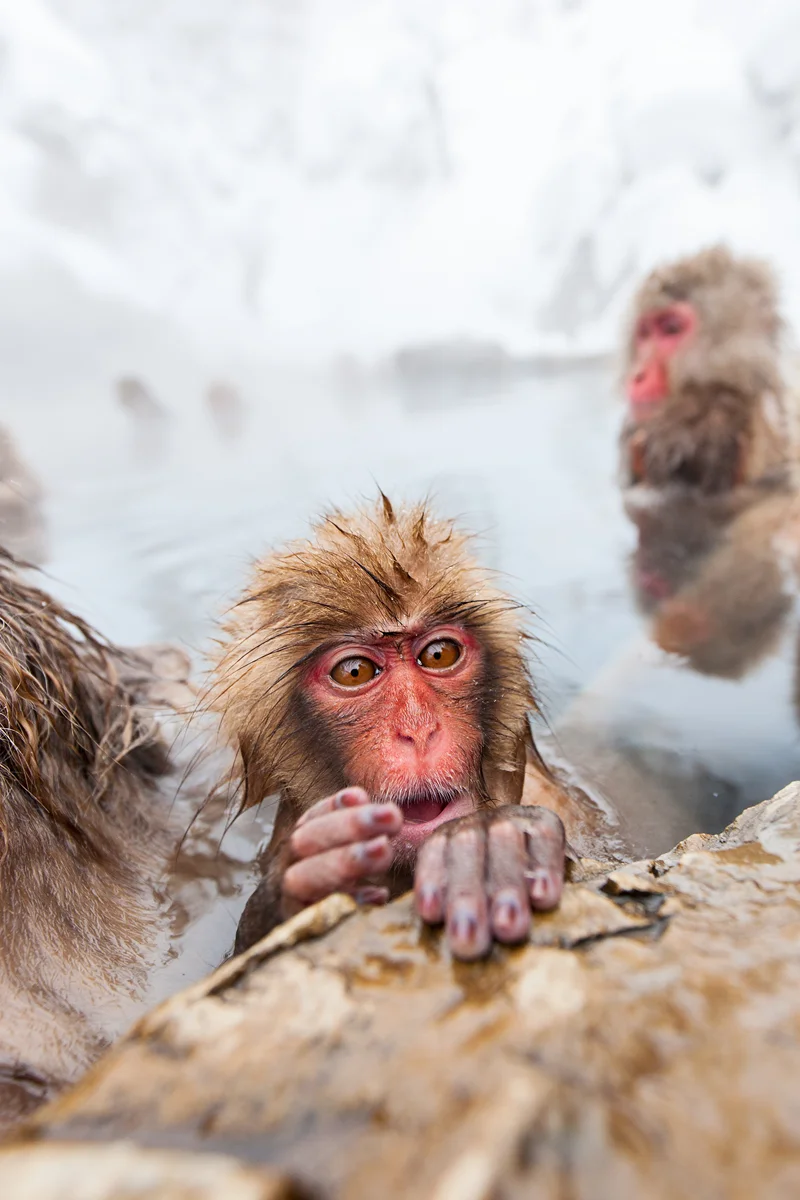
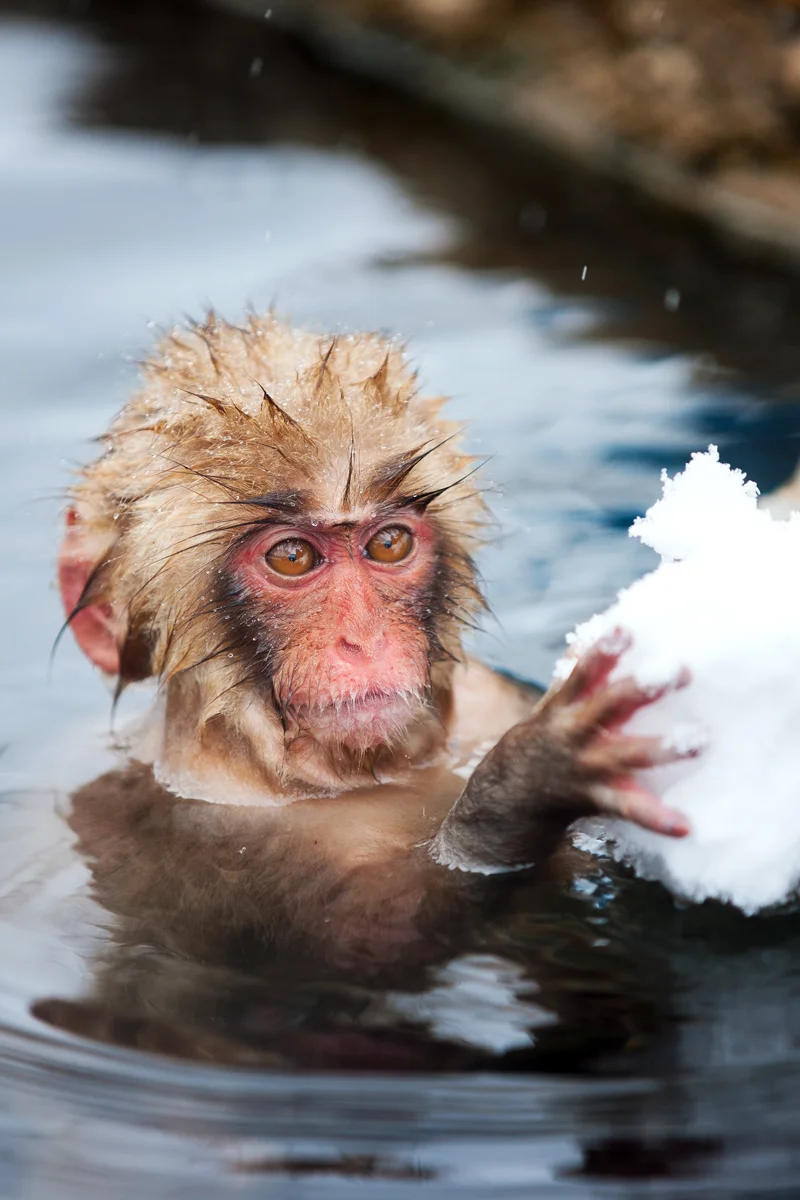
We spent about an hour and a half photographing the monkeys, which was enough to observe the troop’s social dynamics. Grooming sessions on the rocks, mothers with infants clinging to their bellies in the water, juveniles wrestling in the snow while the alpha watched from a perch. The young ones are the real show.
Photography Tips
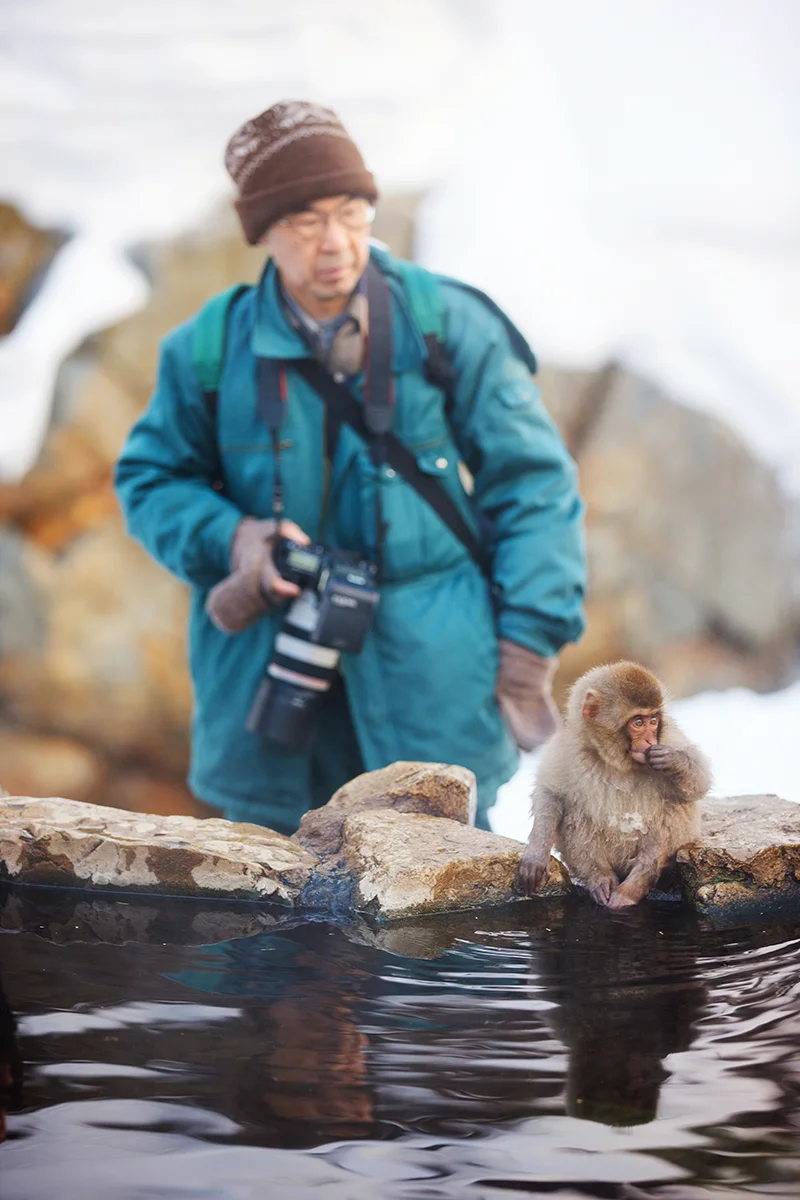
The snow monkeys are one of the most photographed subjects in Japan. Every angle has been shot before, but the steam, snow, and proximity to the troop almost guarantee a great photograph. A few things that helped us:
- A telephoto zoom in the 70-200 mm range gives you flexibility without needing to crowd the pool.
- A natural glance toward the camera is the hero shot. Be patient, stand still, and do not stare or try to provoke a look.
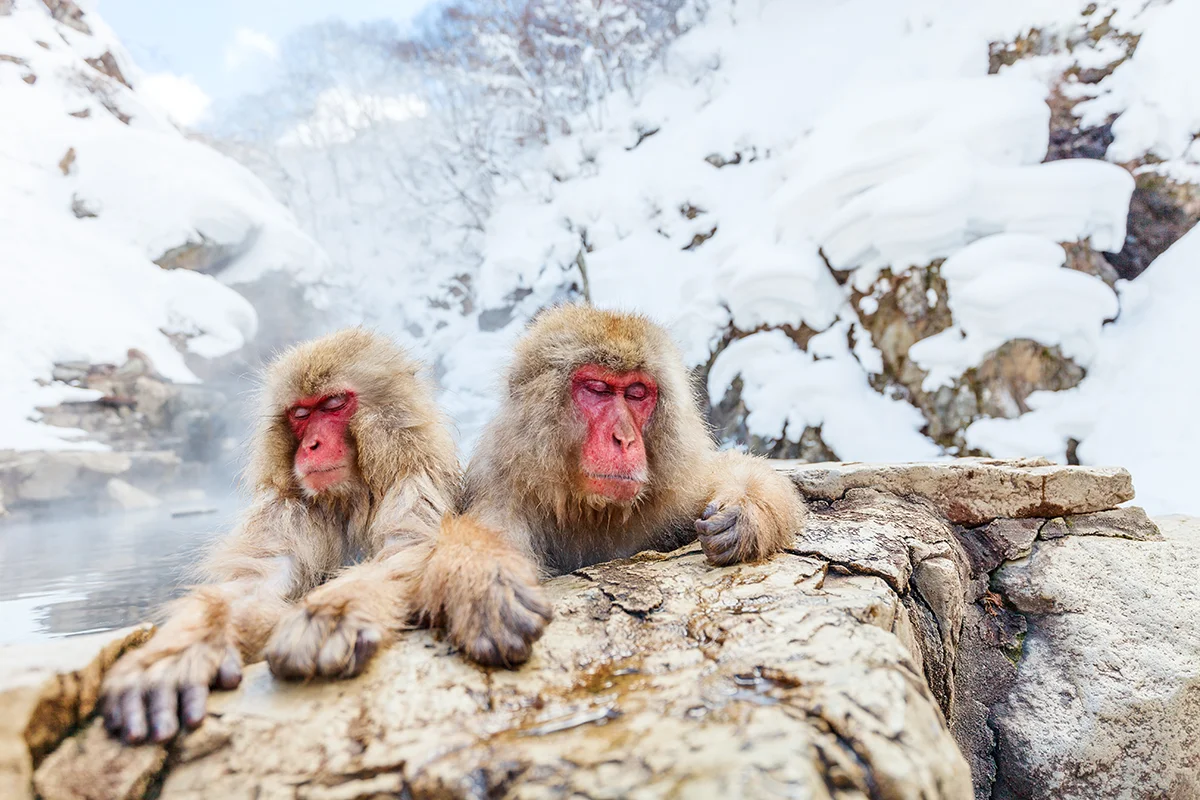
- Wide-angle snow landscape shots of the pool in context are worth taking too. Everyone goes for the tight portrait, and the wider frame tells a better story.

Where to Stay
The best place to stay near the Snow Monkey Park is Shibu Onsen, a 1,300-year-old hot spring town five minutes from the park trailhead by car. It has the densest cluster of traditional wooden ryokans, the nine-bath public onsen circuit, and an atmosphere that earns it a stay in its own right.
In Shibu Onsen, the traditional ryokans we’d recommend:
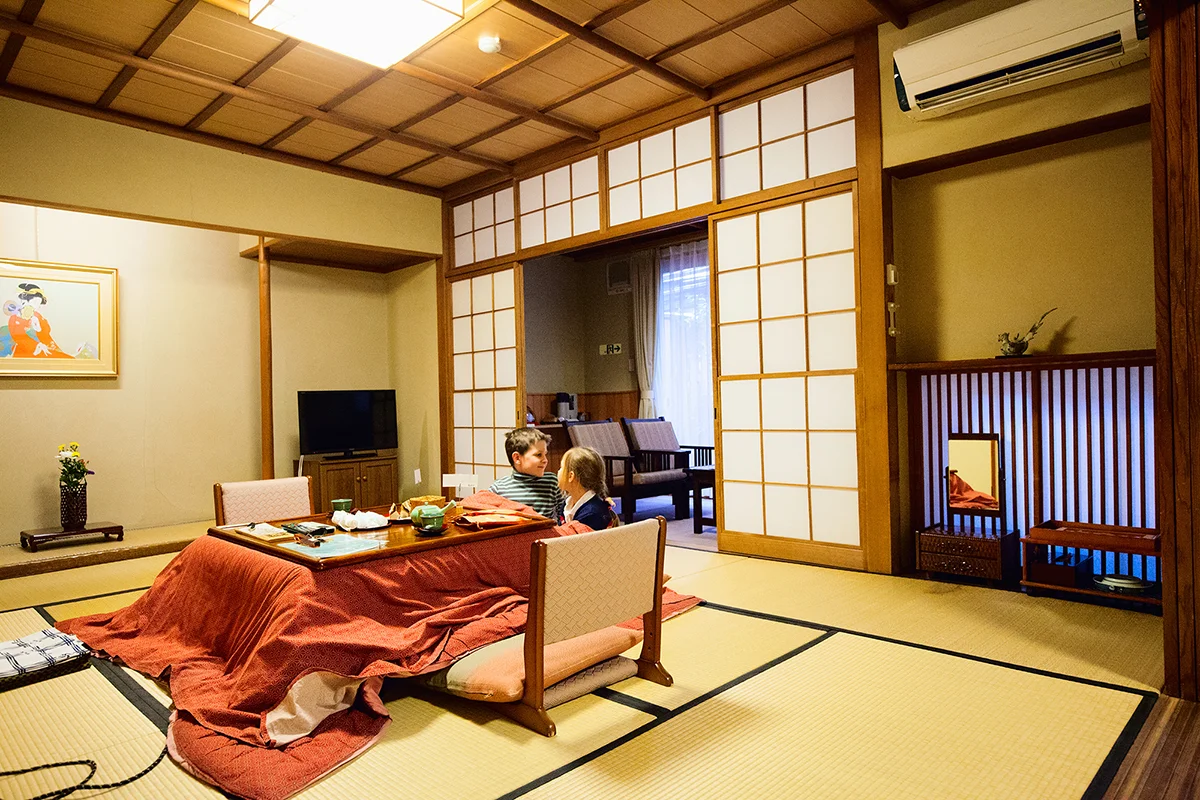
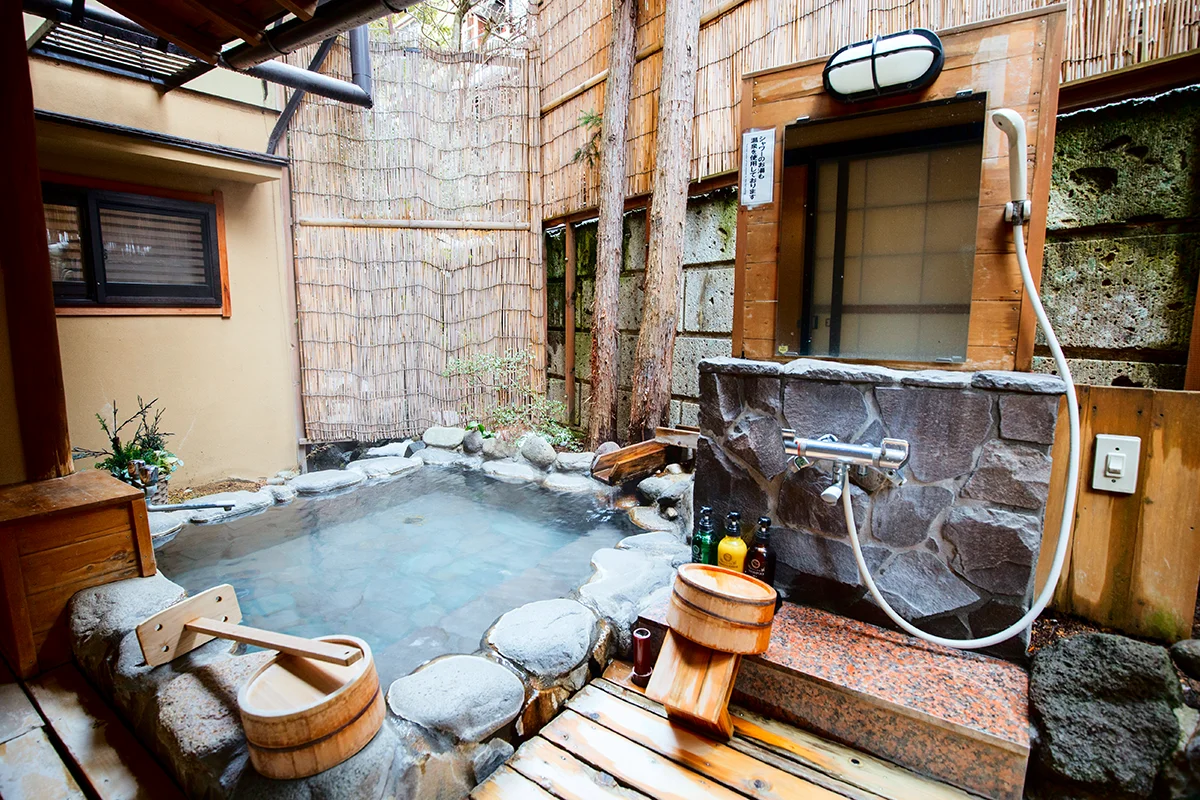
- Kokuya Ryokan ($$$), 400 years of history and probably the best-known ryokan in the village. Shibu Onsen Kokuya features 19 rooms, 9 of which with private outdoor onsen. The hotel is just 3 km away from Jigokudani Snow Monkey Park.

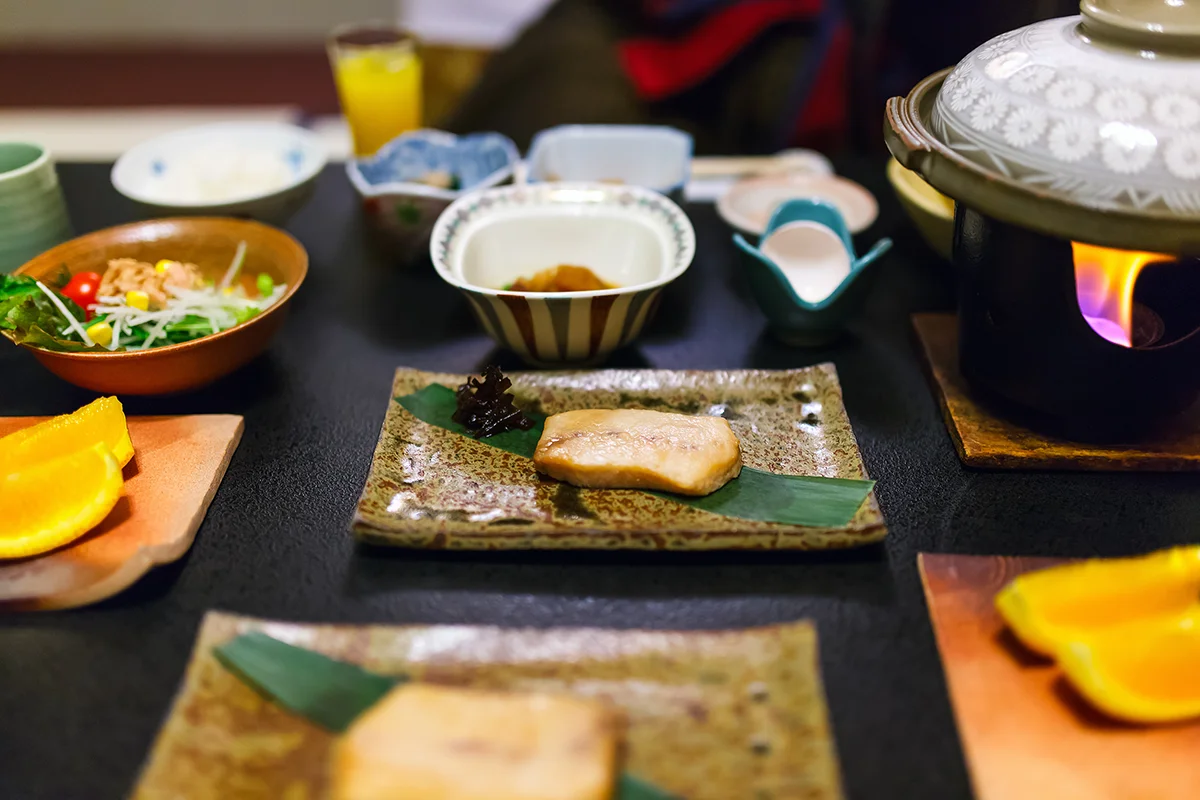
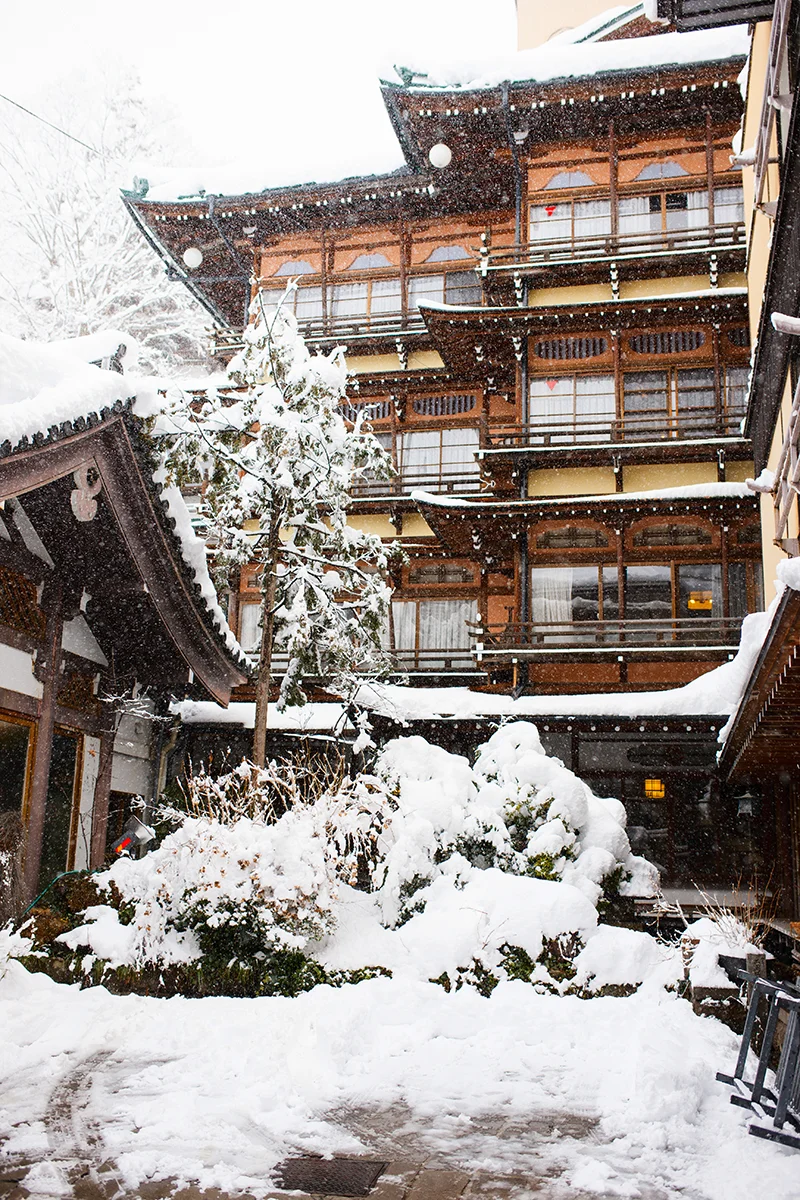
- Kanaguya Ryokan ($$$), a Shibu Onsen landmark often associated with the bathhouse in Hayao Miyazaki’s Spirited Away. The four-story wooden Saigetsuro hall, a Registered Tangible Cultural Property, is what sparked the comparison. The ryokan is popular and books out early.
Whichever you pick, book two nights if you can. One is enough to see the monkeys, but not enough to feel the rhythm of the town.
Getting to the Park from Shibu Onsen
The easiest way to the trailhead from Shibu Onsen is the morning shuttle most ryokans run for guests. If your inn does not offer a shuttle, a taxi from Shibu Onsen takes about 5-10 minutes, or you can catch the Nagaden bus to the Snow Monkey Park stop, a short walk from the trailhead.
What to Do in Shibu Onsen
Beyond the monkey park, the village itself is the reason to stay. Two nights gives you time to visit the nine public bathhouses, stamp a tenugui along the way, and try an onsen egg between baths, all within a five-minute radius of your ryokan.
Walk the Nine Public Baths
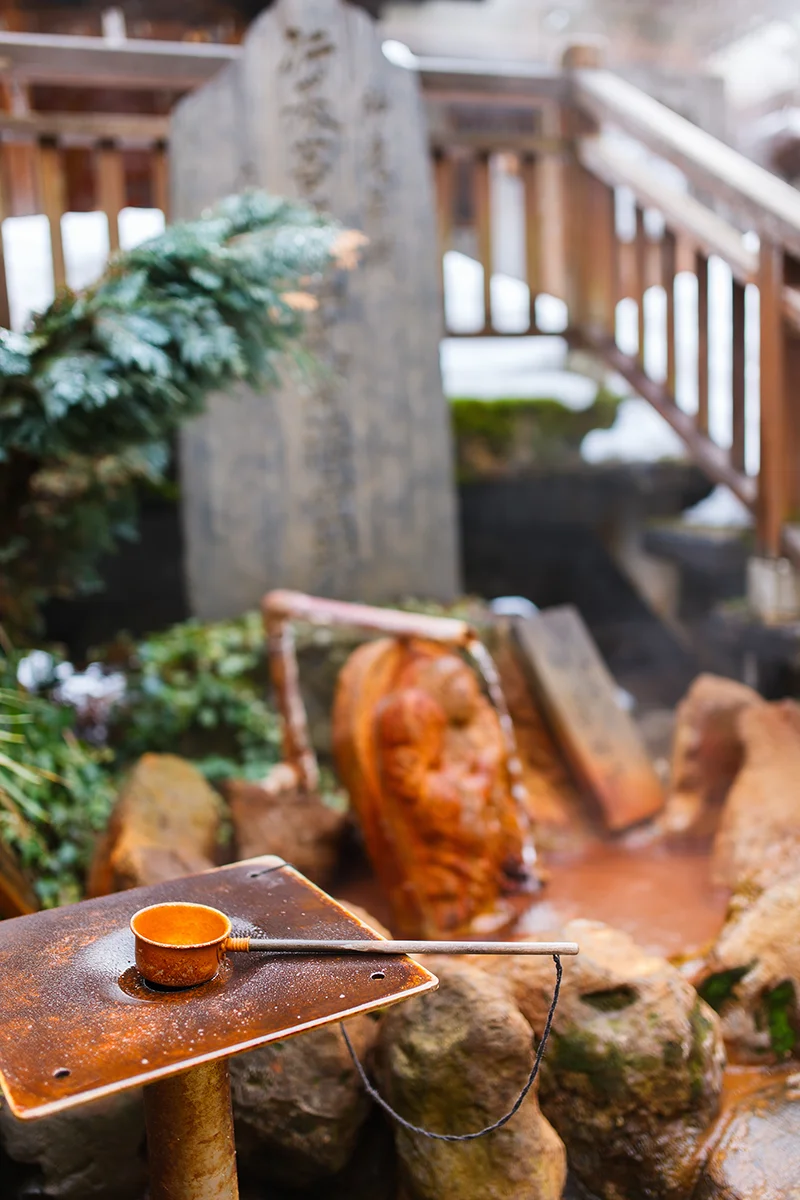
Shibu Onsen’s nine public bathhouses, known as the kyuyu meguri, are the heart of the village. Guests at any local ryokan receive a large wooden key on arrival that unlocks all nine baths. The ninth, Shibu Oyu, is the only one open to day visitors. The other eight are for overnight guests.
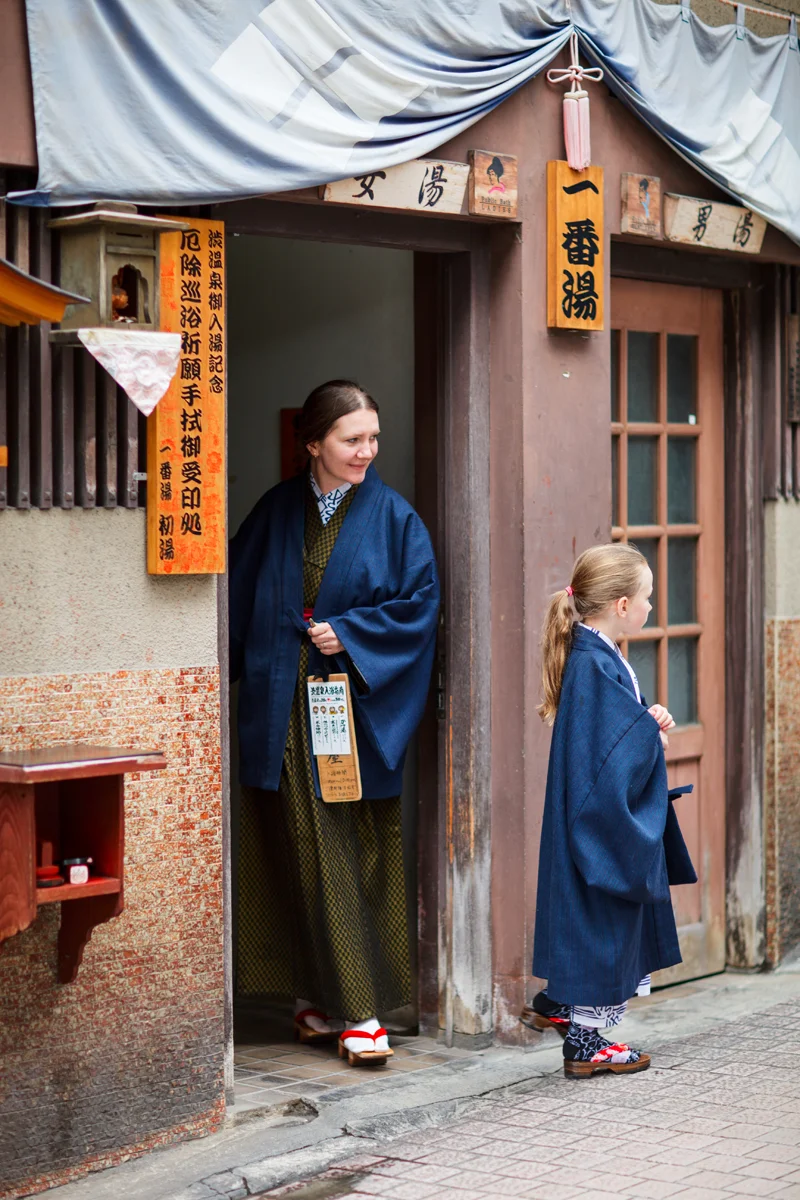
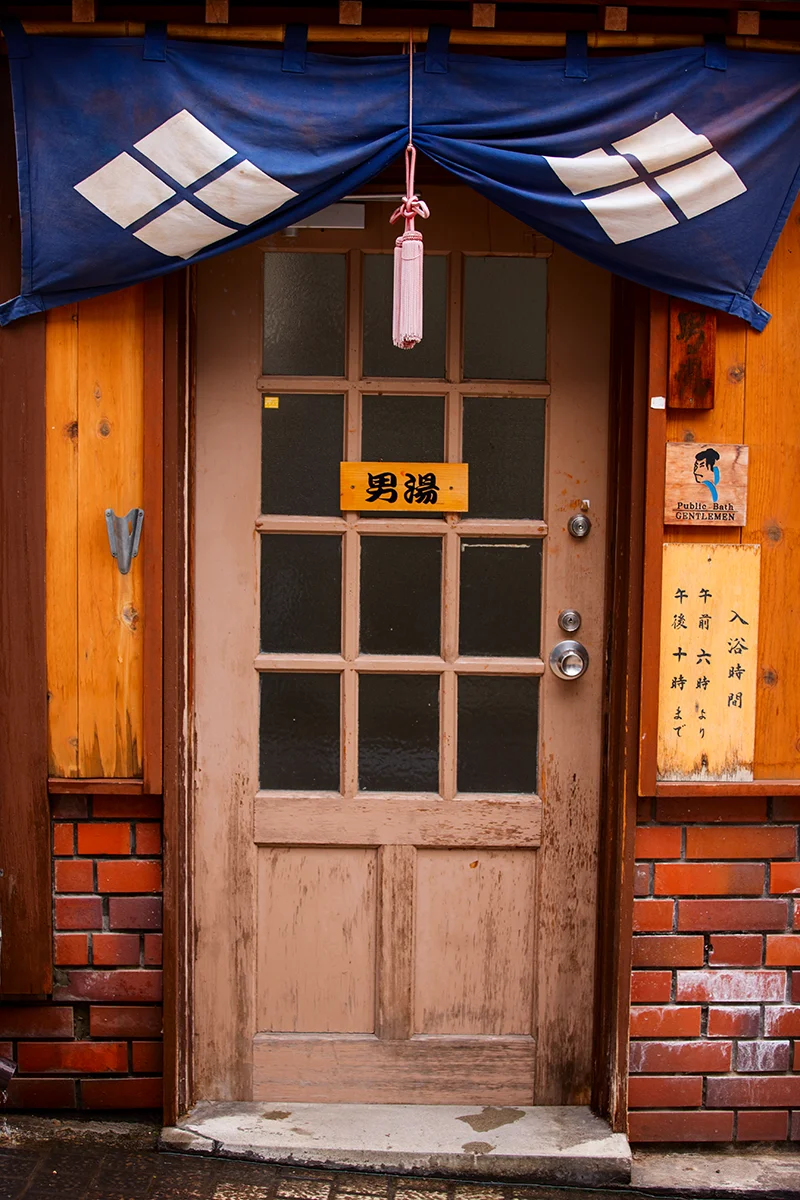

Each bath has its own character, and village tradition gives each one its own blessing:
- 1. Hatsuyu, the first stop, for an easy stomach.
- 2. Sasanoyu, for soft, clear skin.
- 3. Watanoyu, the bath women visited after childbirth, also for cuts and grazes.
- 4. Takenoyu, for stiff, aching joints.
- 5. Matsunoyu, for a tired back and shoulders.
- 6. Me-arainoyu, the “eye-washing bath,” for sore eyes after a long travel day.
- 7. Nanakurinoyu, for healing from injury.
- 8. Shinmeidakinoyu, the women’s bath, for fertility and good health.
- 9. Shibu Oyu, the largest and hottest, said to be good for everything.
A few practical notes, because the first bath is the learning curve:
- Baths are tiny, often two or three people at a time.
- You bathe fully naked, as at any onsen.
- Wash thoroughly before you enter the tub.
- Don’t submerge your cloth towel. Fold it on the edge of the bath or on your head.
- Water temperatures run from roughly 42 to 50 degrees Celsius (108 to 122 Fahrenheit). Start with a cooler bath.
Collect Stamps on a Tenugui Prayer Towel
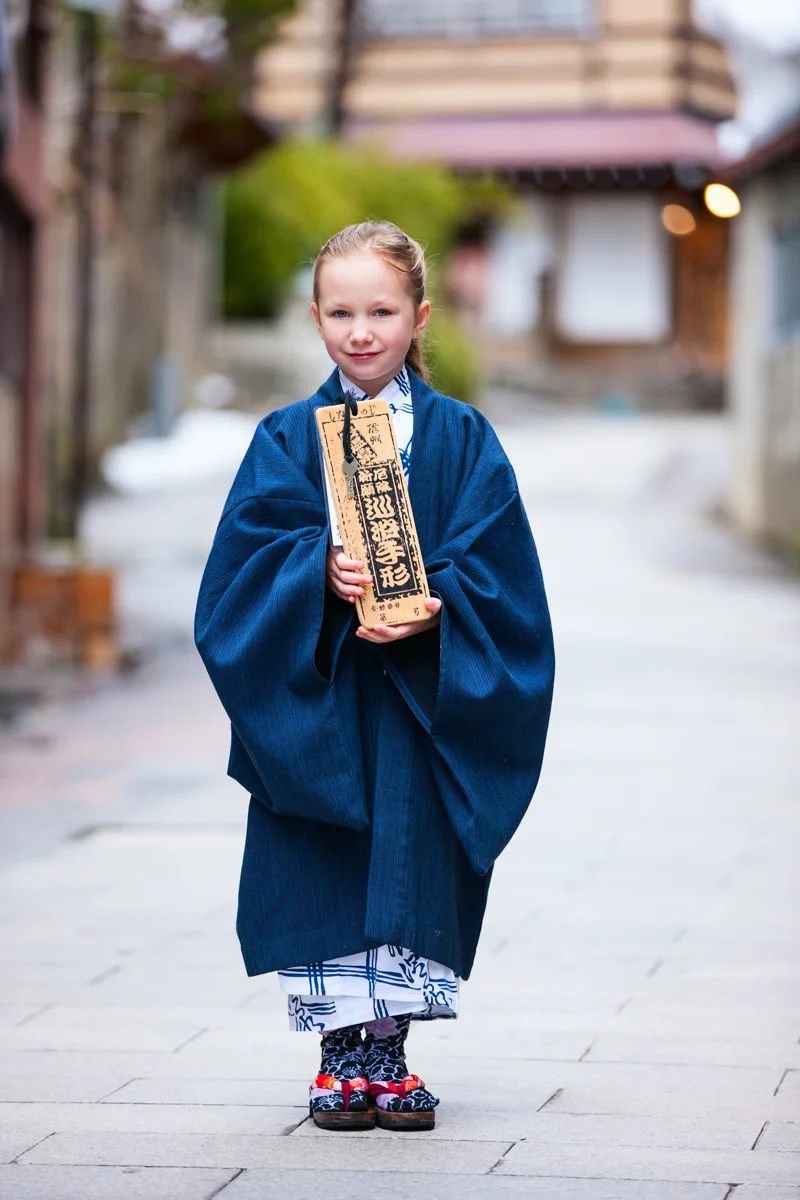
The bath tour comes with a ritual. At the front desk of your ryokan, pick up a tenugui, a thin cotton prayer towel printed with the names of all nine baths. Each bathhouse has its own red ink stamp by the door. Stamp the towel at each bath as you go, working from #1 Hatsuyu to #9 Shibu Oyu.


To finish the pilgrimage, climb the short stone path above the village to Shibu Takai Yakushi, a small wooden shrine overlooking the rooftops, and add a tenth stamp from the box at the shrine. Local tradition says the completed towel brings long life, protection from misfortune, fertility, and the granting of one wish. The fully stamped tenugui makes a nice souvenir to take home.
Eat an Onsen Egg
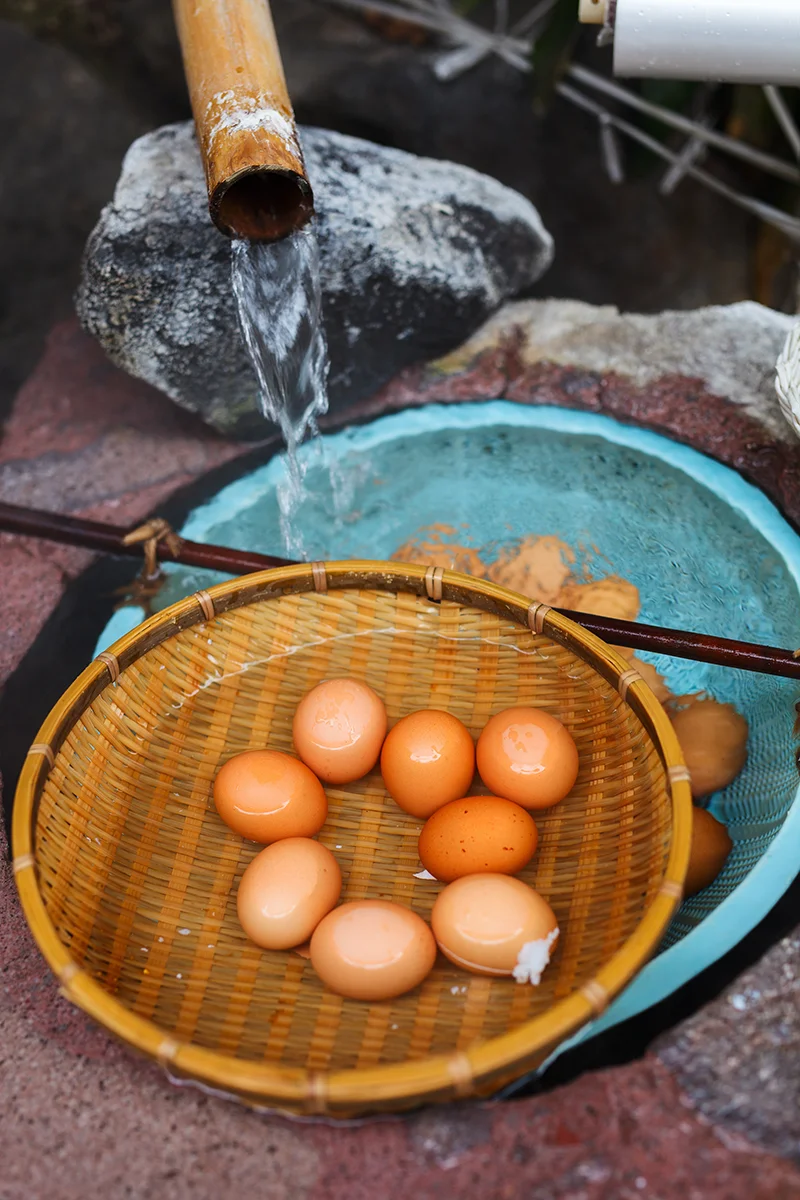
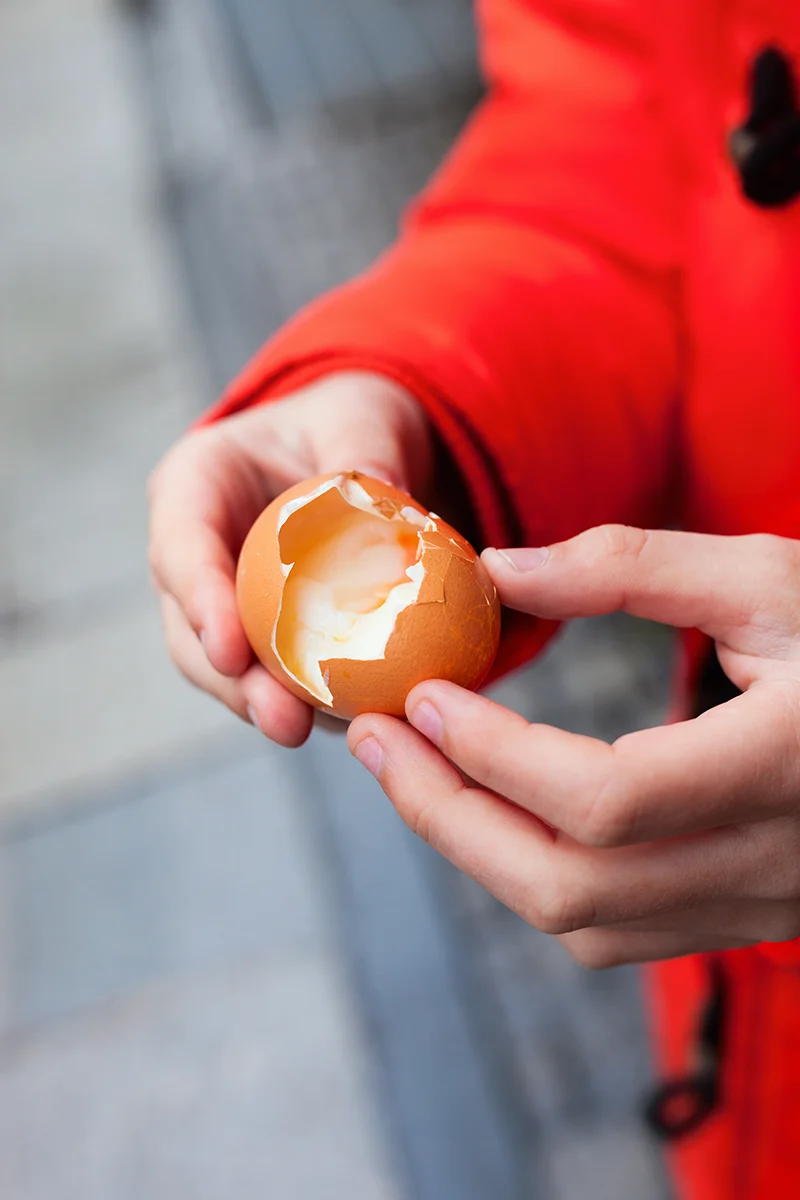
While you walk the village, look for onsen tamago, eggs slow-cooked in 65 to 68 degrees Celsius (149 to 154 Fahrenheit) spring water in a wire basket. The white sets to a soft custard, the yolk stays bright and barely-set, and the whole thing is eaten warm with a splash of soy or dashi. A few of the small shops along the main street sell them ready to eat, and one or two ryokans serve a version with breakfast.
Explore the Village
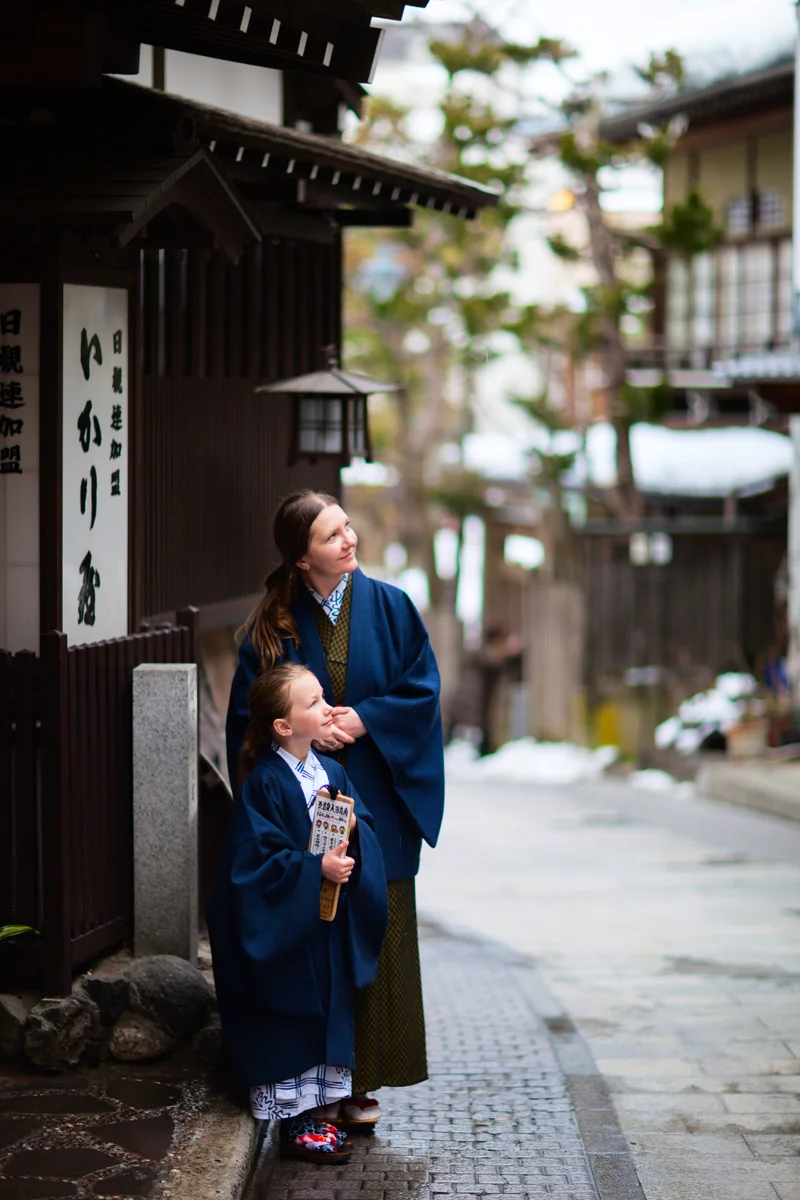
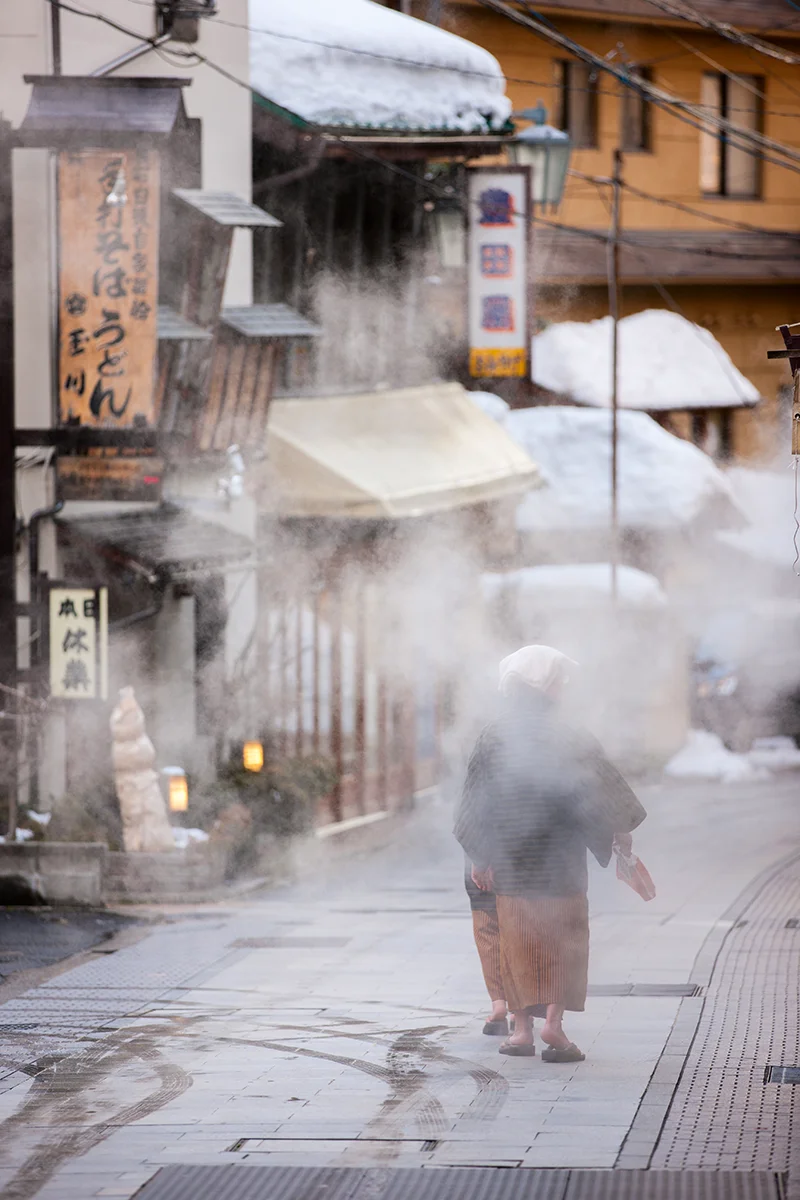
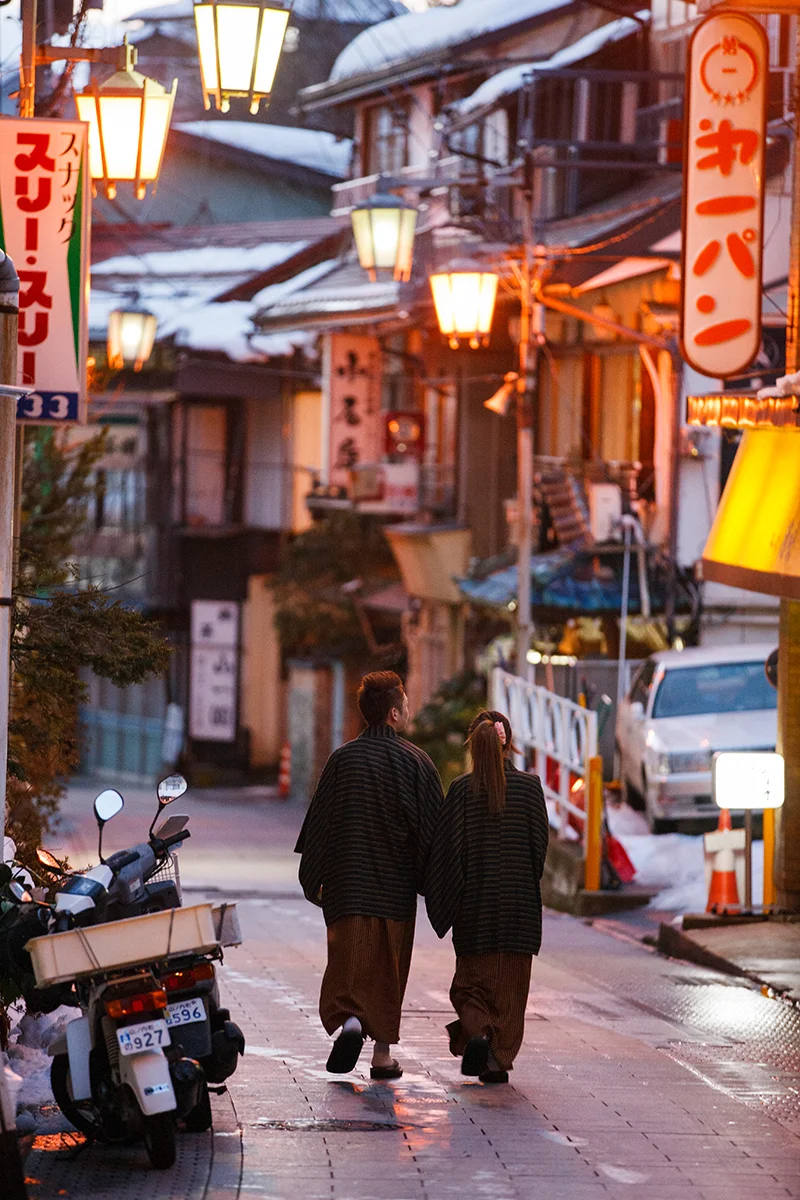
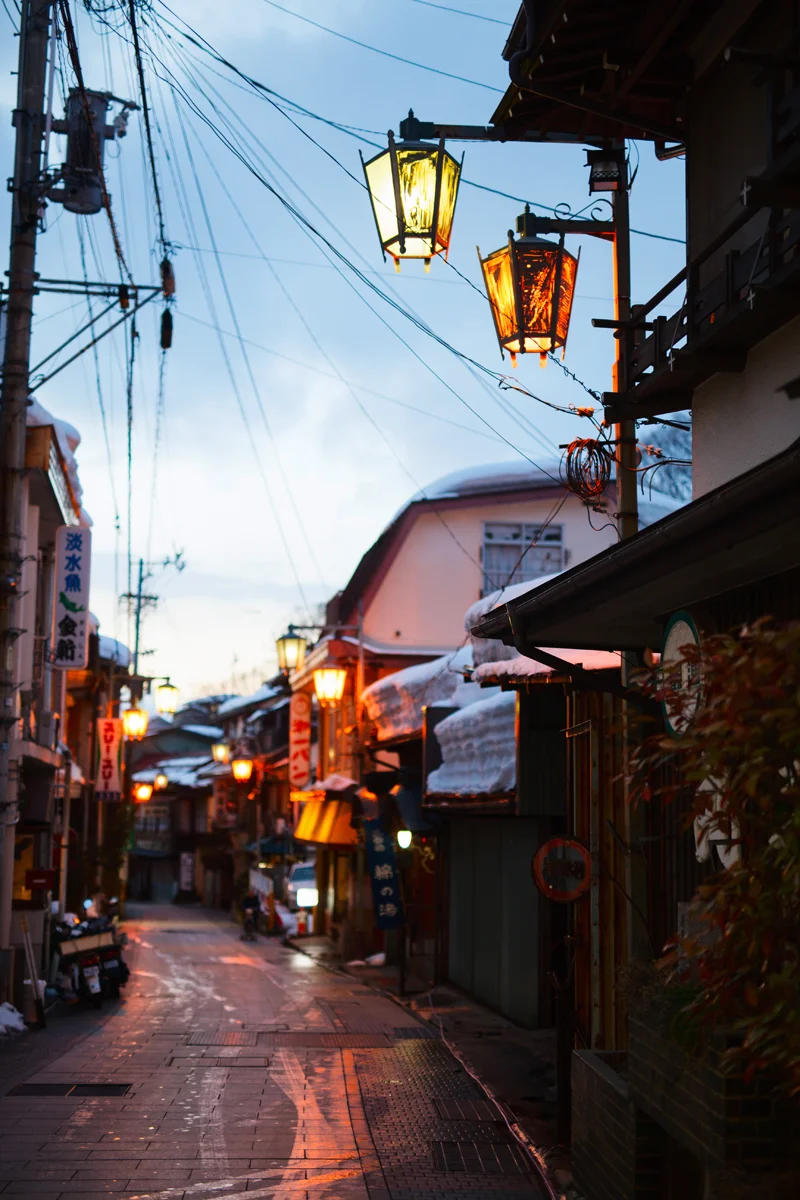
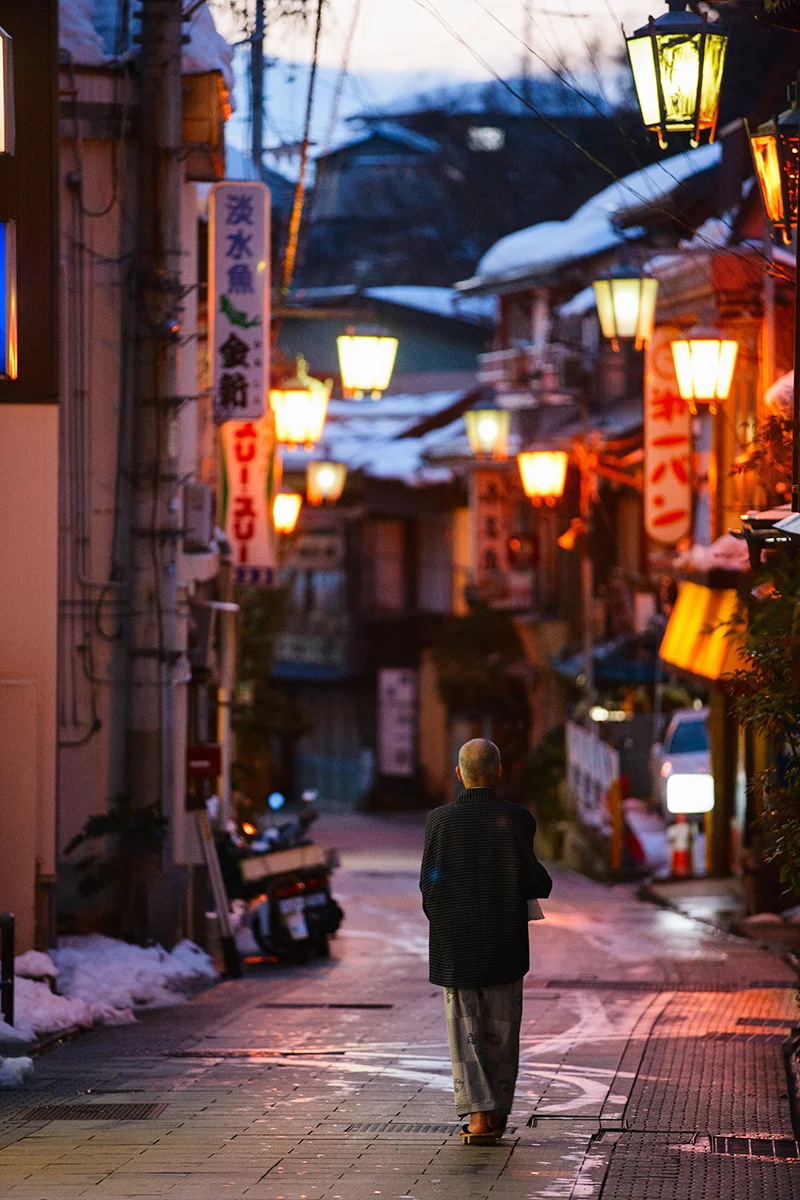
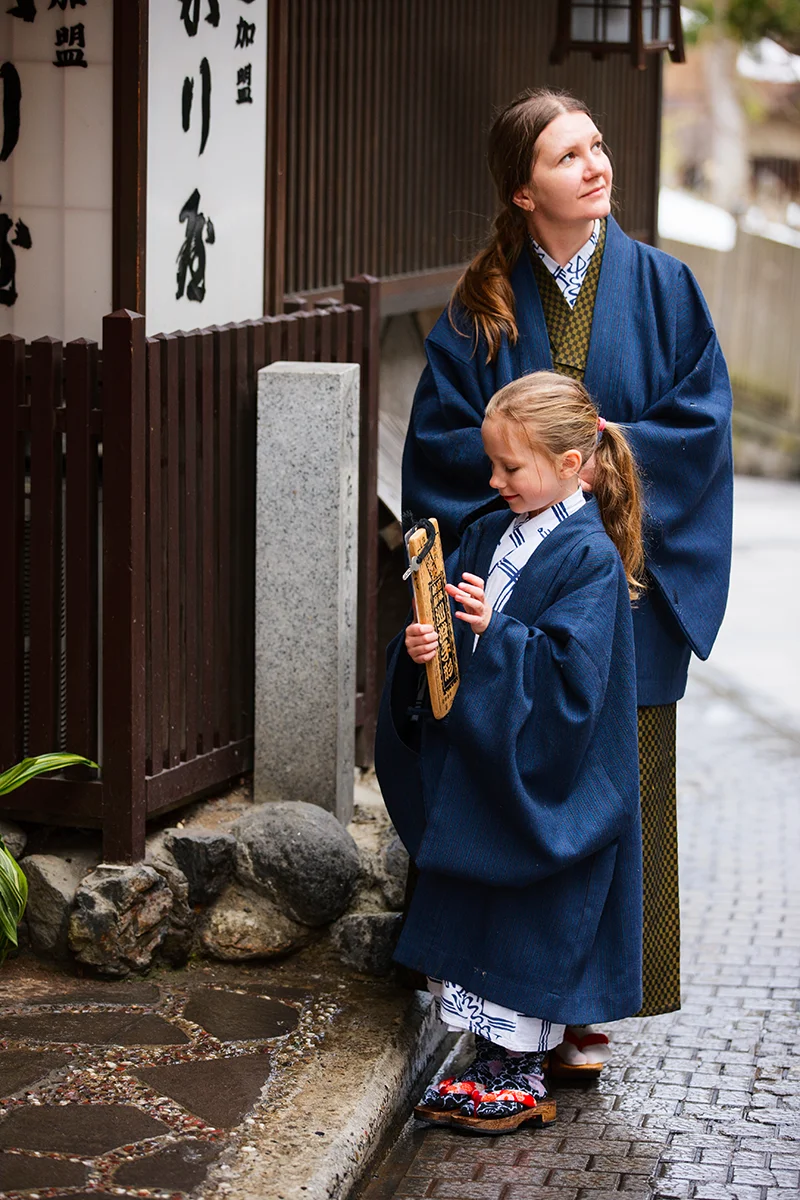
Shibu Onsen’s single cobbled main street is short, you can walk its length in 15 minutes, but it is the kind of place that rewards a second pass after dark. Lantern light reflects off the wet stone, and the village fills up with ryokan guests in yukata and geta clogs clip-clopping between the baths.
If you are not staying at Kanaguya Ryokan, walk past it on the main street, the Saigetsuro hall is instantly recognizable to Spirited Away fans and worth a look from outside.
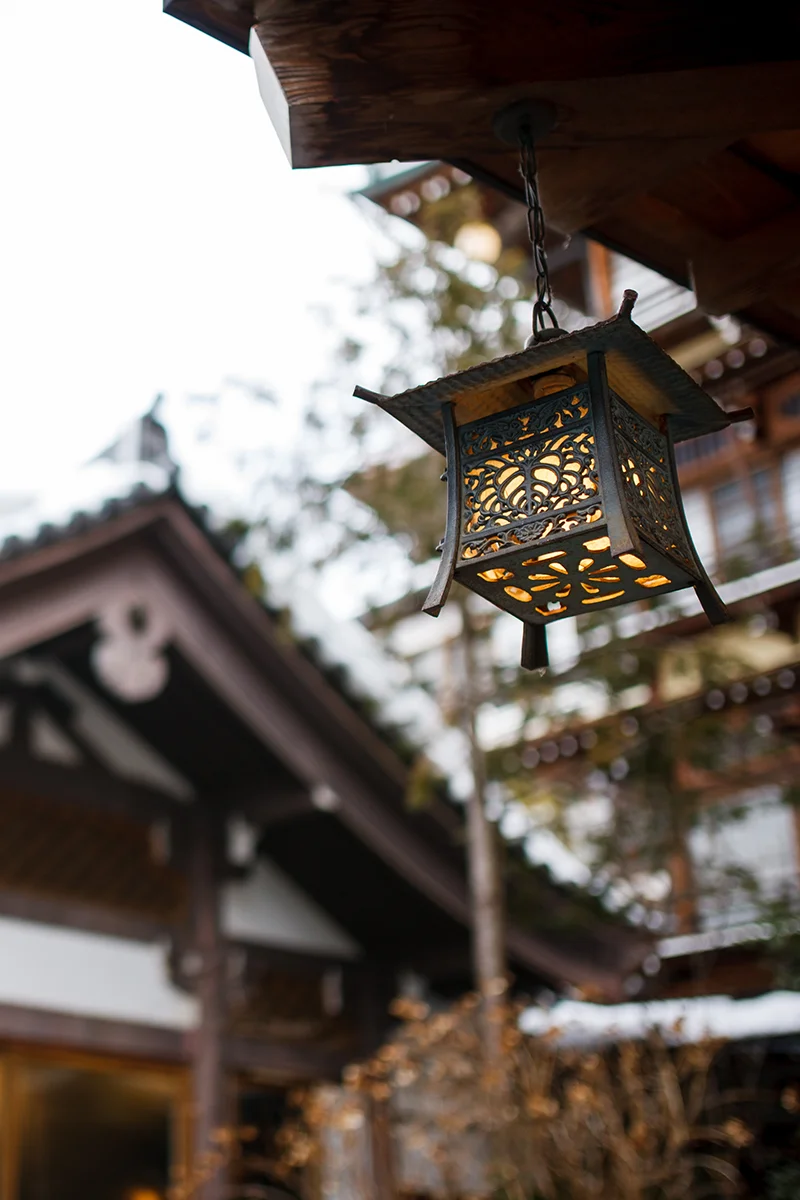
Visitors are encouraged to explore the streets dressed in traditional yukata and wooden geta clogs, provided by your inn. This creates magical, step-back-in-time atmosphere.
FAQs