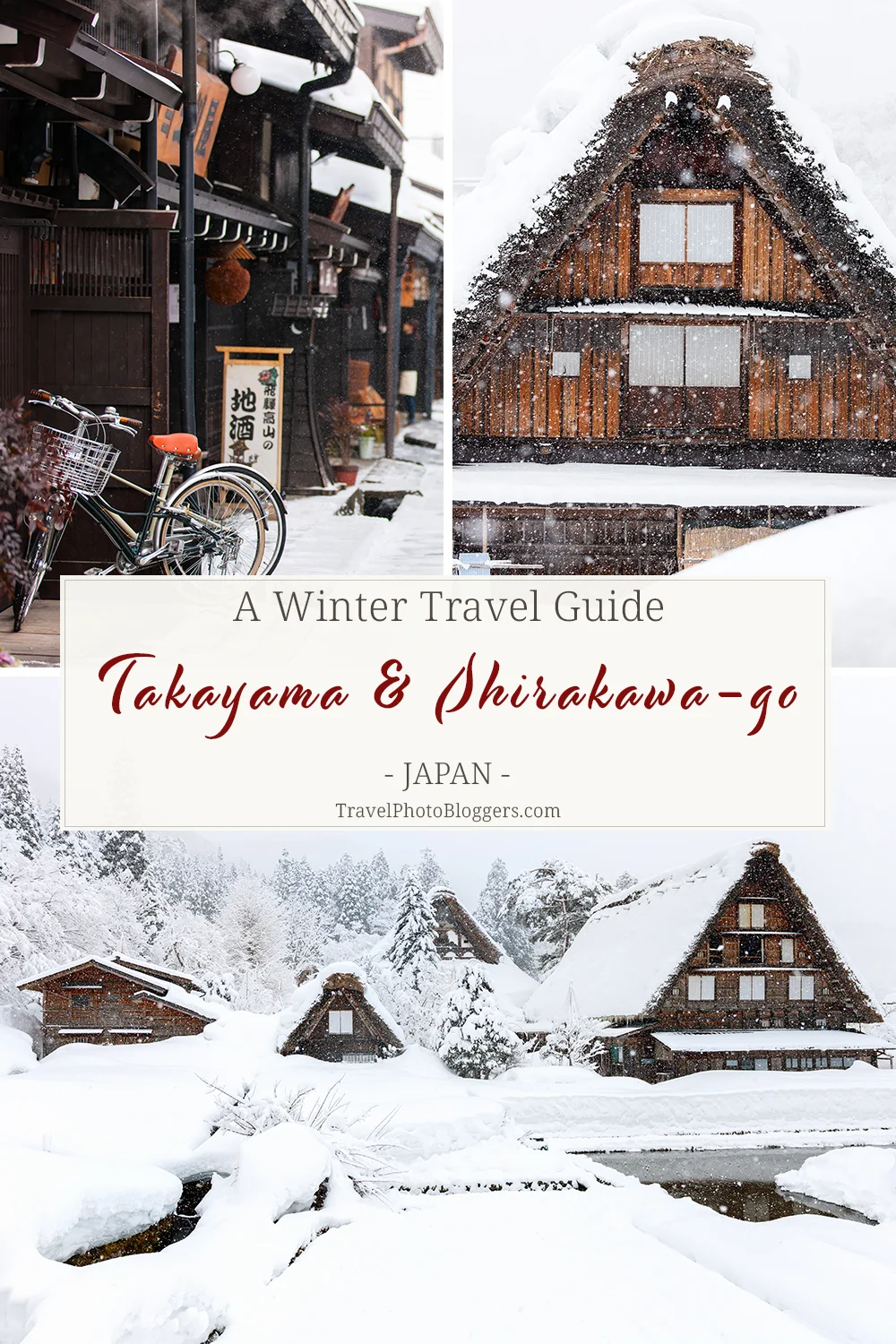
Takayama and Shirakawa-go: A Winter Travel Guide
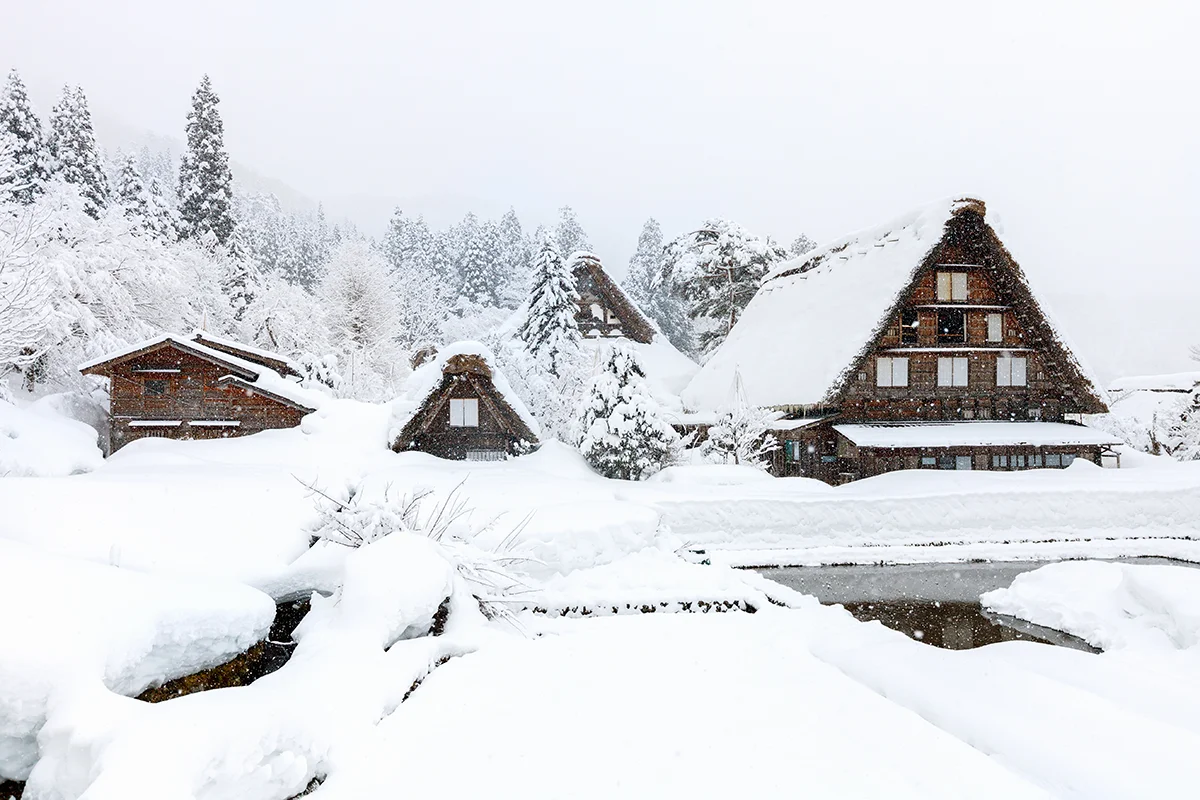
Traveling to Japan in winter? Takayama and Shirakawa-go are two of the most atmospheric stops in the Japanese Alps, with Edo-period streets, thatched farmhouses, and some of the heaviest snowfall in the country. Together they make an easy pairing from Tokyo, Kyoto, or Kanazawa, and we’d put this part of Japan high on the list for any winter trip.
This Takayama and Shirakawa-go winter guide covers where to stay, where to eat, the best things to do in each destination, and a short itinerary at the end to help you put it all together.
At A Glance
- Region: Gifu Prefecture, central Japan
- Where to stay: Takayama Old Town, at a ryokan
- Best time to visit: Mid-January through late February for the heaviest snow
- Getting to Takayama: JR Hida Limited Express from Nagoya, 2 hr 20 min
- From Takayama to Shirakawa-go: Direct bus, 50 minutes each way
- Don’t miss: Snow-covered farmhouses in Shirakawa-go, the view from Shiroyama, Edo-era streets of old Takayama
About Takayama And Shirakawa-go
Takayama is a small mountain town in Gifu Prefecture, centered on a compact old quarter of dark timber facades, sake breweries, and craft workshops dating to the Edo period. It is also the gateway to the Hida region and the easiest starting point for a day trip to Shirakawa-go.

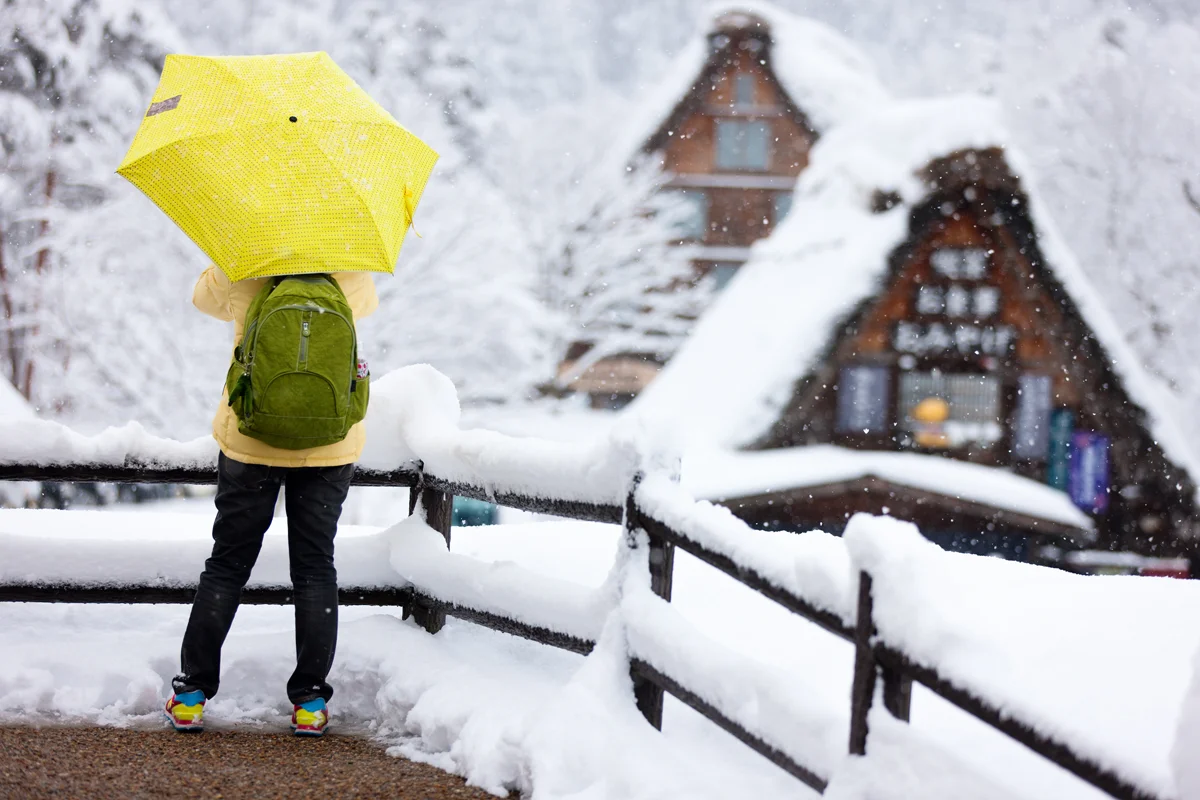
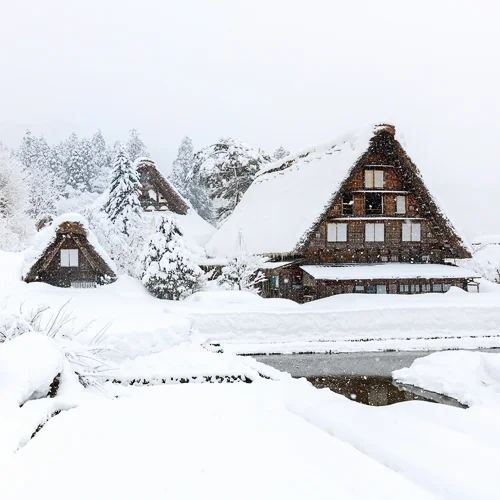
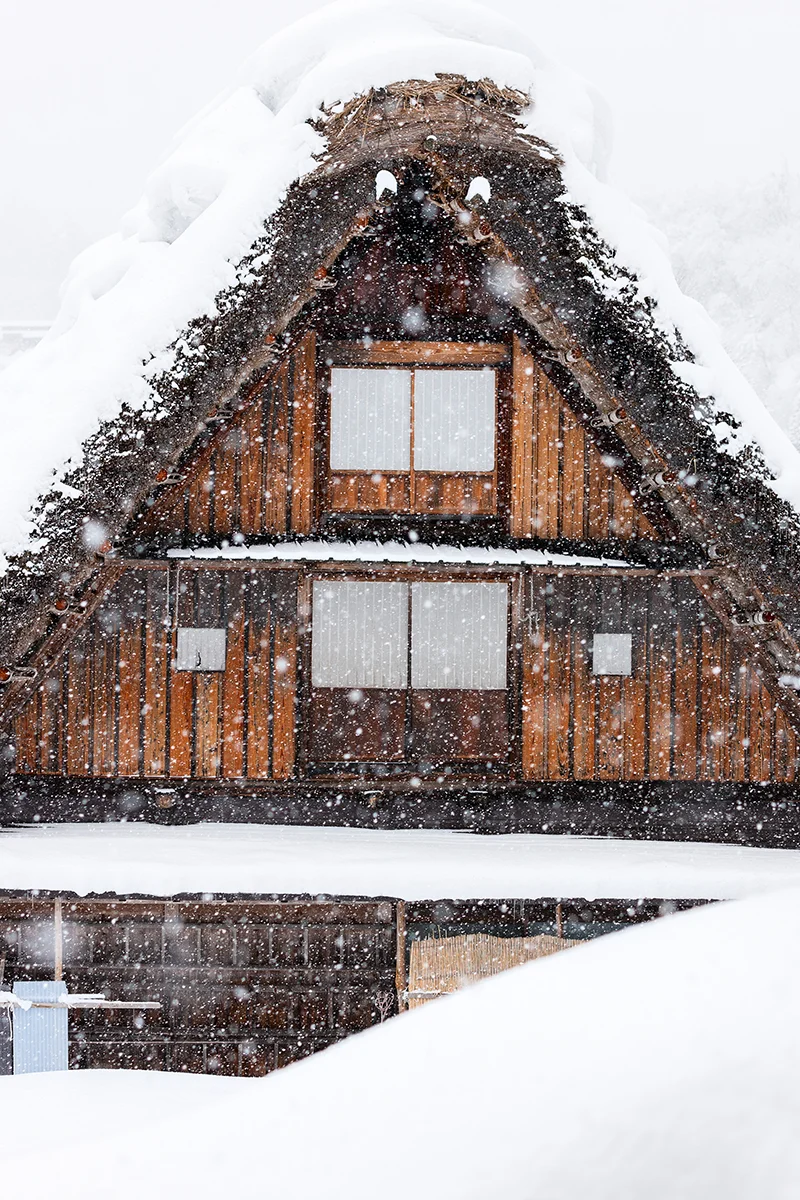
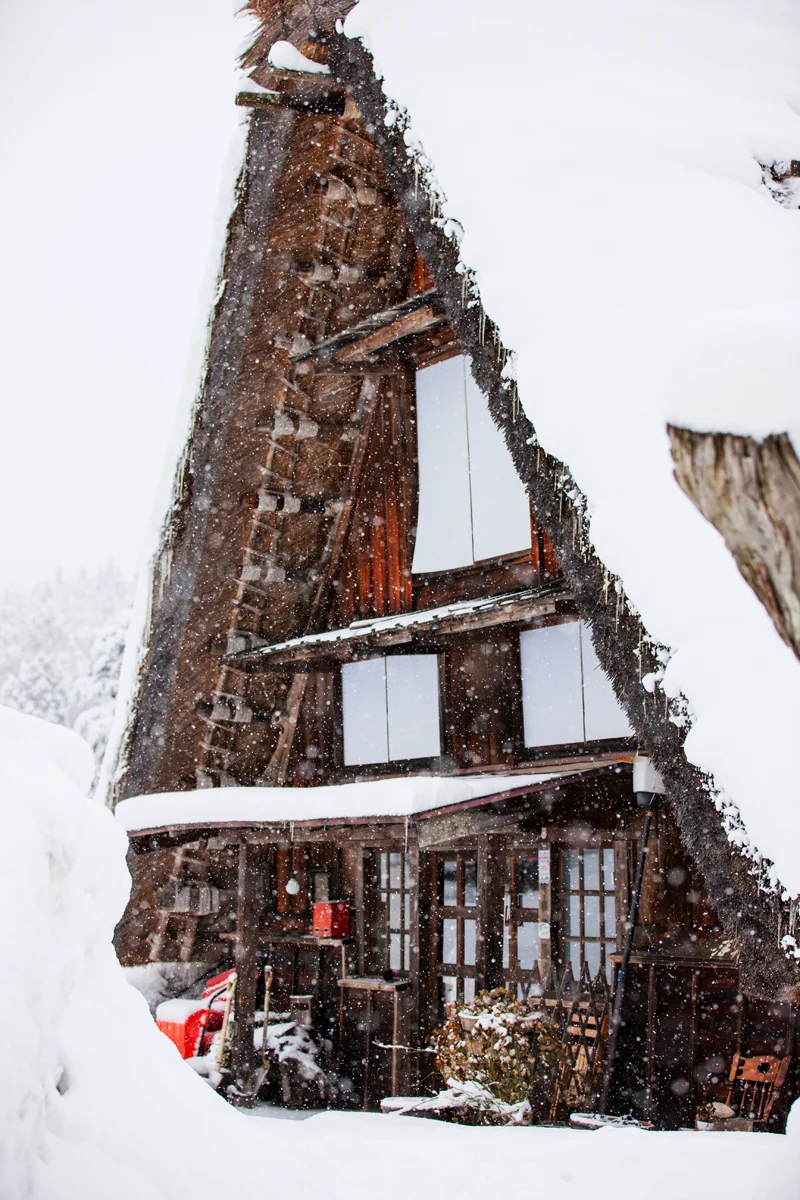
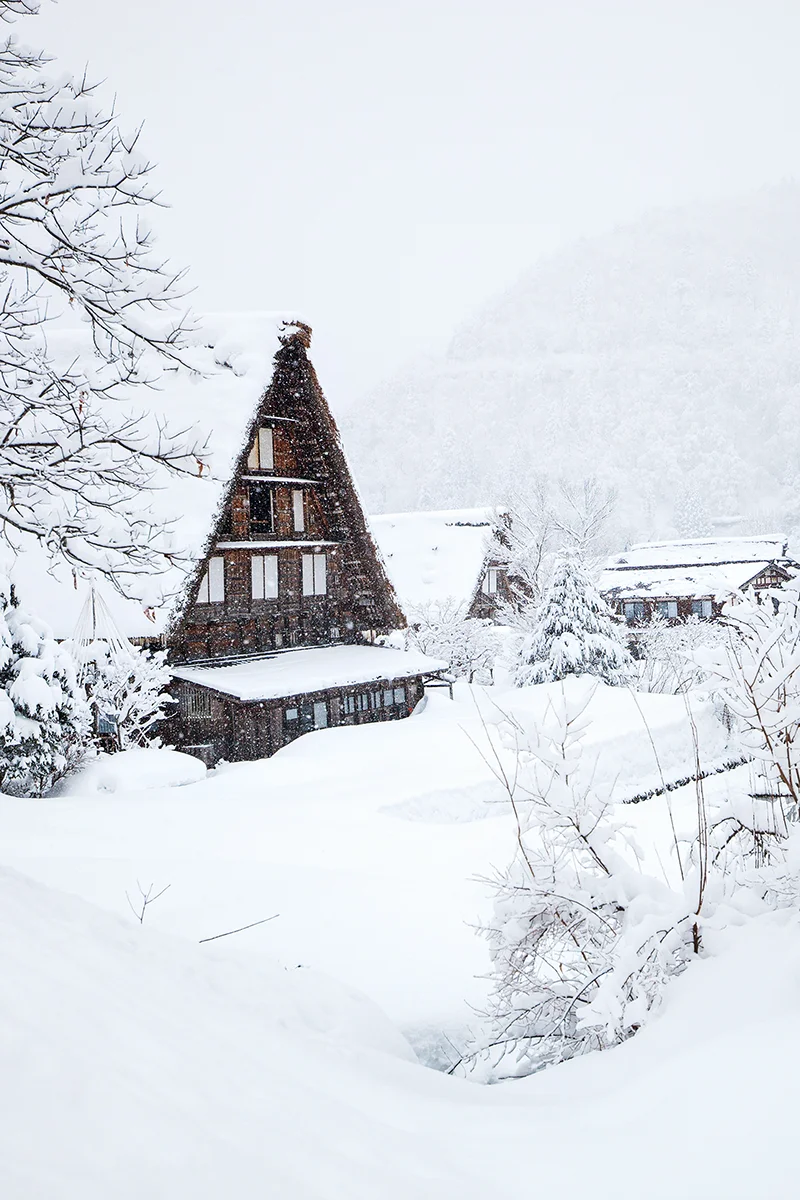
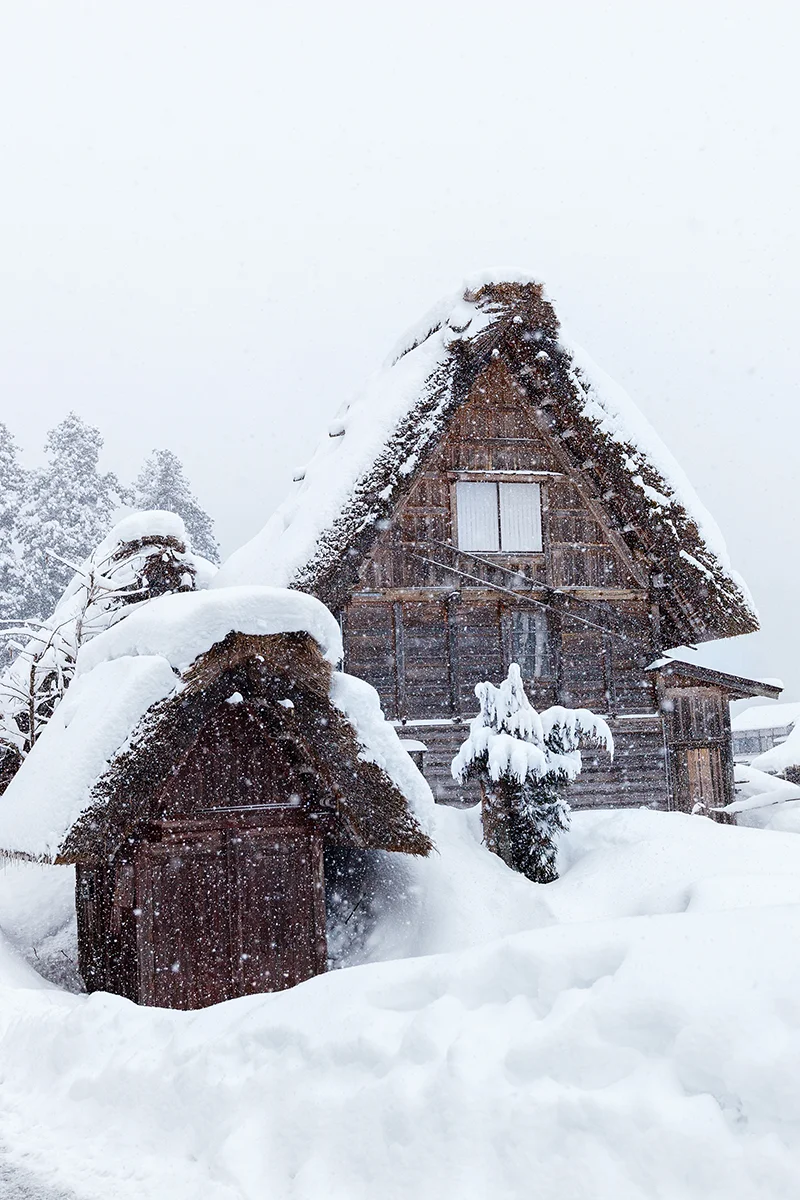
Shirakawa-go, an hour west of Takayama by bus, is a UNESCO World Heritage Site and home to some of Japan’s most distinctive rural villages. Its gassho-zukuri farmhouses, some over 250 years old, are known for their steep thatched roofs. The 60-degree pitch sheds the valley’s extraordinary snowfall. The valley routinely sees more than 10 m (33 ft) of snow over the winter. Many farmhouses are still lived in today, which gives the village more soul than a typical open-air museum.
Best Time To Visit
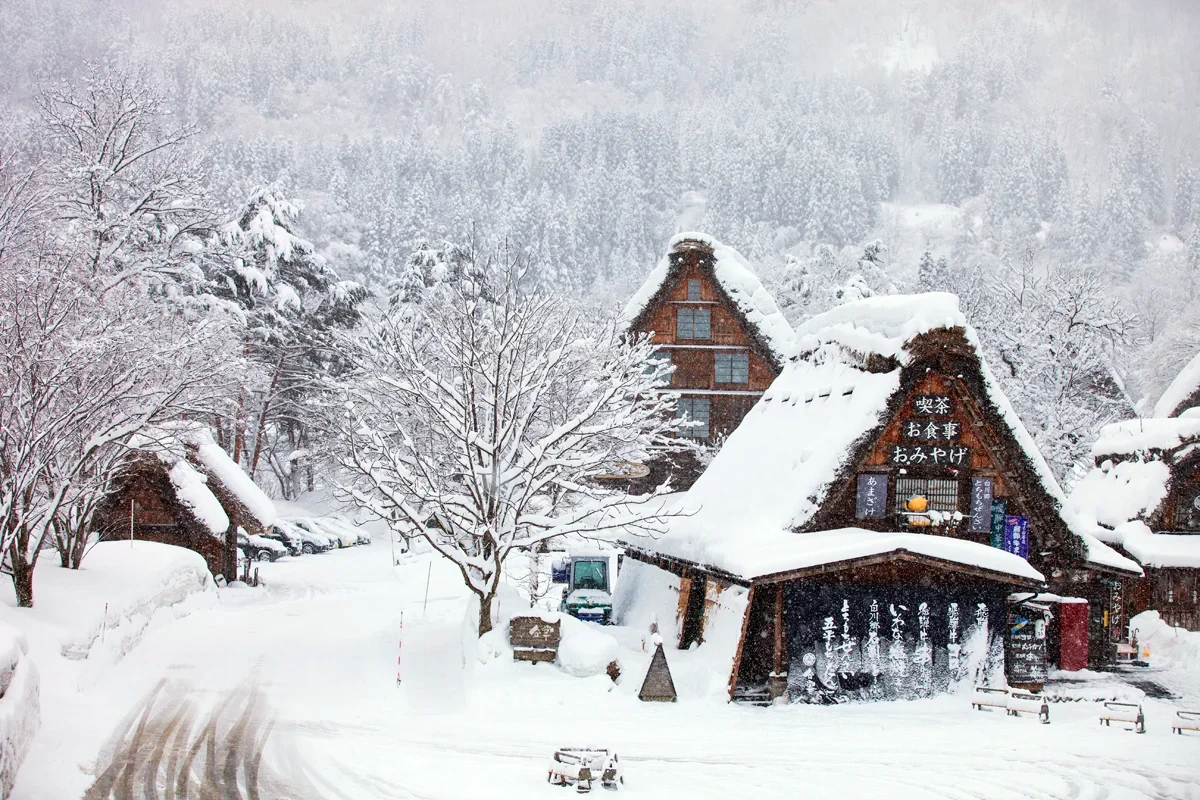
For the deepest snow and most atmospheric scenes, plan for mid-January through late February. We visited in the second week of February and had fresh snow almost every day, with snow banks well over 2 m (6.5 ft) lining the streets in Shirakawa-go.
Daytime temperatures typically hover around -2 to 3 degrees Celsius (28 to 37 Fahrenheit), and nights drop to -8 C (18 F). Pack warm clothes.
Save now, enjoy later
Too busy right now? Save this gem to Pinterest for later.
How Many Days You Need
Two nights and three days is the minimum for Takayama and Shirakawa-go. That’s enough for a day in Takayama and a day trip to Shirakawa-go. If you want a slower pace or time for something like a Sarubobo doll-making workshop, a third night helps.
How To Get There
The easiest approach to Takayama is the JR Hida Limited Express from Nagoya, which runs roughly every hour or two through the day, with nine to ten services in each direction. The journey takes about 2 hours 20 minutes through genuinely beautiful scenery, past rivers, gorges, and a snowy cedar forest.
The train is highly popular, particularly during weekends and holidays, making early reservations advisable. Make sure you have a seat ticket in addition to your fare ticket.
Takayama Station is about a 15-minute walk from the Old Town, and many ryokans offer a free shuttle if you ask in advance.
Takayama
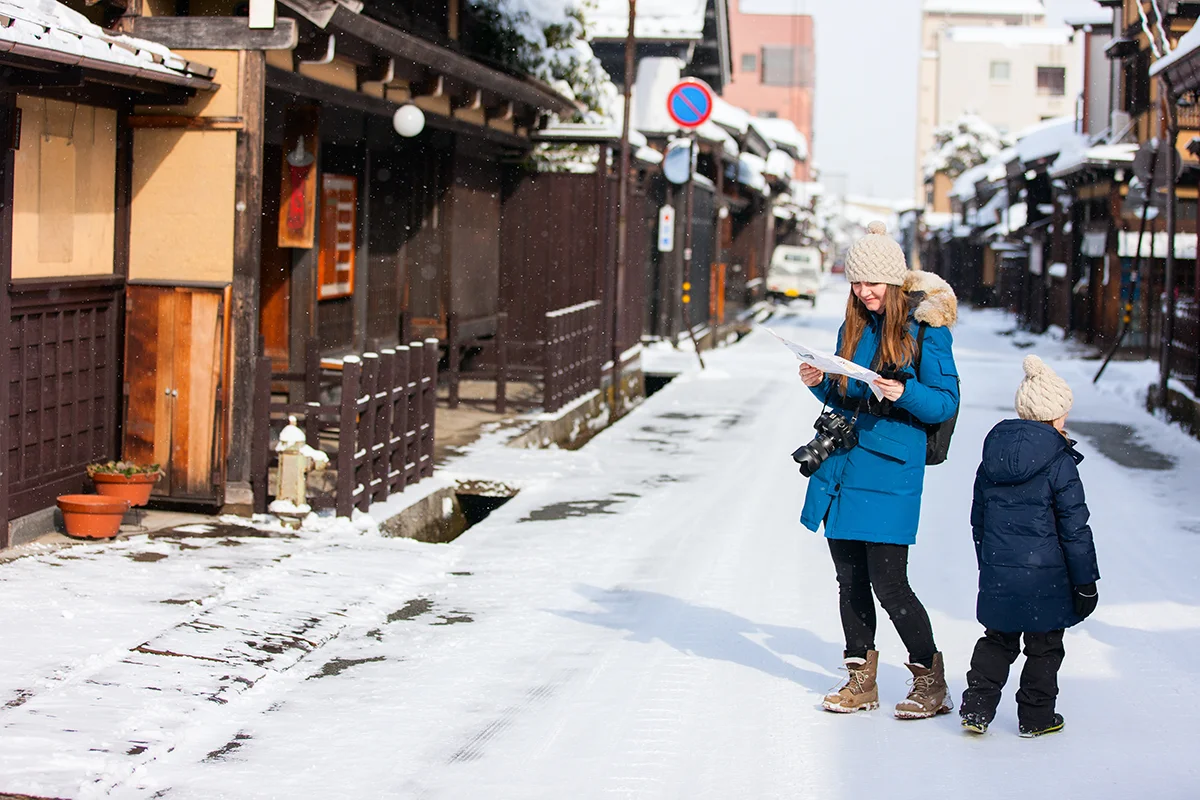
Takayama sits in a high valley ringed by the Japanese Alps, and its old merchant quarter is one of Japan’s best-preserved Edo-period districts. Three narrow streets of dark-timber townhouses run parallel to the Miyagawa River. They’re lined with sake breweries, lacquerware shops, and houses close to three centuries old. You can walk the length of it in fifteen minutes, though it’s the kind of place that rewards slow exploration.
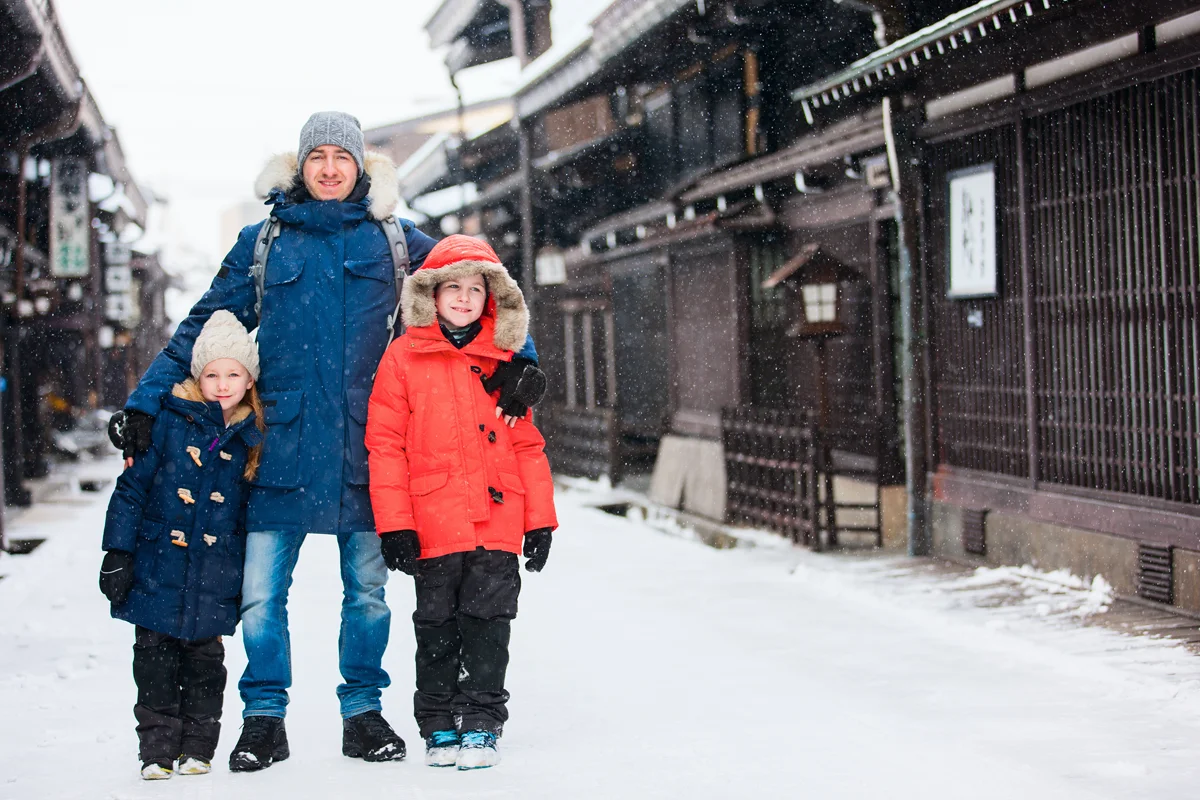
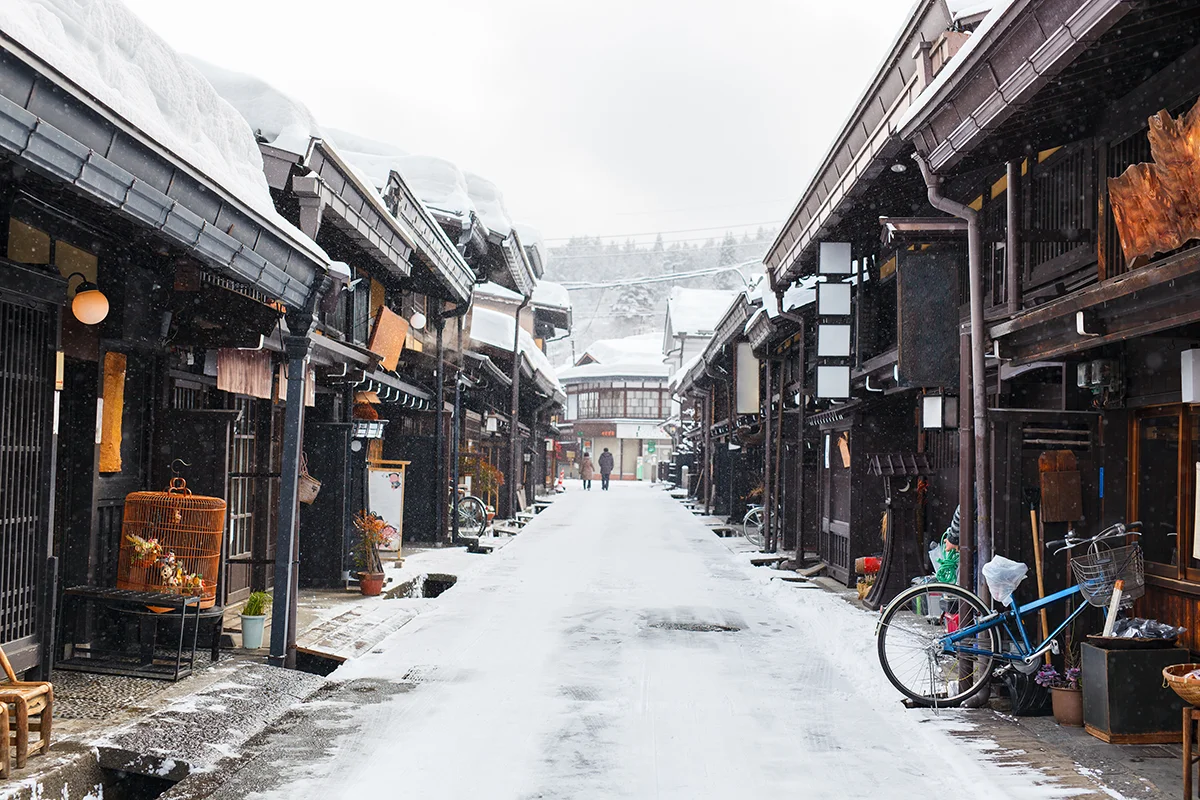
Winter is the quietest season here, and in our view, the best. Snow rounds off the tiled roofs, and the contrast between the white drifts and the black cedar facades is what draws photographers to Takayama. January and February are peak brewing season, when the sake houses hang fresh cedar balls above their doorways and open their cellars for tastings.
Where To Stay In Takayama
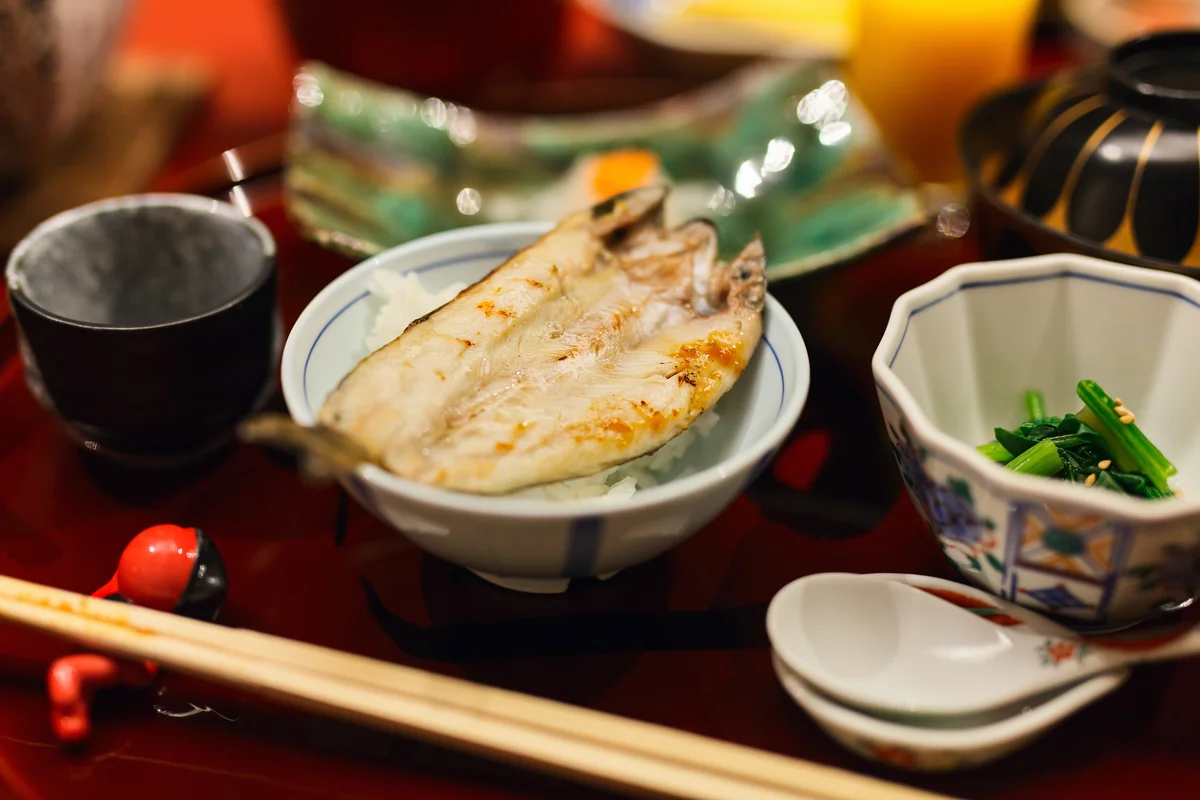
Takayama’s most memorable stays are its ryokans, traditional Japanese inns with tatami rooms, kaiseki dinners, and onsen baths. Here are the properties we’d recommend.
- Machiyado Ichiryu is a Michelin-recognized, adults-only urban ryokan housed in a converted two-story merchant townhouse five minutes’ walk from the Old Town. Just 11 suites, each with its own semi-open-air bath. Meals are served in private dining rooms, and the kaiseki leans heavily on top-grade Hida beef.
- Honjin Hiranoya Kachoan sits steps from the Nakabashi Bridge, the morning market, and the Old Town. A comfortable ryokan stay with private dining rooms for breakfast.
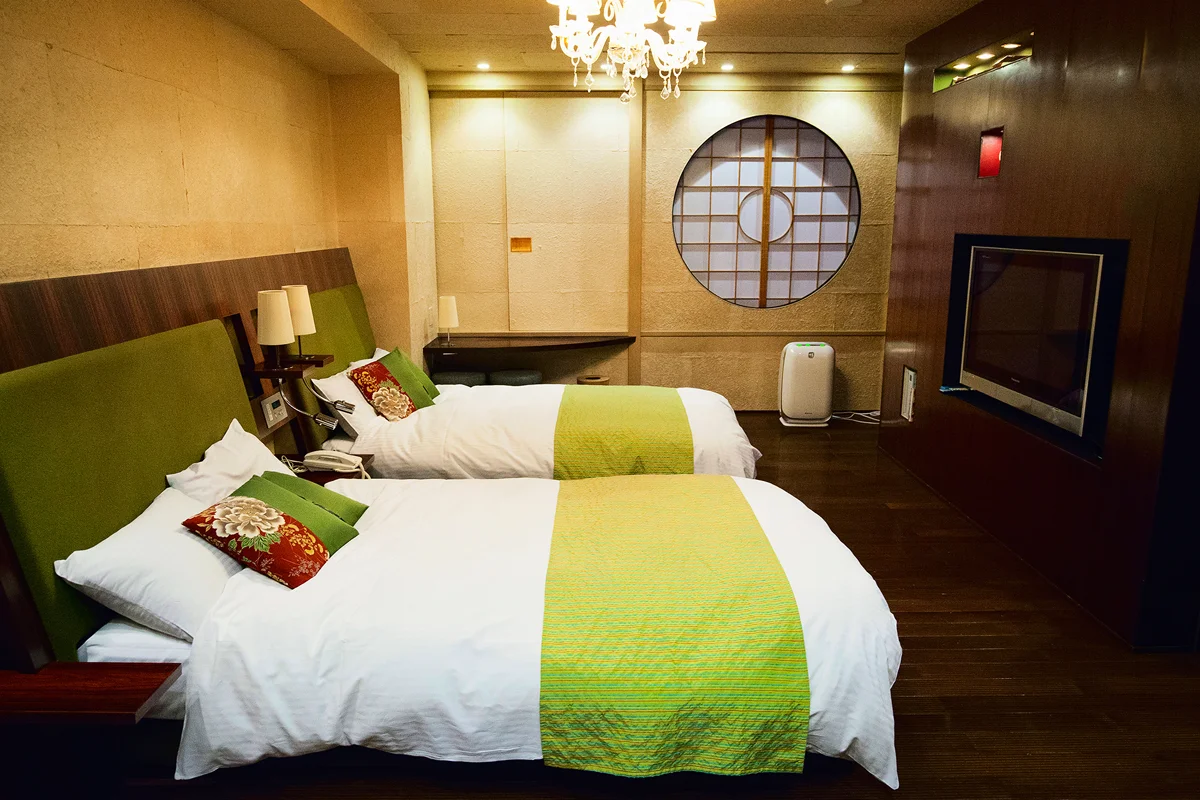
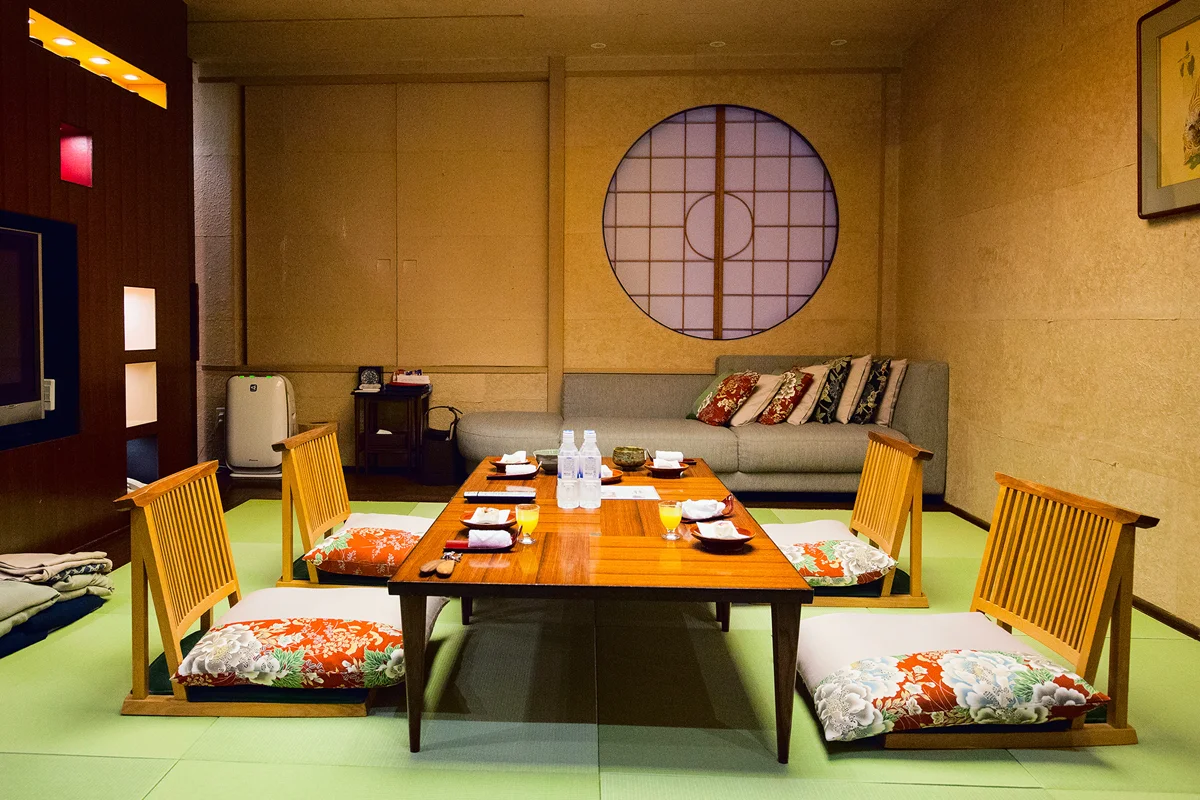
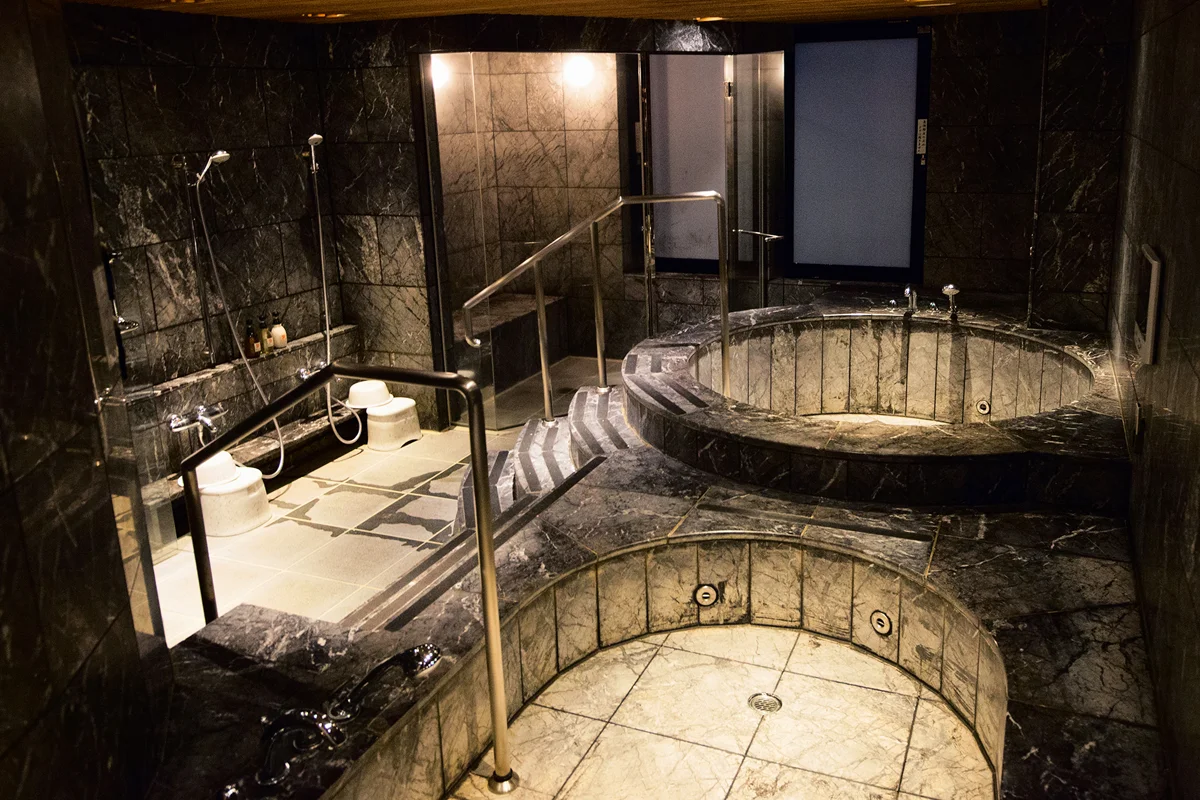
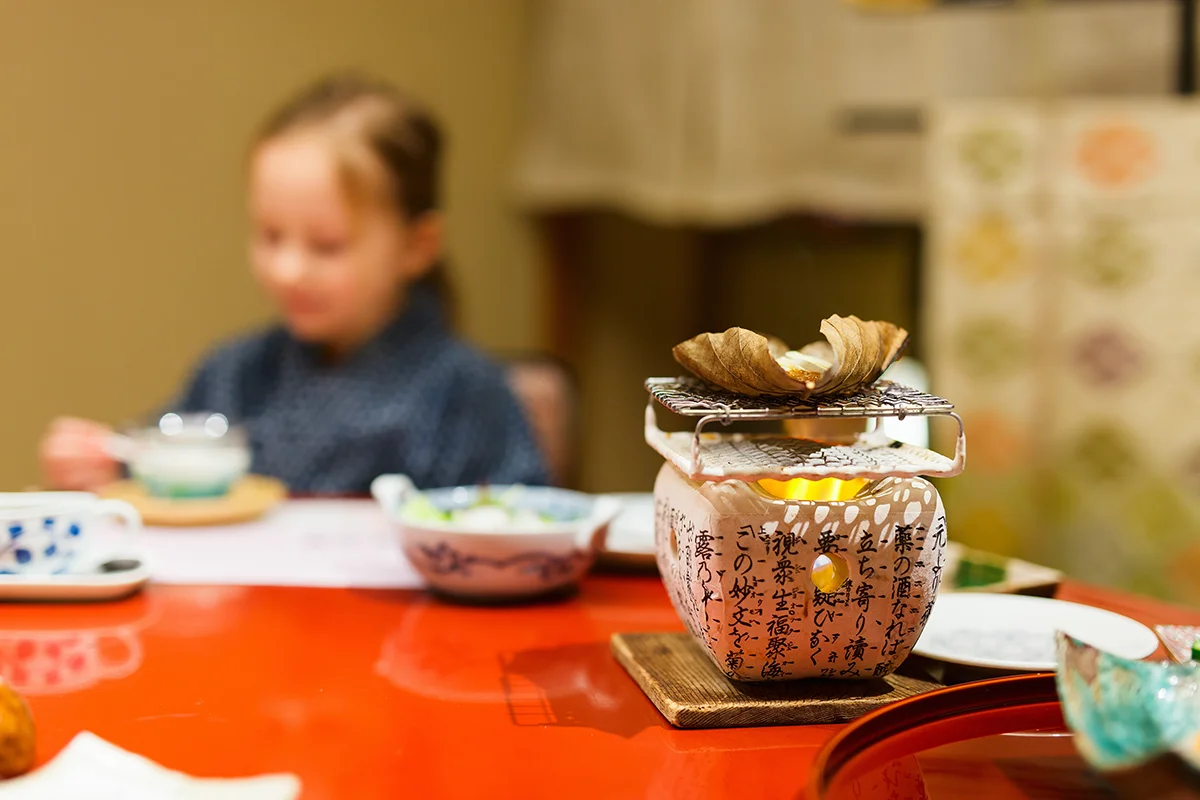
- Hidatei Hanaougi is the best pick if you want a quieter ryokan stay, a short taxi ride from the center. Rooms are built from Hida cedar with tatami floors, and many come with a private outdoor bath on the terrace.
- Wanosato is the most atmospheric ryokan of the lot, set in a secluded valley outside Takayama. Choose it for a countryside stay with gassho-style buildings, irori hearth dinners, and a stronger sense of retreat than anywhere in the center. The taxi ride into Takayama Old Town takes about 15 to 20 minutes.
Best Things To Do In Takayama
Wander the Old Town
The Sanmachi Suji is the heart of the old town, and the stretch where most of the shops, breweries, and craft workshops are concentrated. Step into Funasaka📍 or Harada📍 for a sake tasting, look for sarubobo charms in the craft shops, and keep an eye out for the small stalls selling local Hida delicacies tucked between the storefronts.
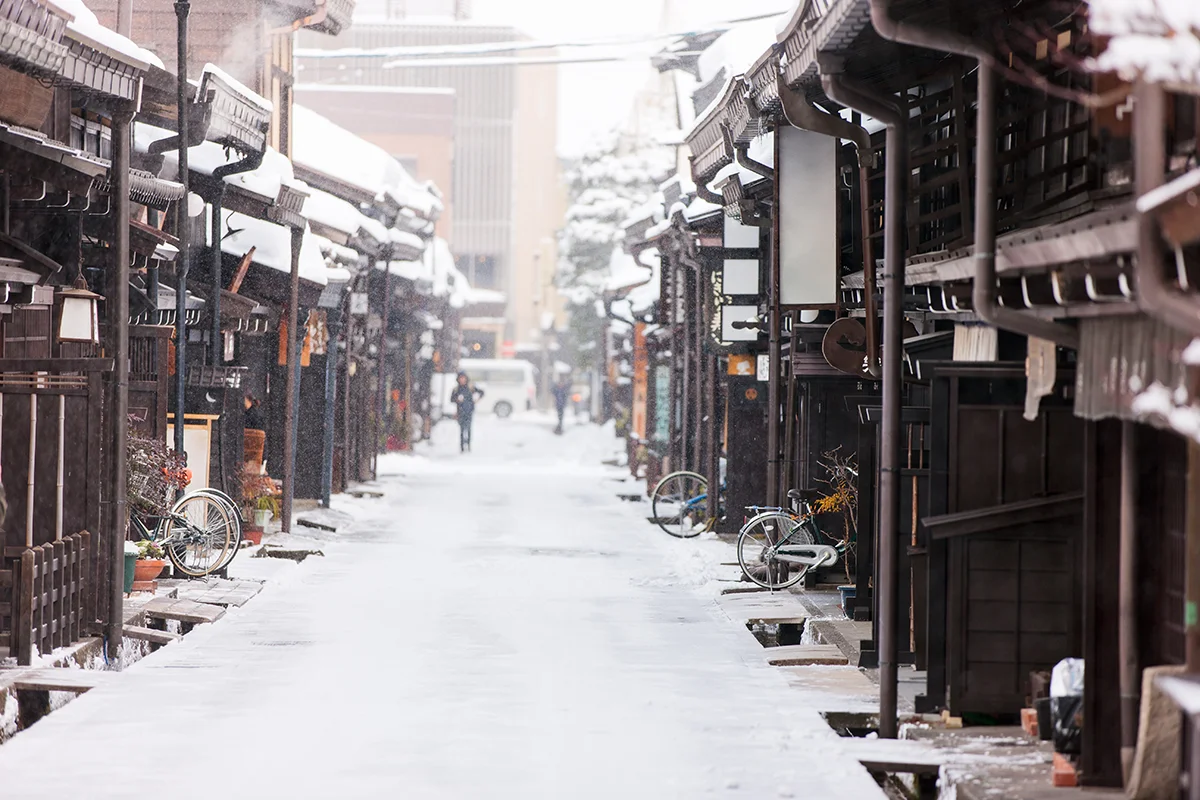
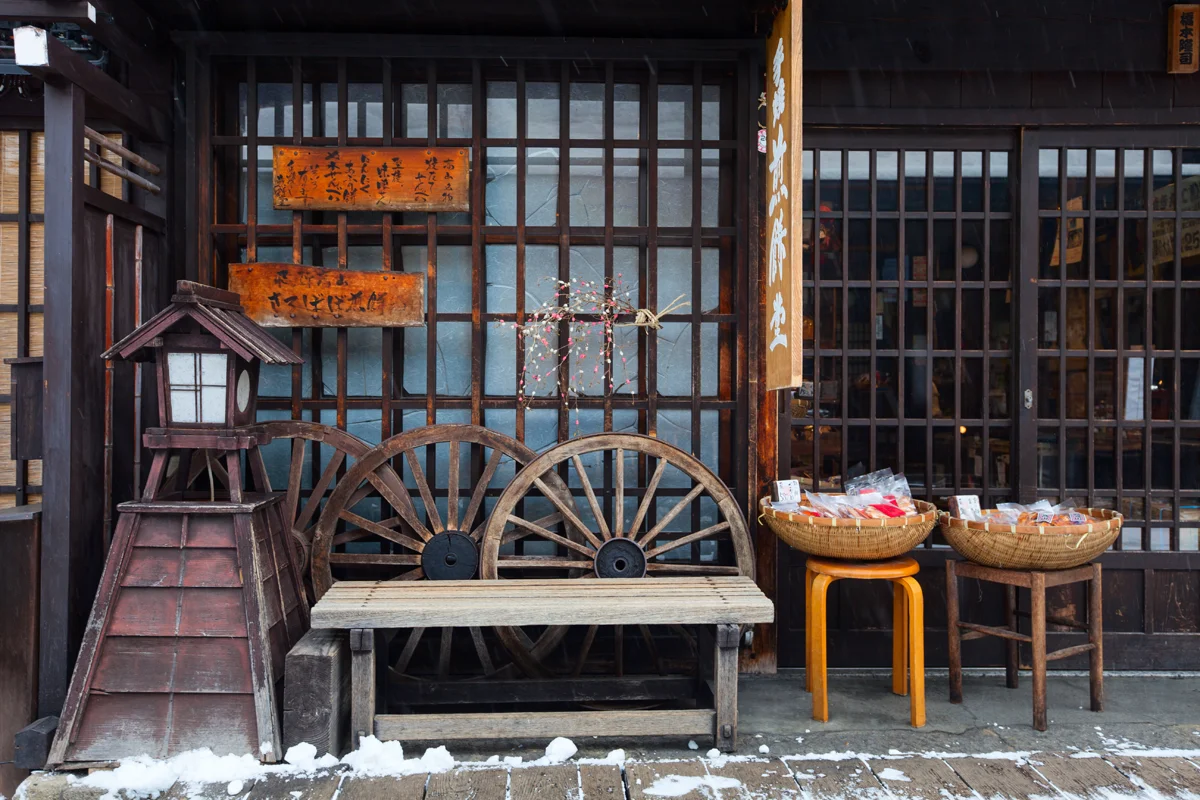
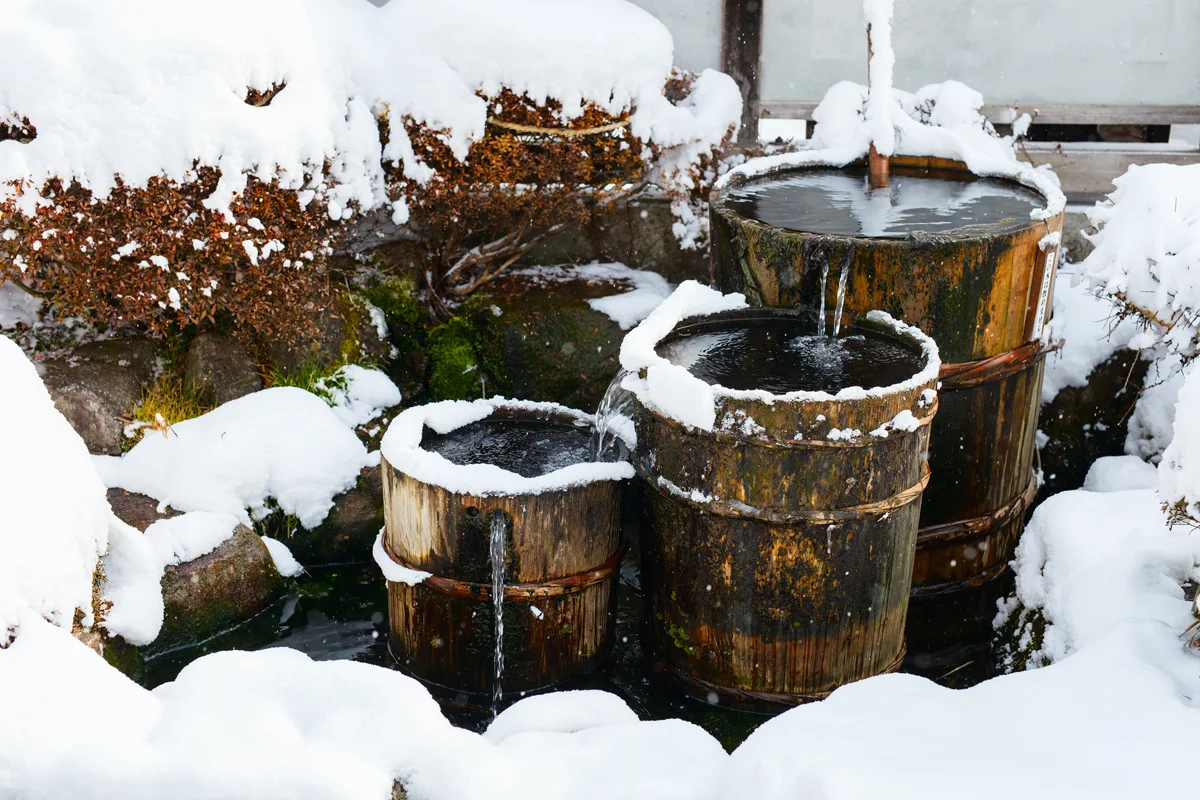
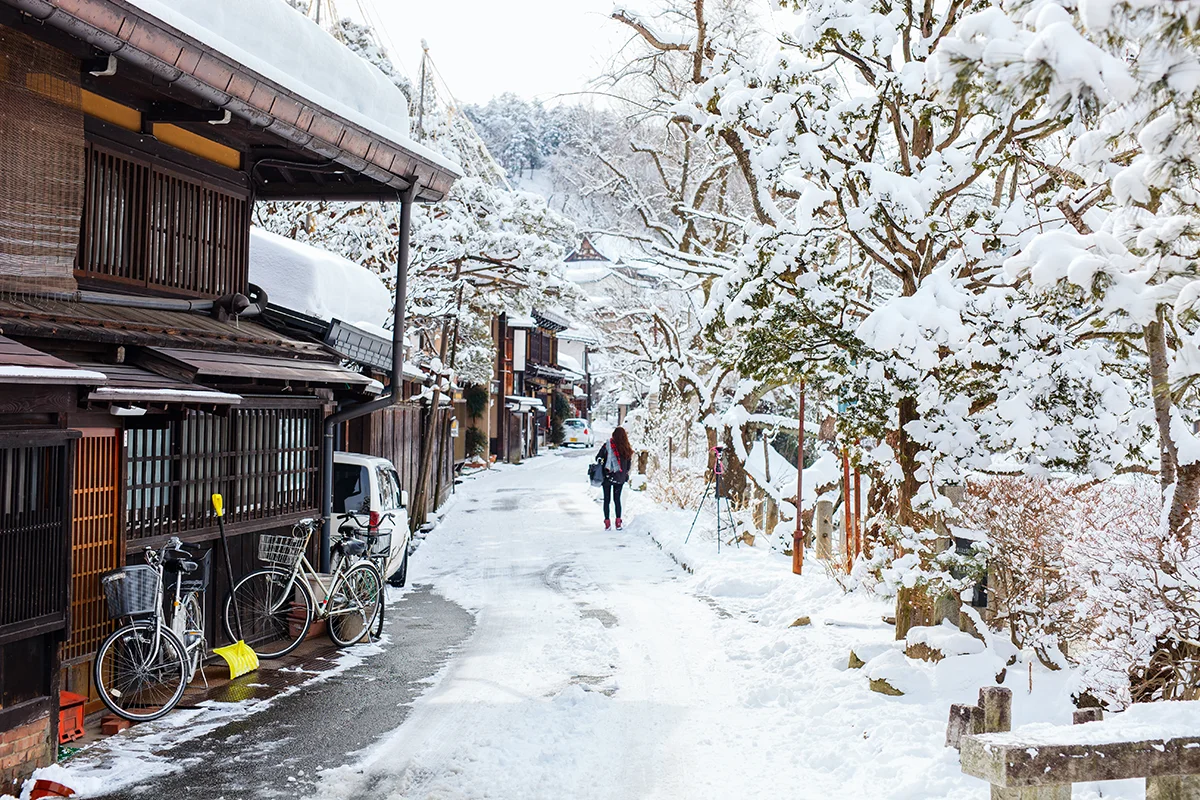
Early morning is the best time for photos, when the light is soft, the streets are at their most serene, and shop owners are sweeping snow off their stoops. As the sun rises higher, it angles down between the dark wooden buildings and catches the snow beautifully. Try to wrap up before 10 AM, when day-trip tour groups start arriving and the streets fill up until around 4 PM.
Stroll Along The Enako River
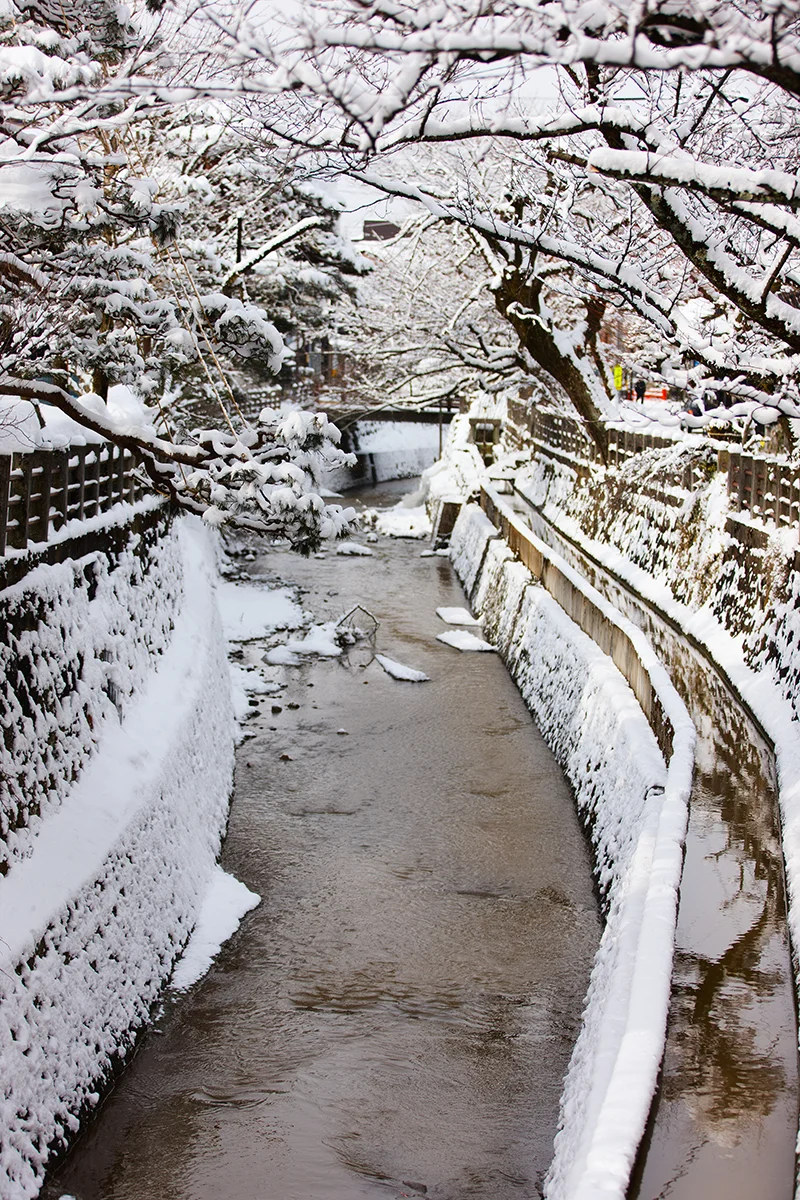
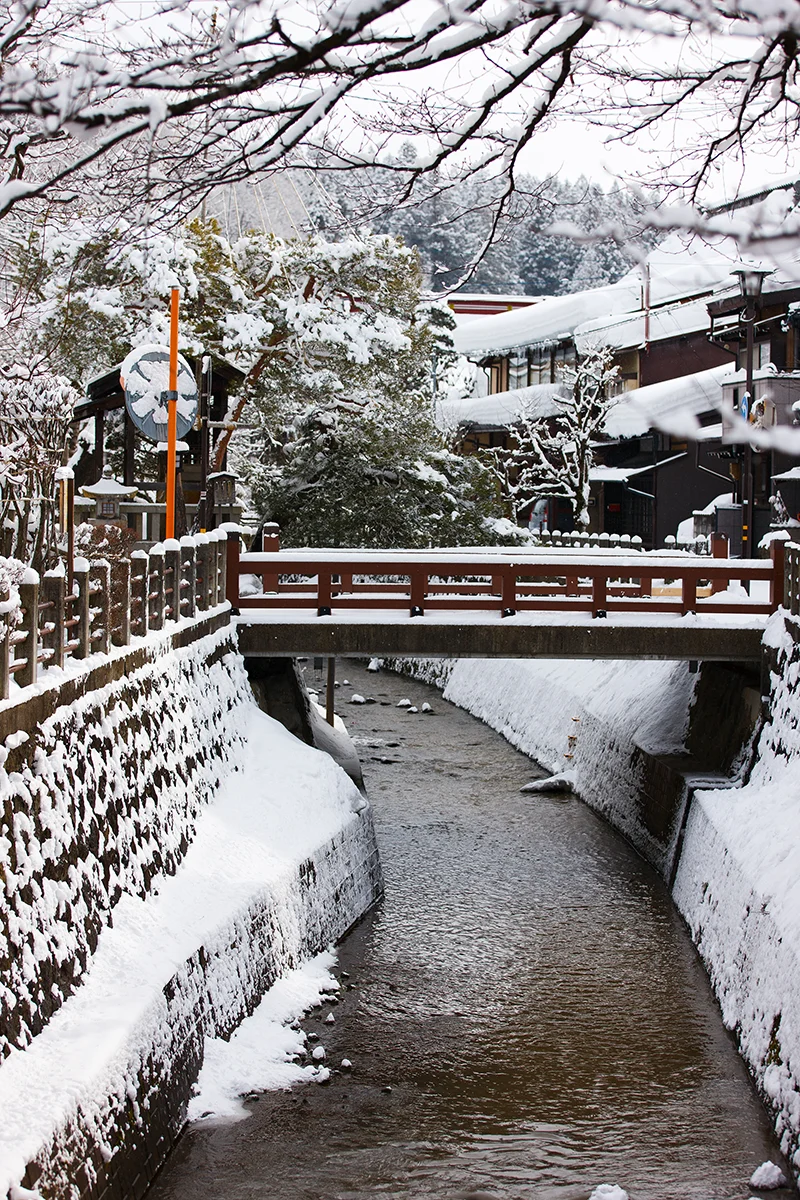
Just east of the Old Town, the Enako River is one of Takayama’s off-the-beaten-path corners, a narrow waterway that flows past white-walled storehouses. In spring it’s a famous cherry blossom spot, but winter might be its best season, with small bridges dusted white and mostly locals for company.

Cross The Nakabashi Bridge
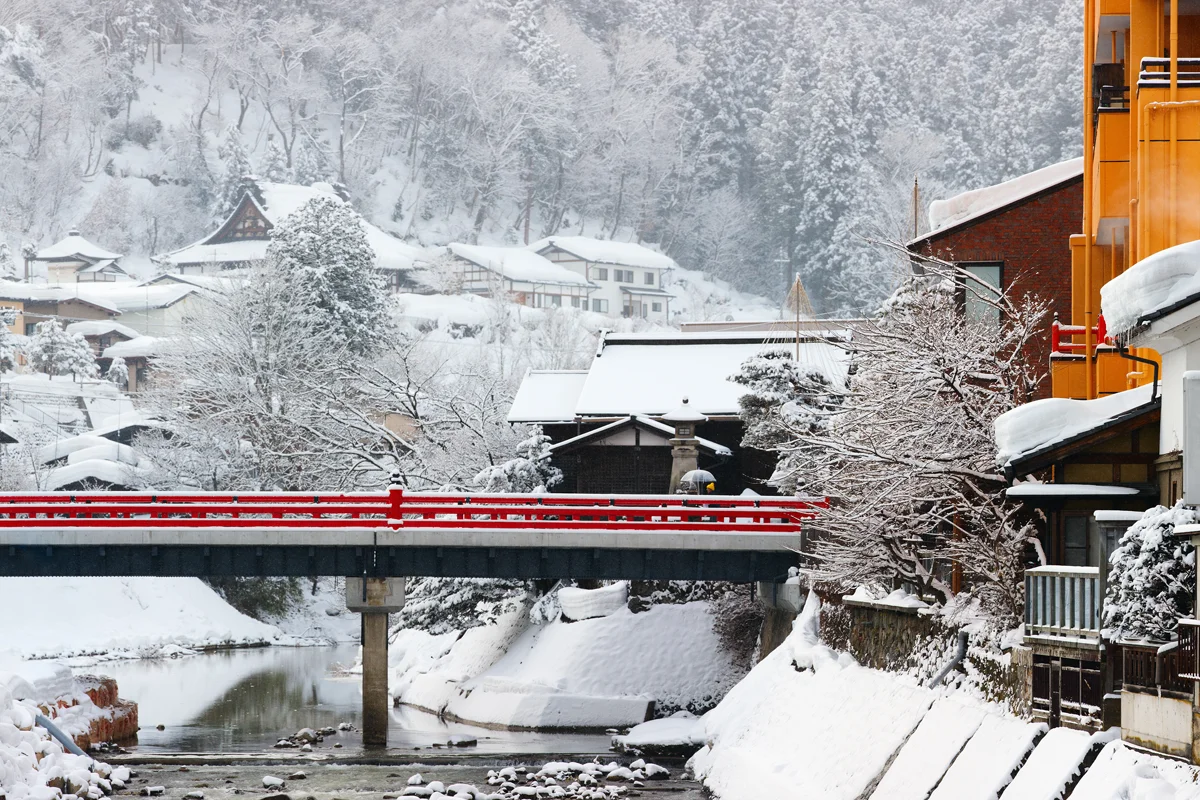
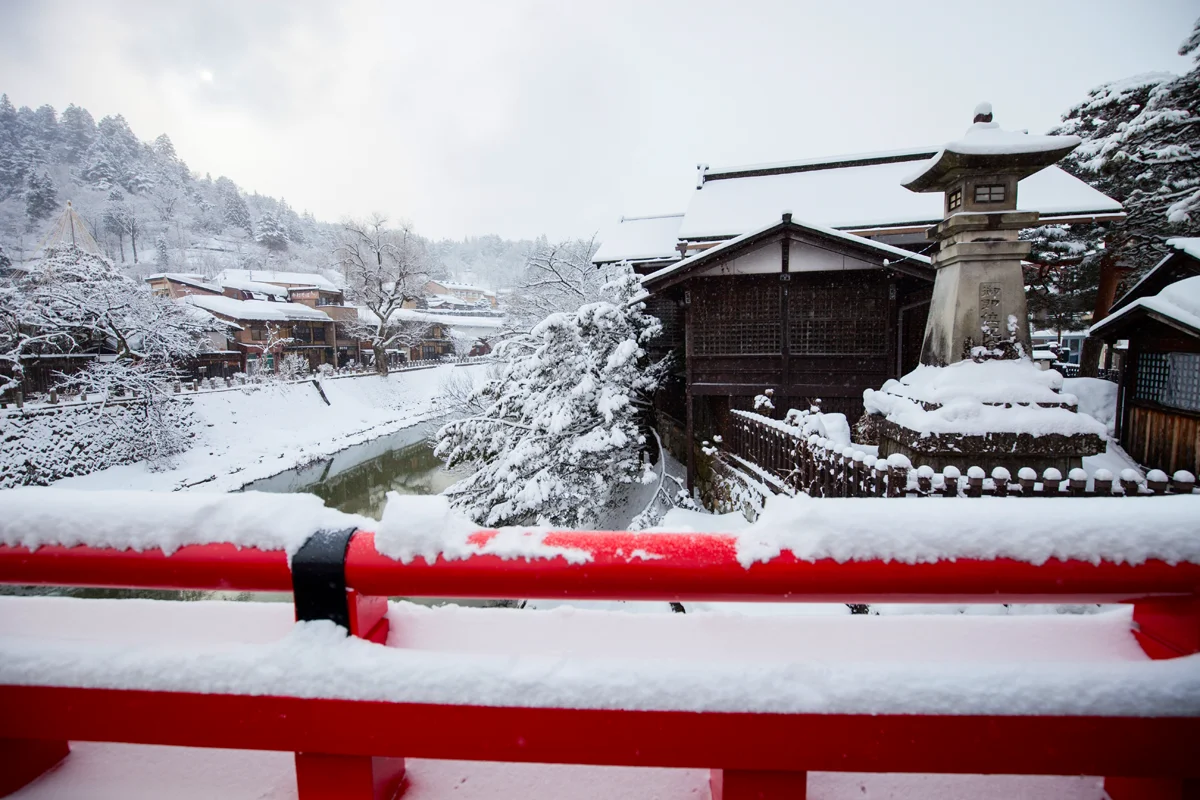
The red Nakabashi Bridge over the Miyagawa River is one of Takayama’s most photographed spots, with the old town behind it. It’s particularly atmospheric after dark, when the bridge is lit. Expect crowds during peak hours.
Try Local Hida Delicacies
Takayama’s food scene leans heavily on local Hida specialties, many of which are best sampled at the Miyagawa Morning Market📍, open daily along the riverbank from 8 AM to noon in winter. Look for:
- Hida beef nigiri, served on a rice cracker from the stall at Kotte Ushi📍 in the Old Town.
- Hida beef skewers, grilled over charcoal near the morning market.
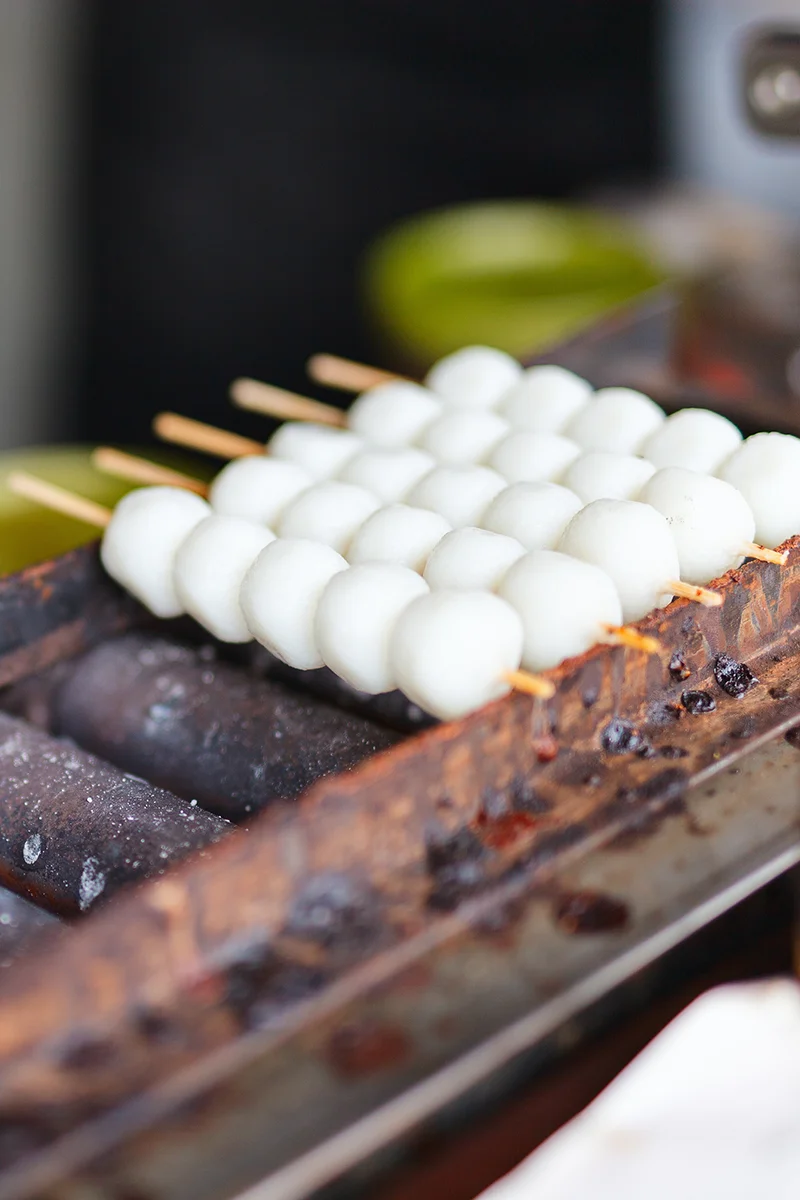
- Goheimochi, a grilled rice cake brushed with walnut miso sauce.
- Mitarashi dango, skewered rice dumplings glazed with soy.
- Hida apples, a crisp local variety sold at the morning market.
- Sake tastings at one of the old town breweries.
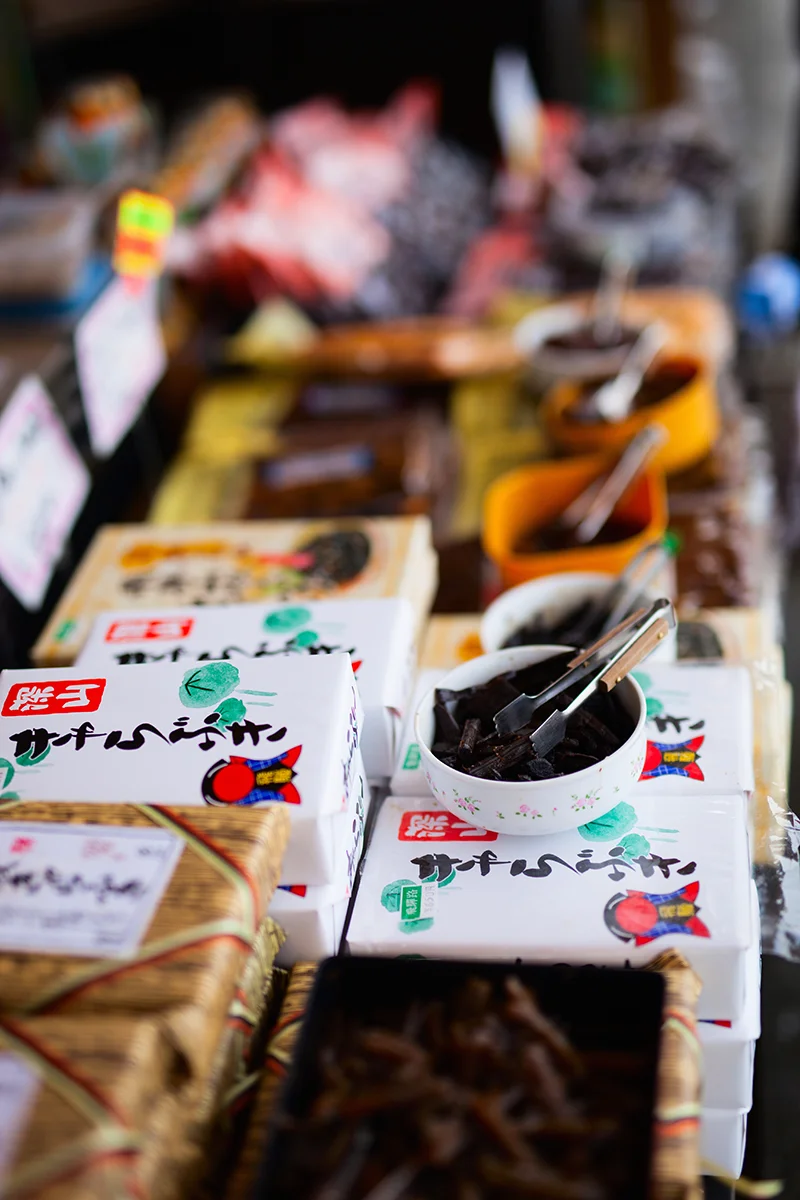
While you’re at the market, keep an eye out for the town’s small red sarubobo dolls, a traditional charm for good fortune.
Find Tranquility At Hie Shrine
A 20-minute walk from the Old Town, Hie Shrine📍 is one of Takayama’s most serene corners, home to what many consider the most beautiful torii gate in the city. The approach is lined with stone lanterns, and at the heart of the grounds stands a thousand-year-old cedar tree, its scale hard to process until you’re standing next to it. The shrine is also known as one of the inspirations behind the anime film “Your Name” (Kimi no Na wa), which adds a layer of meaning for fans, but the place earns a visit regardless.
Best Restaurants In Takayama
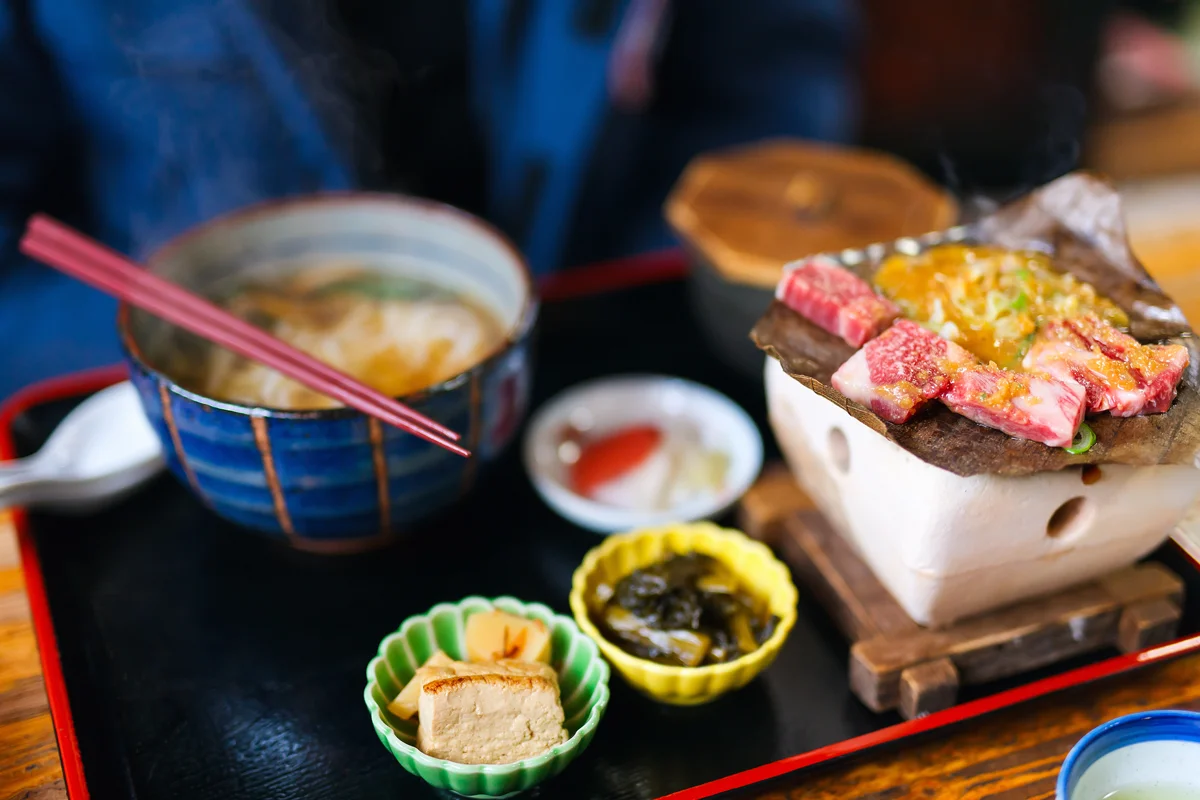
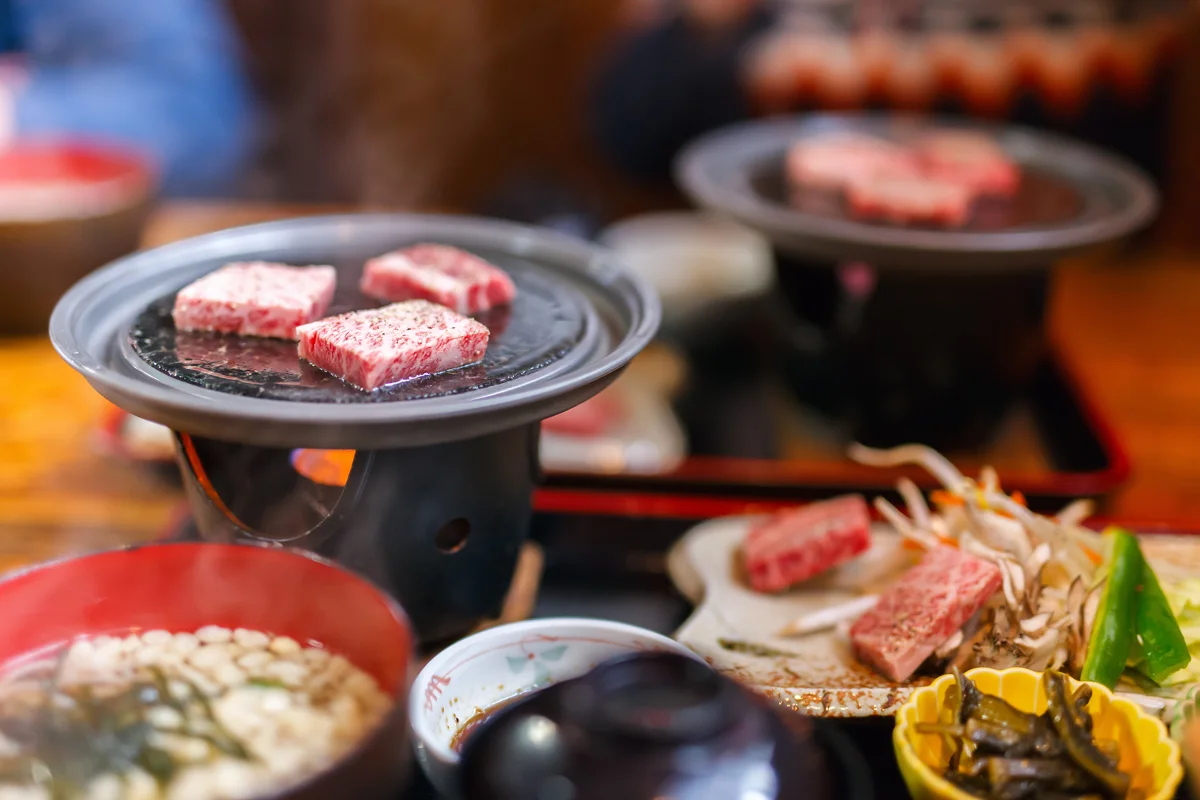
- Suzuya📍 is the place to try Hida beef hoba miso steak – Hida beef cooked on a magnolia leaf over a traditional charcoal stove at the table, brushed with miso and served with vegetables and mushrooms. Book ahead and come early, it fills up quickly in winter.
- MATSUKI-ushi📍 serves A5 Hida beef cuts prepared by the chef and served on a hot stone. The menu also includes a solid sushi and sashimi selection. A reliable alternative if Suzuya is fully booked.
- Teuchi Soba Ebisu📍 serves hand-cut soba in a traditional setting in the old town. A warming lunch after a cold morning walking the streets.
- Menya Shirakawa📍 is where to go for Takayama ramen, a simple soy broth with thin, curly noodles. It often has a line. If the queue is too long, Tsuzumi Soba📍 is nearby and a great alternative.
Shirakawa-go
The Shirakawa-go valley contains three villages. Ogimachi is the largest and the one most visitors come to see, sitting along the Shogawa River and ringed by wooded mountains.
How To Get To Shirakawa-go
Shirakawa-go is one of the best day trips you can do from Takayama. Buses run directly from Takayama Bus Terminal to Shirakawa-go in about 50 minutes, with frequent departures through the day. Some services are reservation-only, so check the current timetable and reserve ahead if required.
Best Things To Do In Shirakawa-go
Cross The Ogimachi Suspension Bridge
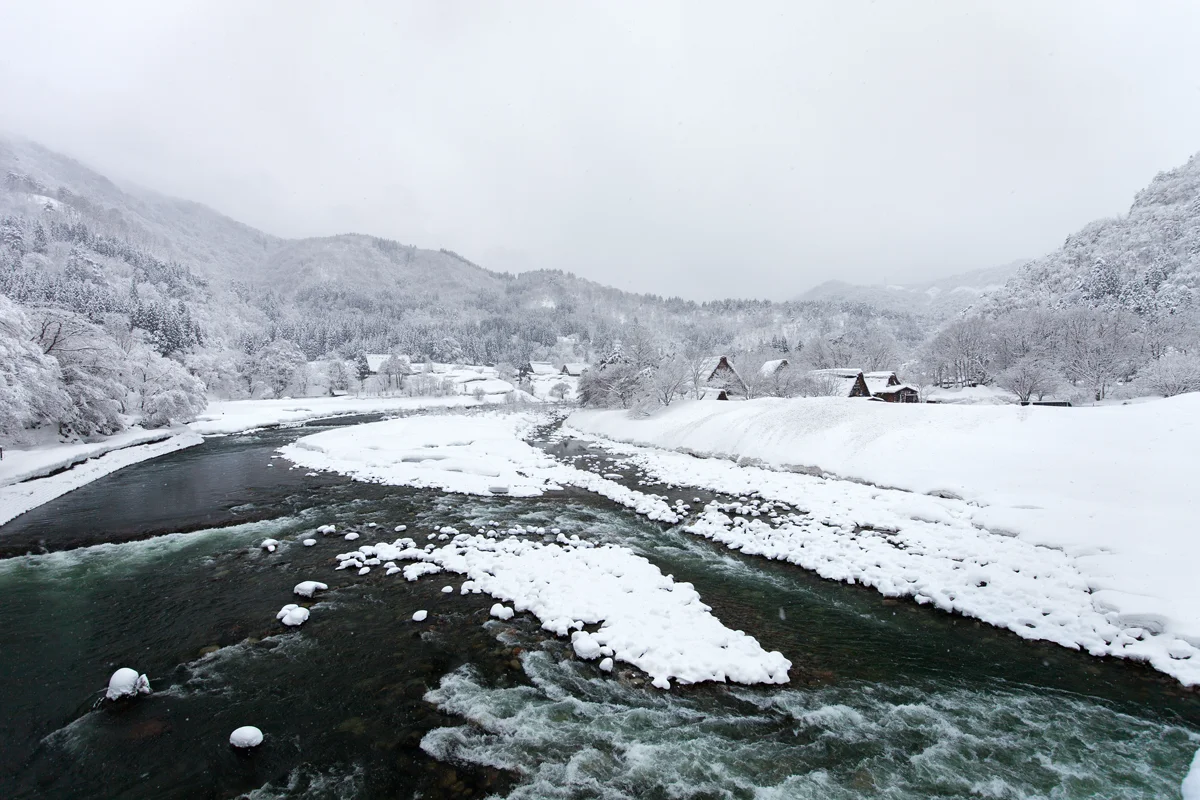
The Ogimachi Suspension Bridge, also known as Deai Bridge, is the main pedestrian access to the village. At 107 m (350 ft) long, it crosses the Shogawa River and offers the first real view of the thatched farmhouses rising from the snow. The reverse angle on the way out is just as good.

Walk Through Ogimachi Village
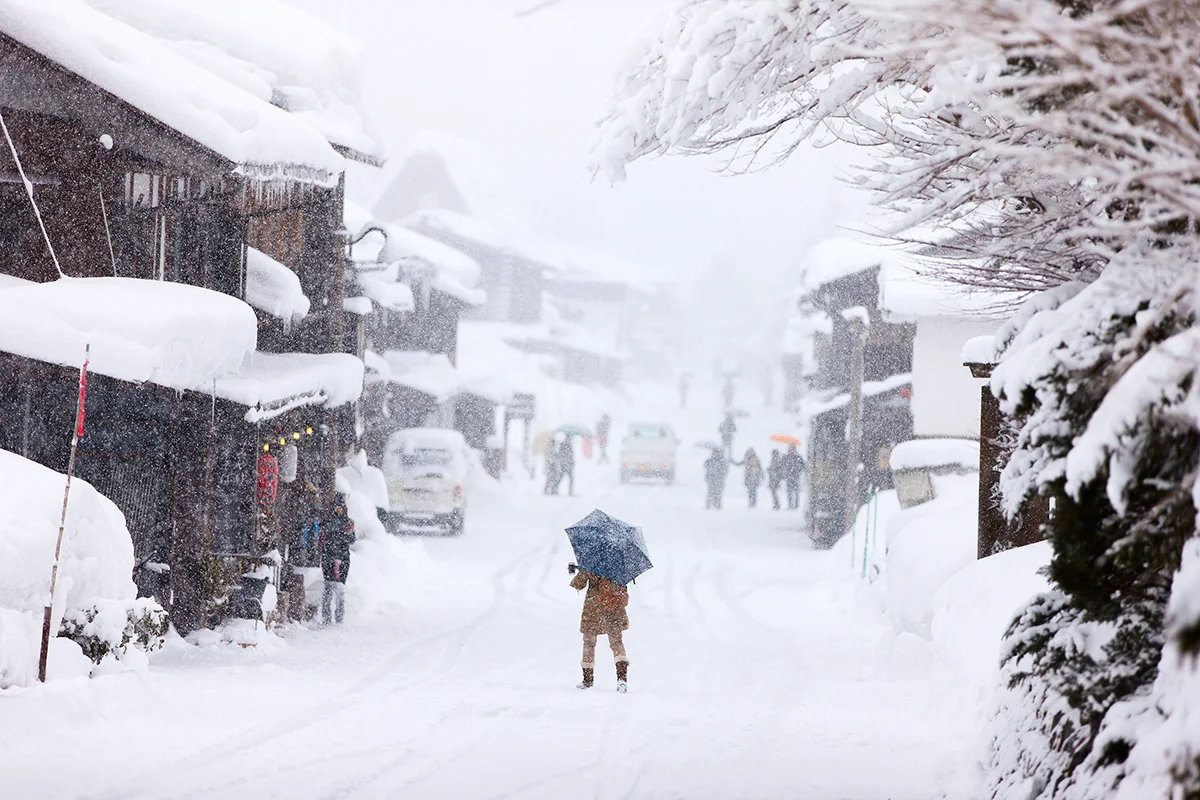
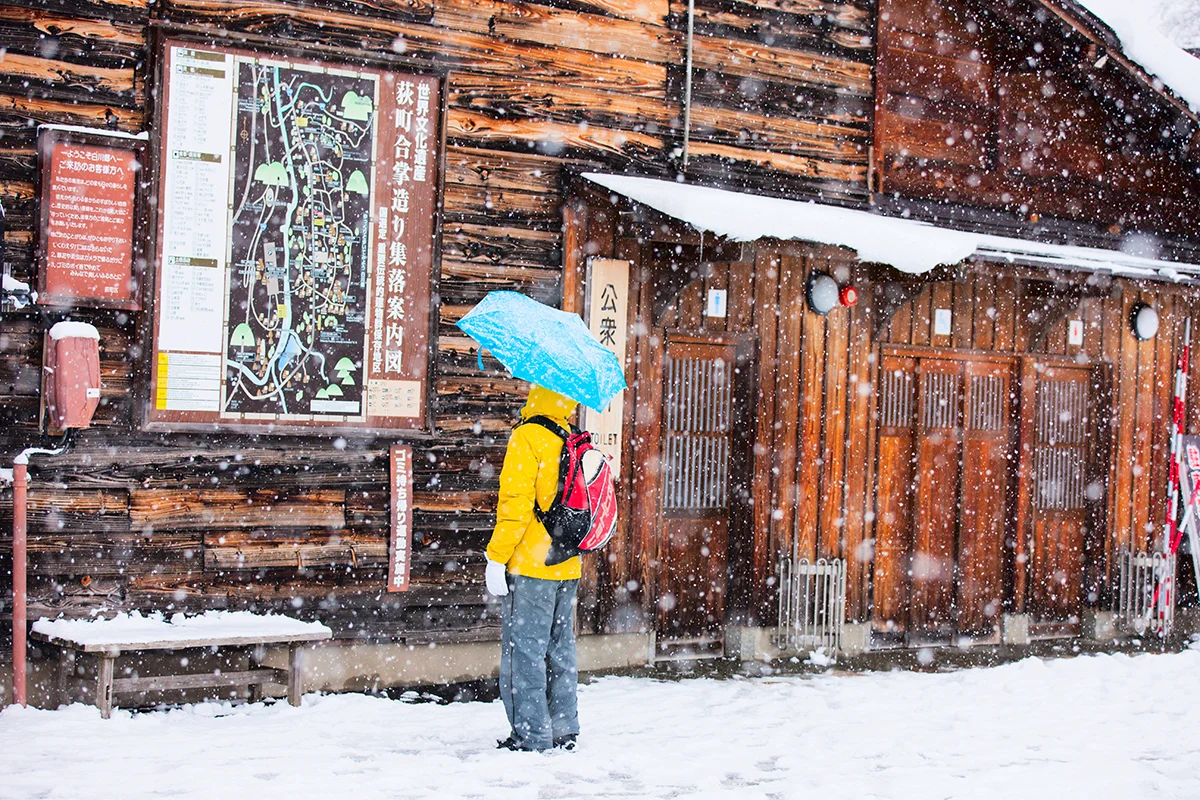
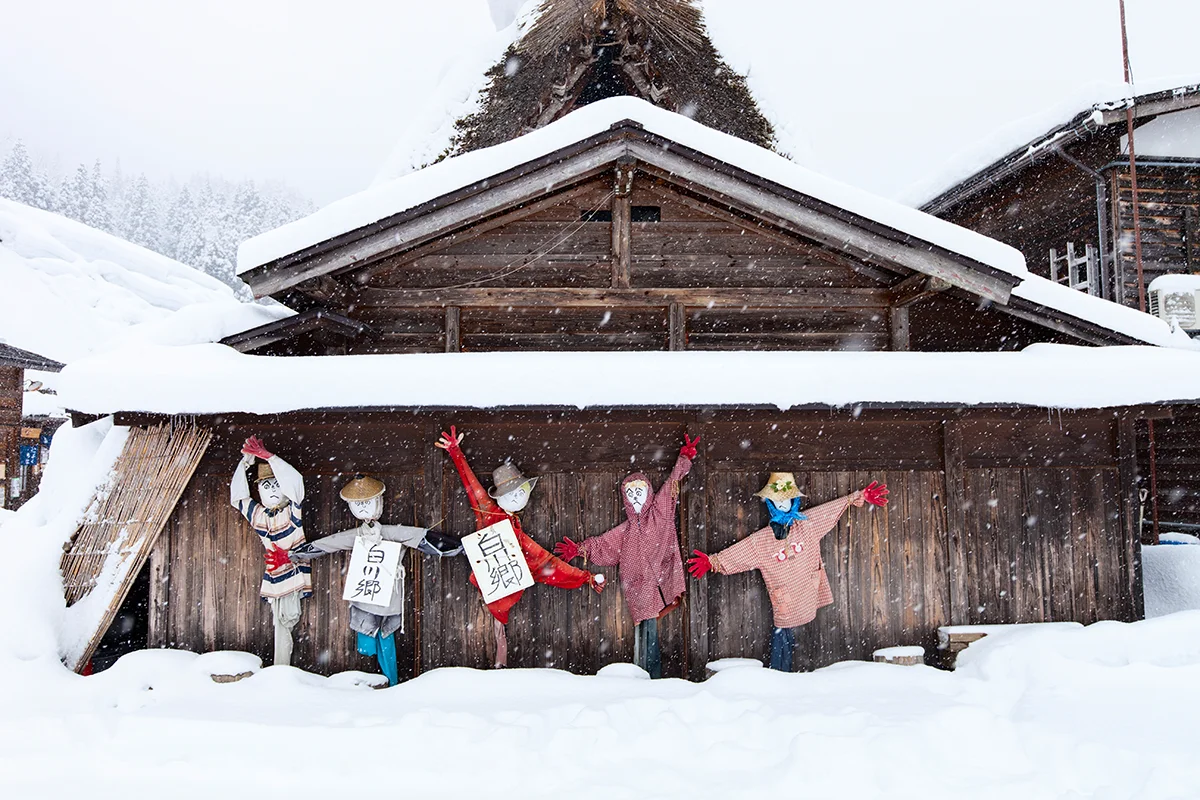
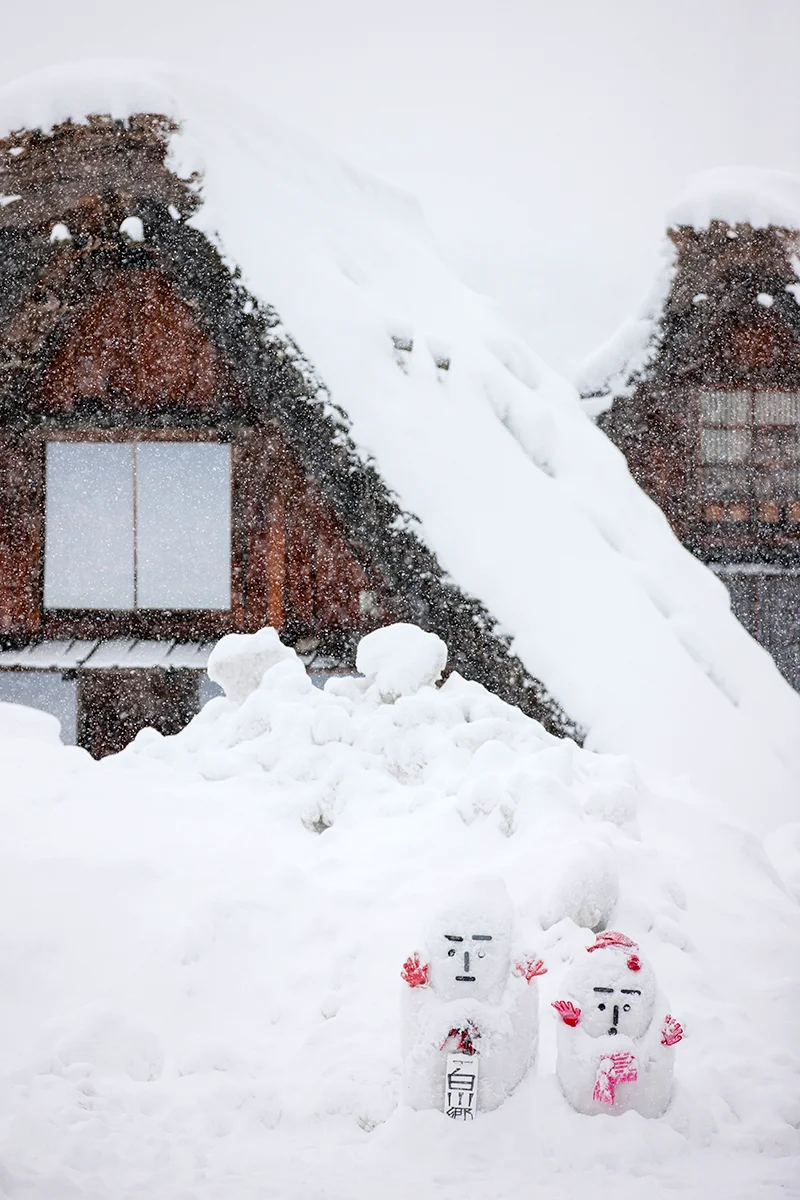
The main street of Ogimachi runs roughly north-south and can be walked end to end in twenty minutes, lined with souvenir shops, cafes, and food stands. Many of the buildings are still lived in, some standing for over 250 years. The more interesting paths branch off toward the smaller farmhouses at the edges of the village, where in winter you will see residents clearing snow off the roofs with long wooden rakes, and snowdrifts piled well above the ground-floor windows.
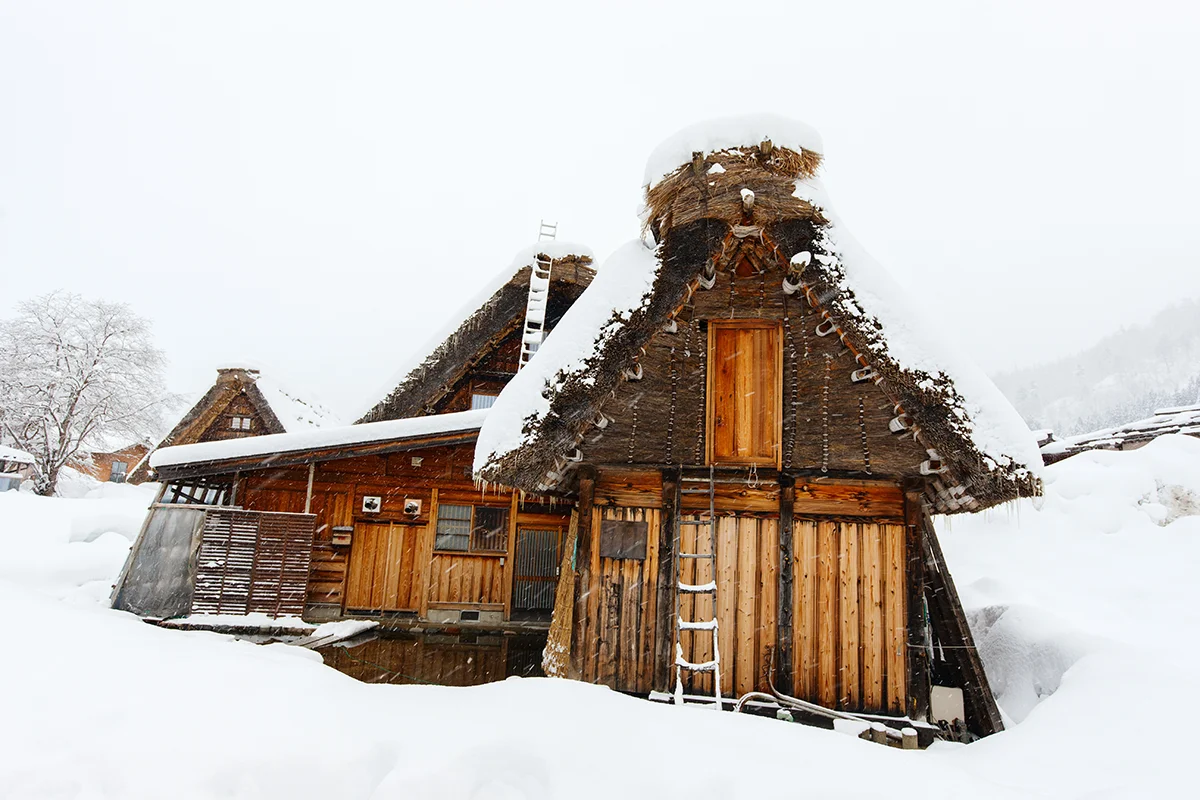
A few stops worth stepping into as you walk:
- Wada House, the largest gassho-zukuri house in Ogimachi and still owned by the Wada family. The smoke-blackened beams overhead come from centuries of the open-hearth irori fire below, and the upper floors show how silk production once supported the village.
- Kanda House and Nagase House, two smaller farmhouses nearby that give you a different angle on village life.
- Myozenji Museum, the village’s working Buddhist temple, with a gassho-style main hall and a bell tower under its own separately thatched roof.
Visit The Open-Air Museum
Across the Shogawa River sits the Shirakawa-go Gassho-zukuri Minkaen open-air museum, with the postcard view of the valley and thatched farmhouses against the wooded mountainside. Around 25 gassho-zukuri houses have been moved here from other villages in the valley, and most are open for you to step inside. With irori hearths lit through the winter, the museum is one of the few places where one can feel a gassho under deep snow.

Take In The View From Shiroyama
The Shiroyama Viewpoint gives you the classic view of Ogimachi, the village below with farmhouses clustered along the river and snow-covered peaks in the distance. In winter, the walking path up is closed, so the only way to reach the viewpoint is the paid shuttle bus, which runs every 20 minutes from in front of Wada House.
Experience The Winter Light-Up
On a handful of scheduled evenings in January and February, the farmhouses are illuminated against the snow, one of the most striking winter scenes in Japan. Tickets are required and sell out months in advance. The exact dates change each year, so check the official announcements page for the current schedule and booking.
Best Restaurants In Shirakawa-go
Lunch options in Shirakawa-go are limited and fill up between noon and 1:30 PM, so it’s worth being flexible with timing.
- Hakusuien📍 on the main street serves Japanese cuisine in a traditional gassho-zukuri style house. Try the Hida beef set, grilled at the table on a magnolia leaf over a small Hida stove, with a side of soba.
- Irori📍 is a good alternative to Hakusuien, with a similar menu and setup.
- Bunsuke📍 specializes in fresh grilled river fish, including iwana (white-spotted char), amago salmon, and nijimasu trout, served alongside mountain vegetables in a gassho-zukuri building.
For a quick snack, look for goheimochi (grilled rice cake with walnut miso), mochi grilled to order outside Myozenji, and Hida beef skewers at the small stalls along the main street.
Sample 2-Night Itinerary
- Day 1: Arrive at Takayama, wander the Old Town.
- Day 2: Day trip to Shirakawa-go.
- Day 3: Takayama morning market, Enako River, and anything you missed on Day 1. Then onward to your next destination.