Tiger’s Nest Hike In Bhutan: The Complete Guide

Some journeys are beautiful, and then there are the ones that stay with you. The Tiger’s Nest hike in Bhutan falls firmly into the second category. Paro Taktsang, a monastery that appears to grow straight out of a sheer cliff face, is unlike anything else we’ve seen in years of travel. The path follows the same route pilgrims have walked for centuries – through pine forest with prayer flags, steep enough to make you stop and breathe, beautiful enough that you don’t mind. And by the time you arrive, the walk has already earned its place in your memory.
This guide covers everything you need to know: the trail in detail, the best viewpoints, what to expect inside the monastery, practical tips, and a quieter side trip for those who want to go further.
At A Glance
Tiger’s Nest Stories And Legends
Tiger’s Nest Monastery 📍, also known as Paro Taktsang, sits perched on the edge of a cliff in the Paro Valley at 3,120 m (10,240 ft) above sea level. Its name traces back to the 8th-century saint Guru Rinpoche – the figure credited with bringing Buddhism to Bhutan – who, according to legend, flew from Tibet on the back of a mystical tigress and landed on this very cliff. He then meditated in a nearby cave for 3 years, 3 months, 3 weeks, 3 days, and 3 hours to subdue the local demons.
The monastery itself was built around that cave in the late 17th century, and the energy here is something many visitors say they can feel, even before knowing the full story.

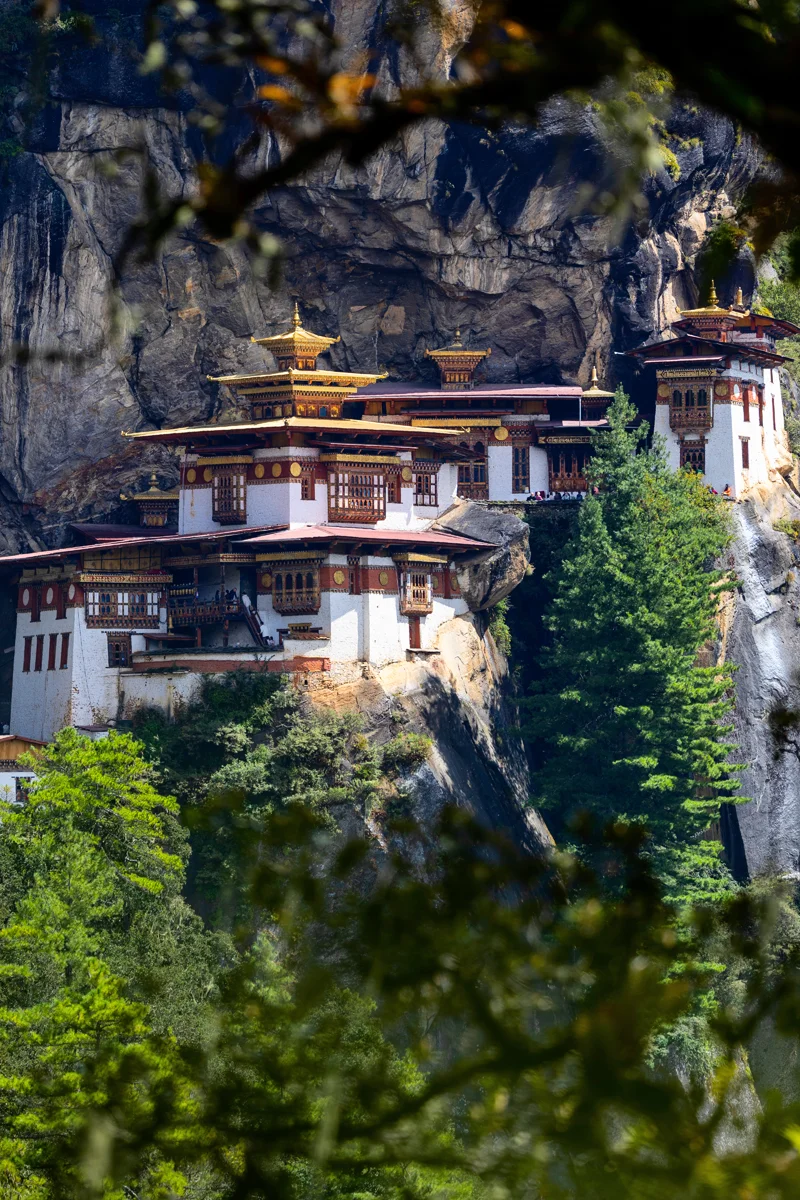
In 1998, a severe fire gutted much of the structure, destroying artifacts and claiming the life of a monk. What made the story remarkable – and what pilgrims still speak of – is that a statue of Guru Rinpoche survived the intense heat completely intact. The monastery was meticulously restored over the following years and reopened in 2005, looking much as it did before the fire.
The Tiger’s Nest Hike
Hike Overview
The trail can be divided into three logical sections: a steep climb through pine forest to the Taktsang Cafeteria, a bit gentler stretch to the main viewpoint, and a final demanding descent and ascent on stone steps to the monastery entrance. The full round-trip can take anywhere from 4 to 8 hours, depending on your pace – and pace is the right word here. This isn’t a race, and the monastery will be there whenever you arrive. Take your time, stop when you need to catch your breath, and let the walk be part of the experience.


On average, including a visit inside the monastery, stops for photos, and a break at the cafeteria, plan on 5 to 7 hours.
Save now, enjoy later
Too busy right now? Save this gem to Pinterest for later.
Aim to start between 6:00 and 7:00 AM. You’ll get ahead of the crowds that build up from mid-morning, avoid the strongest midday heat, and reach the monastery during its quieter hours.
Section 1: Base To Cafeteria
The hike begins at a dedicated parking area 📍 at around 2,600 m (8,530 ft). There are basic restroom facilities here, though the cleanest ones on the trail are at the cafeteria further up. Additional basic facilities are available at the monastery and along the path in the forest. Worth bringing your own toilet paper regardless.
Wooden hiking sticks are available to rent at the base. On steep, uneven terrain, they genuinely earn their keep, particularly on the descent.
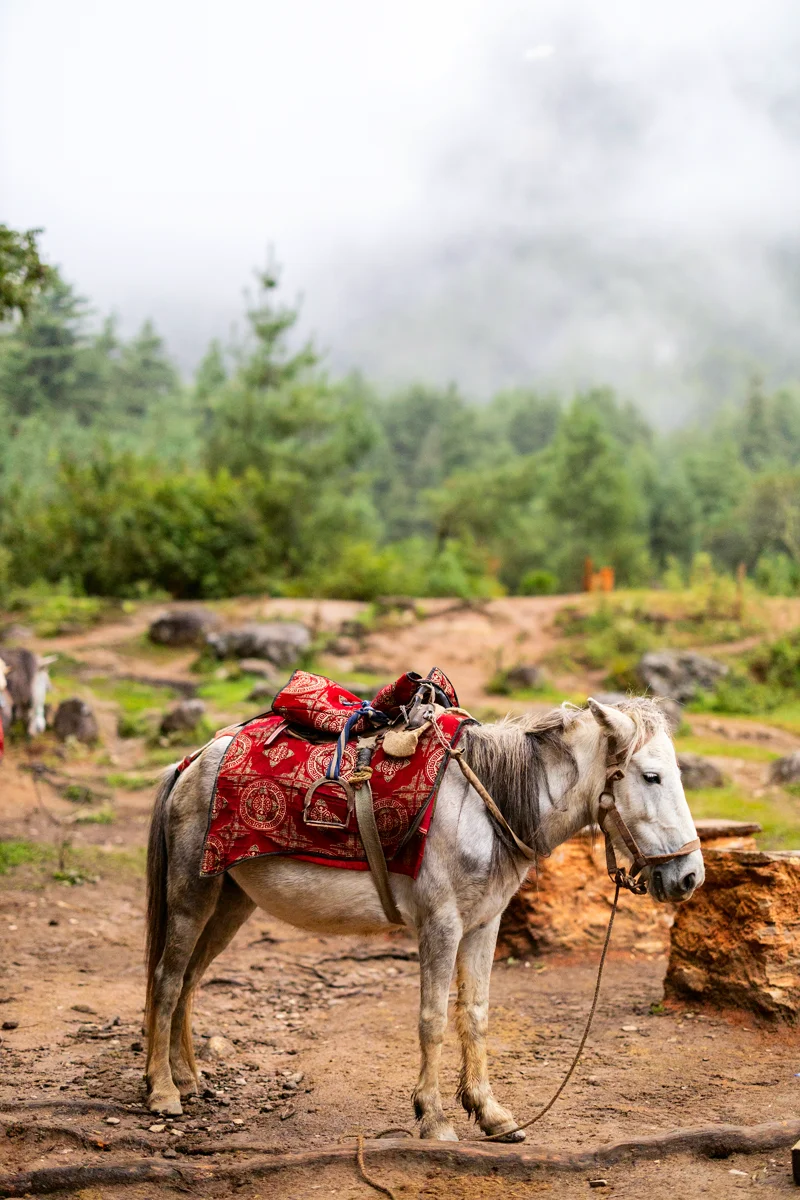
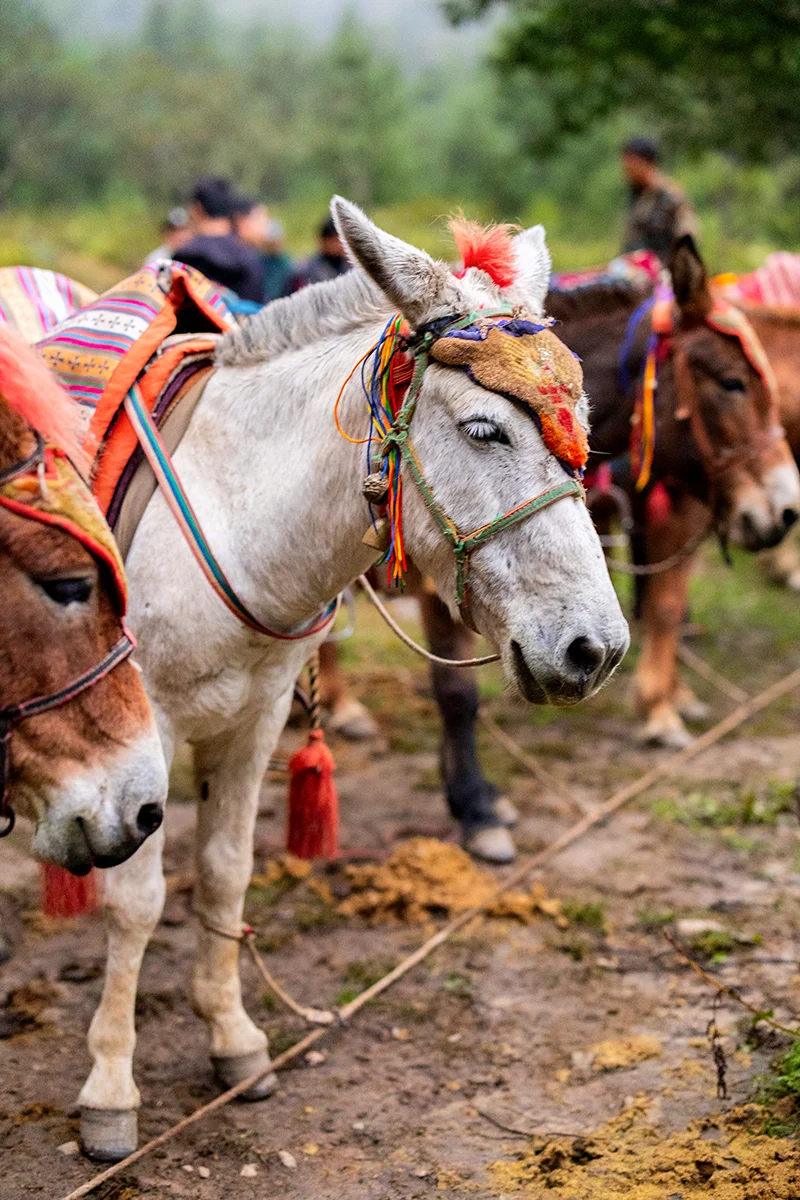
Horses are also available for hire and can take you as far as the large prayer wheel near the cafeteria 📍. They are owned and managed by local families for whom this is an important source of income, and most take good care of their animals. That said, there have been concerns raised about the welfare of some horses on this route. If you’d like to ride, ask your guide to recommend a family known for looking after their animals well – it’s a straightforward way to support local livelihoods responsibly.
Many locals believe that walking the entire way builds spiritual merit, cleanses negative karma, and demonstrates sincere devotion.
The trail climbs steeply through pine forest on a mix of dirt tracks and rocky paths, gaining significant elevation in a relatively short distance. This section takes from 1 to 2 hours. If you encounter a horse on the trail, always step to the uphill side to let it pass – being on the wrong side could be dangerous.
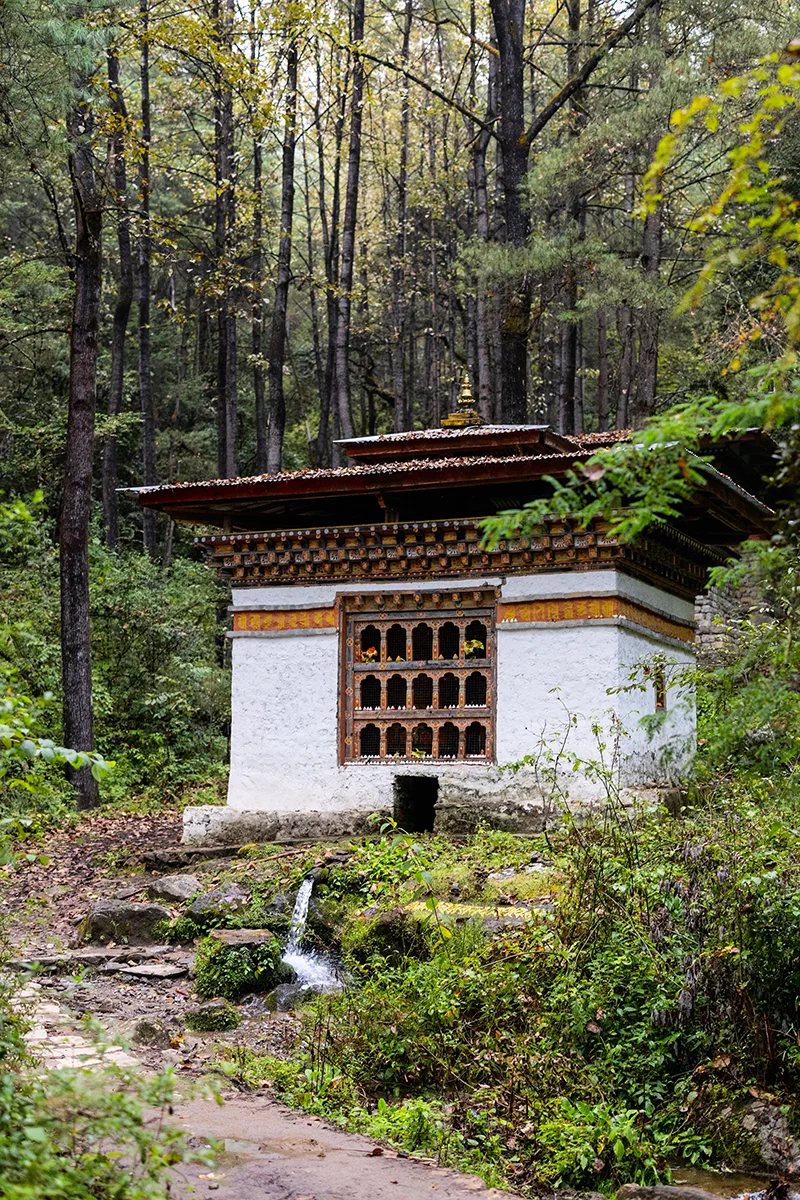

Along the way, keep an eye out for prayer wheels set alongside the trail – there’s a notable water-powered one near the start, and a large wheel at the halfway rest point. Spinning them is believed to carry the same meritorious effect as orally reciting the prayers inscribed on them.
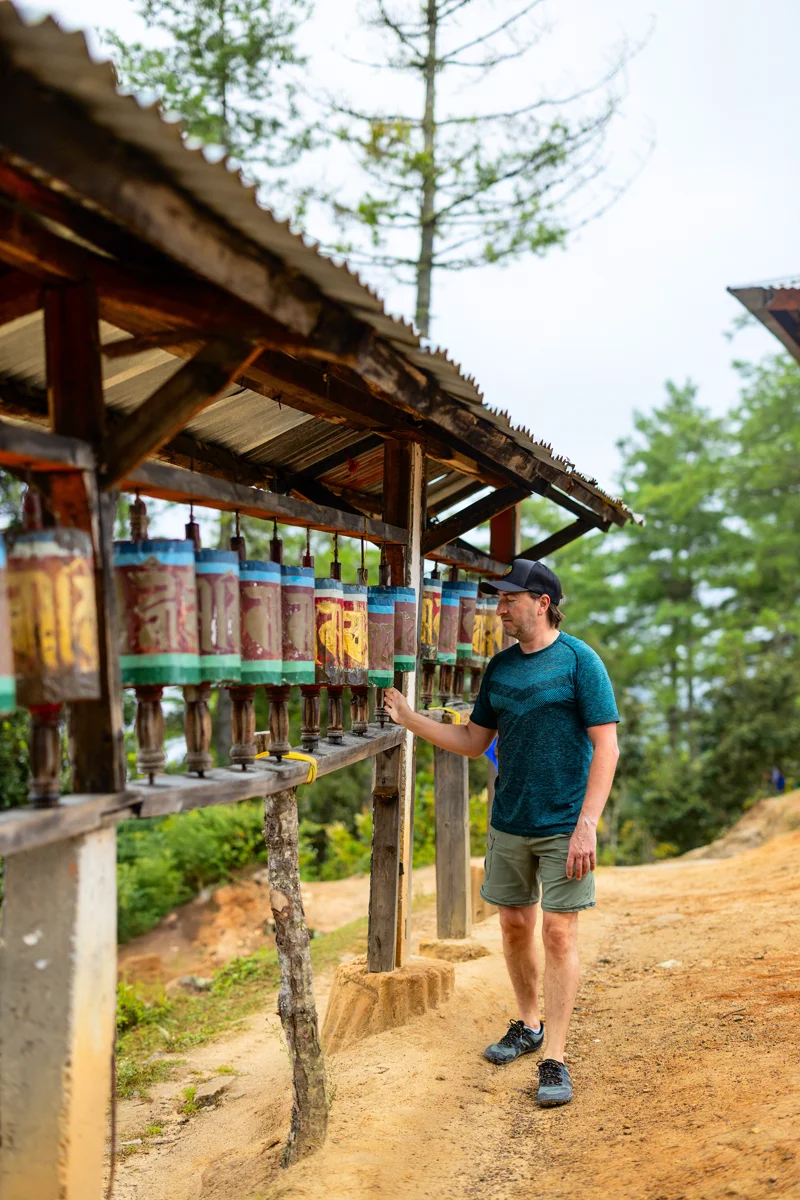

The trail levels out at the Taktsang Cafeteria 📍 at around 2,900 m (approx. 9,500 ft), where you’ll get a clear view of the monastery across the valley. Some visitors choose to stop here altogether and just enjoy the view with a cup of coffee. The cafeteria is the only place to get food along the trail.


Section 2: Cafeteria To Viewpoint
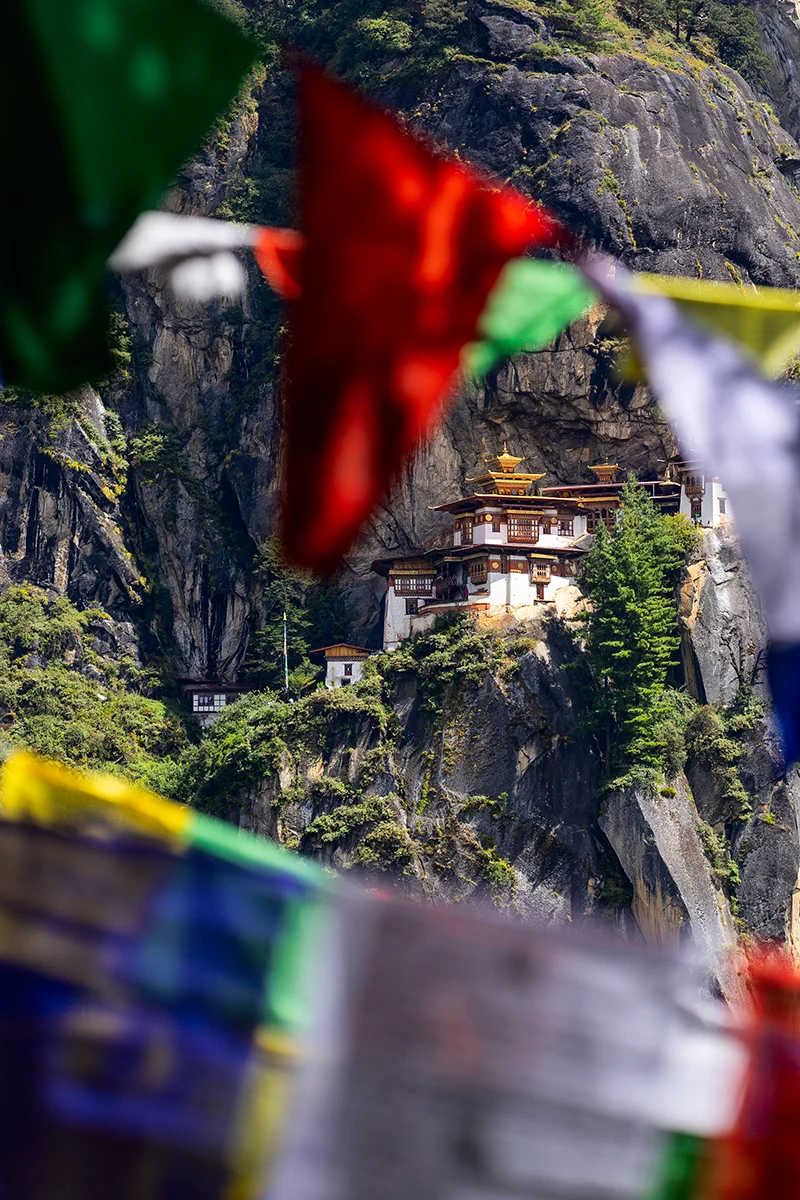
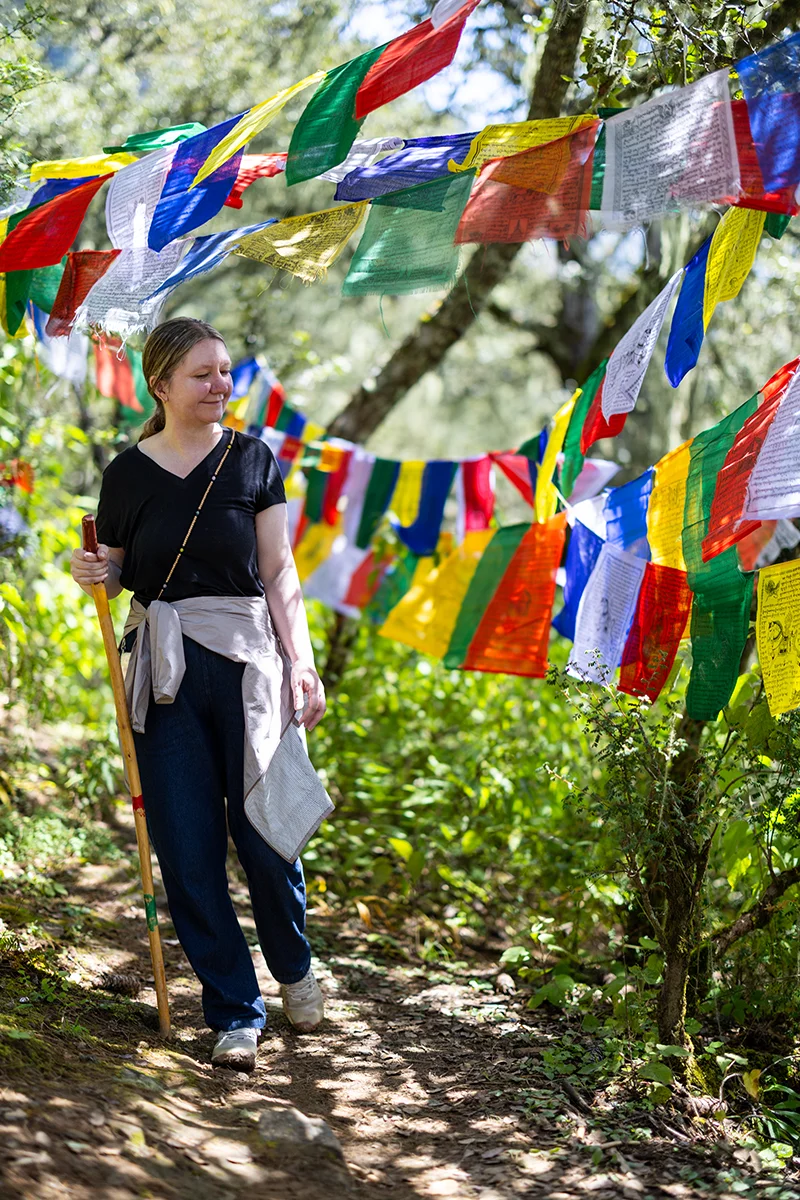
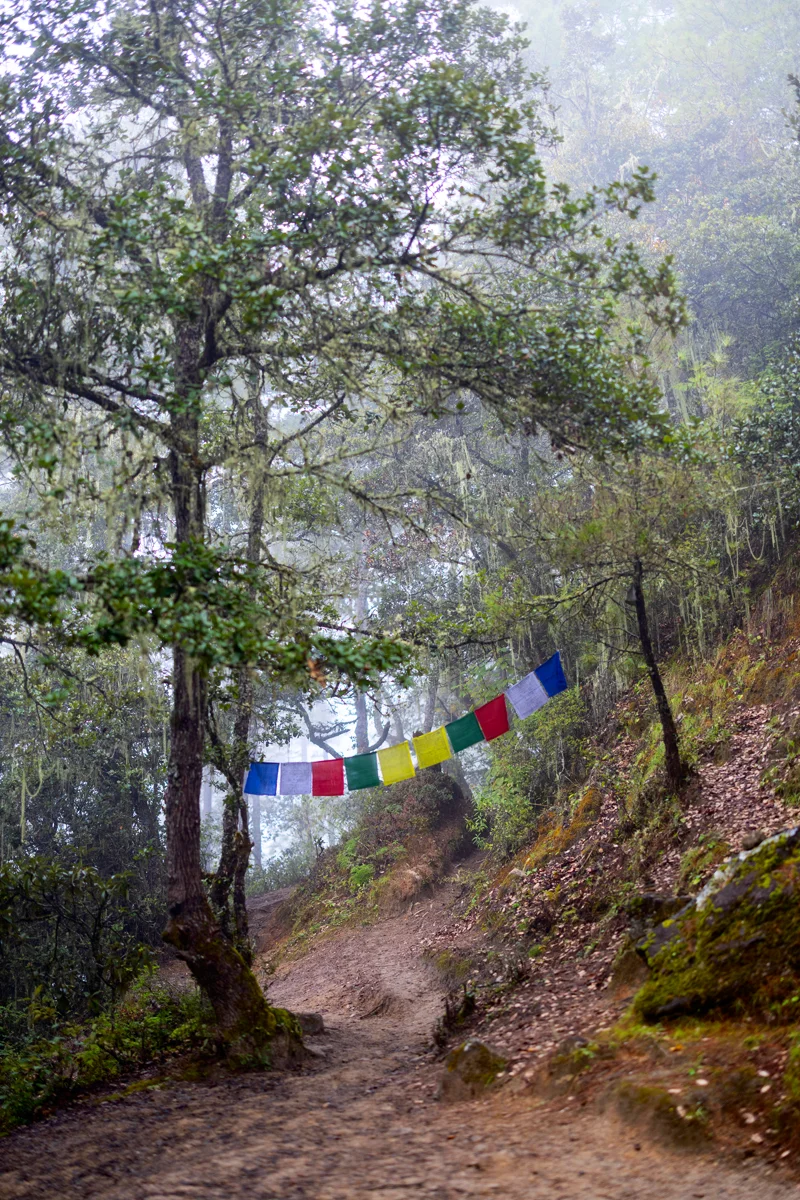
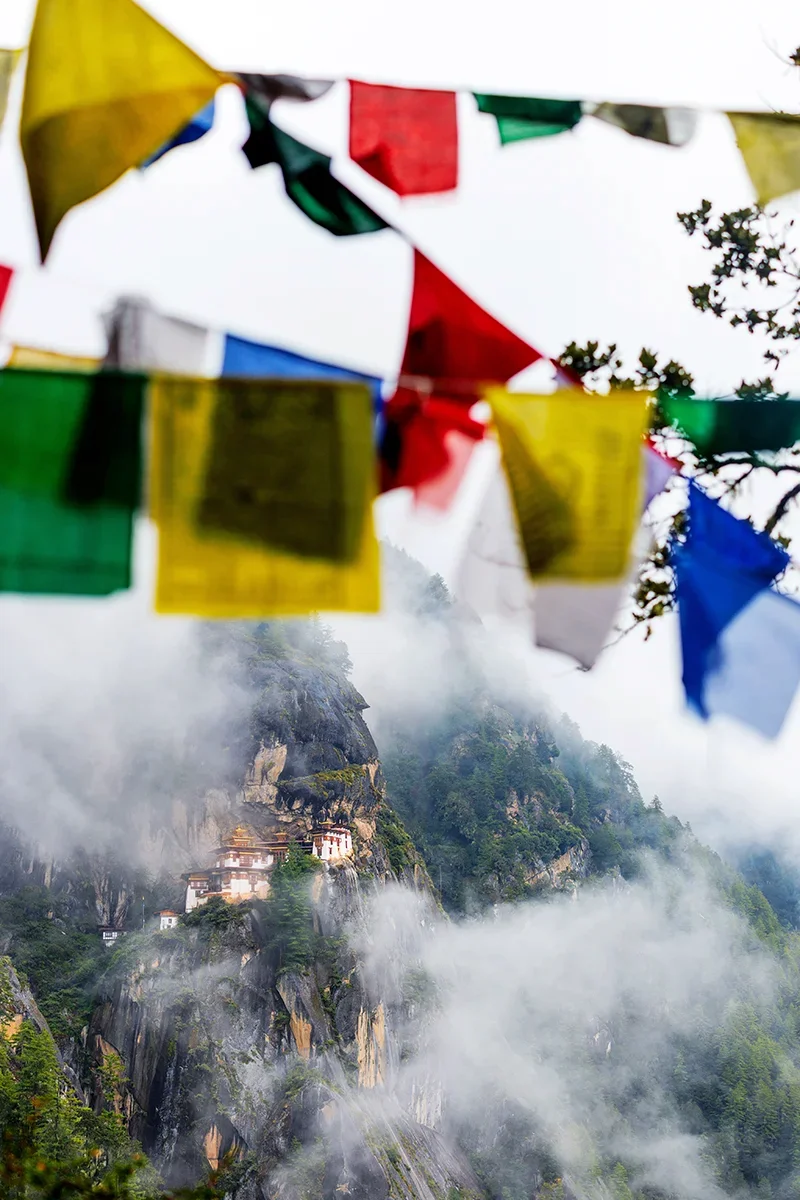
The path continues steadily upward through a scenic blue pine forest strung with prayer flags. There are several spots along the way where the monastery comes into view through the trees.


One spot we particularly liked 📍 is just slightly off the main path, with prayer flags framing a direct view of the monastery. It’s easy to miss, so look for the small side trail.


Along the path, tucked into the crevices of rocks, you’ll notice miniature conical clay figurines called Tsa-Tsas. They are created to generate merit, serve as offerings to deities, or house the ashes of loved ones to help liberate their souls.


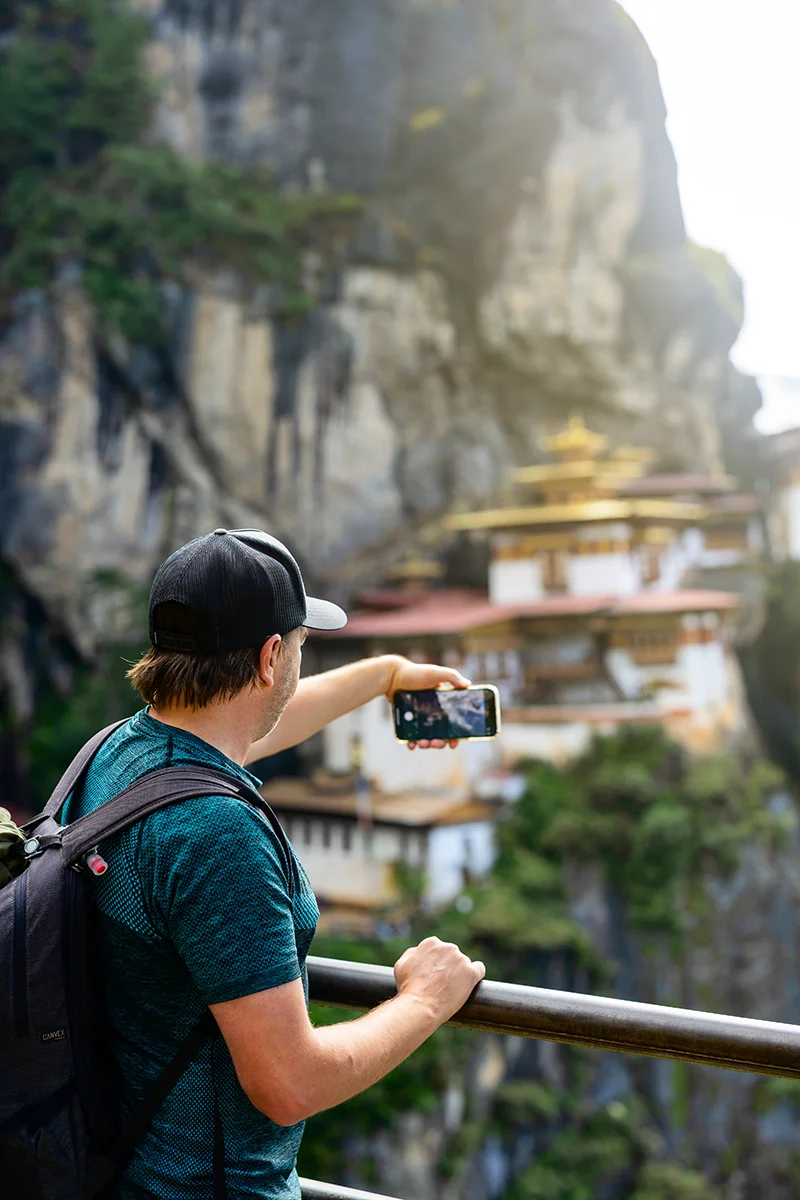
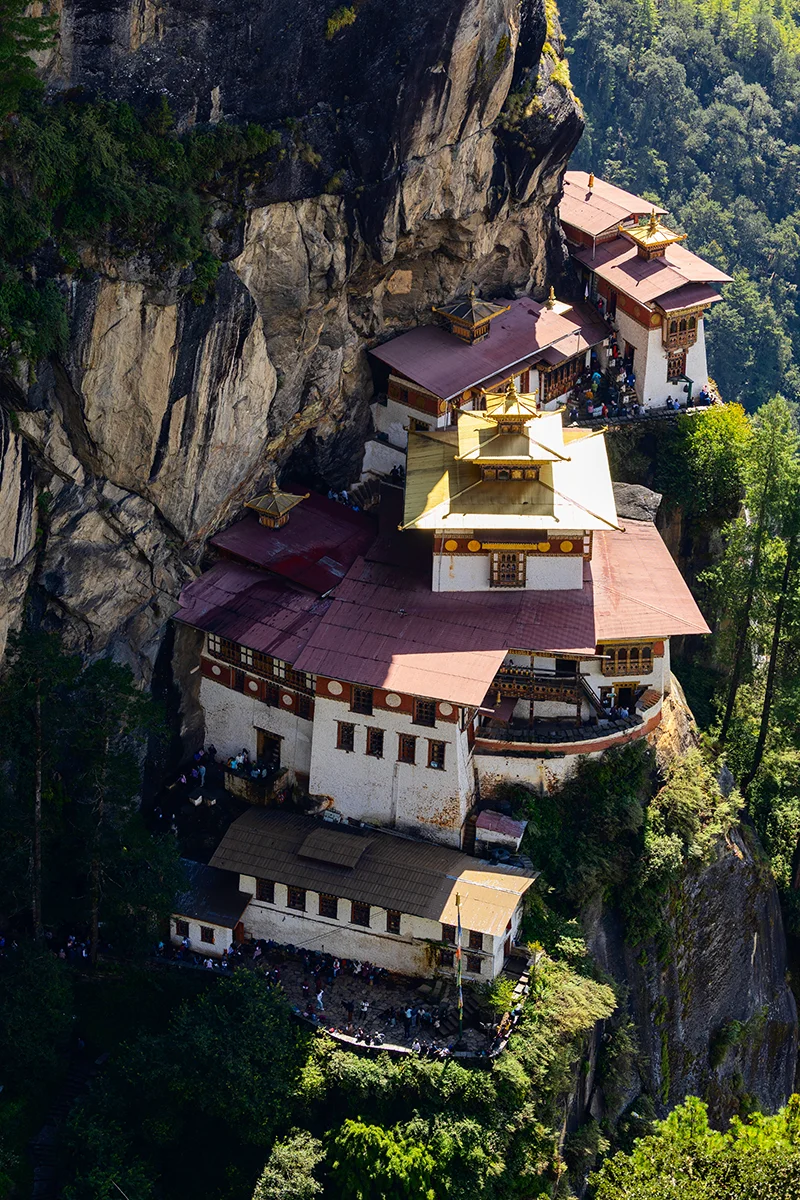
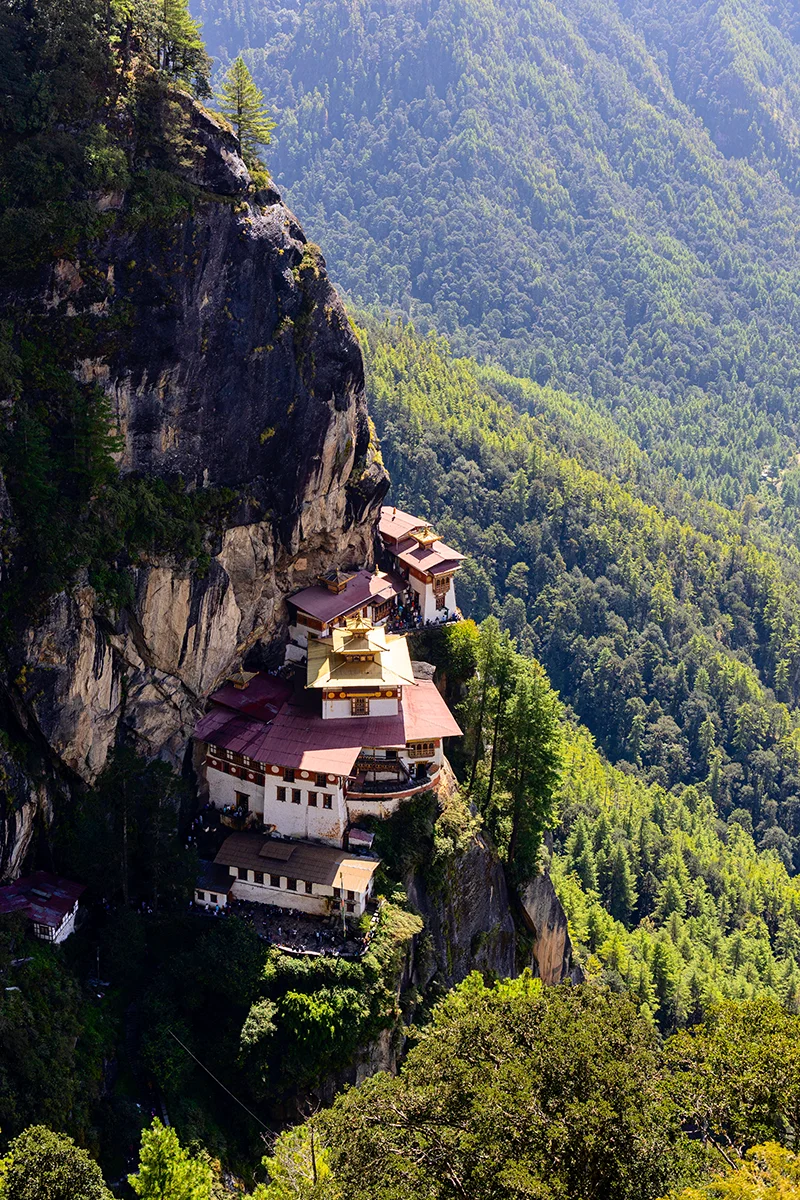
The path leads to the Paro Taktsang viewpoint 📍, which has two levels. From both, you get an unobstructed view of the entire monastery complex perched dramatically on a cliff, as well as sweeping views across the Paro Valley. It’s the best vantage point on the hike and a natural stopping point before the final stretch.
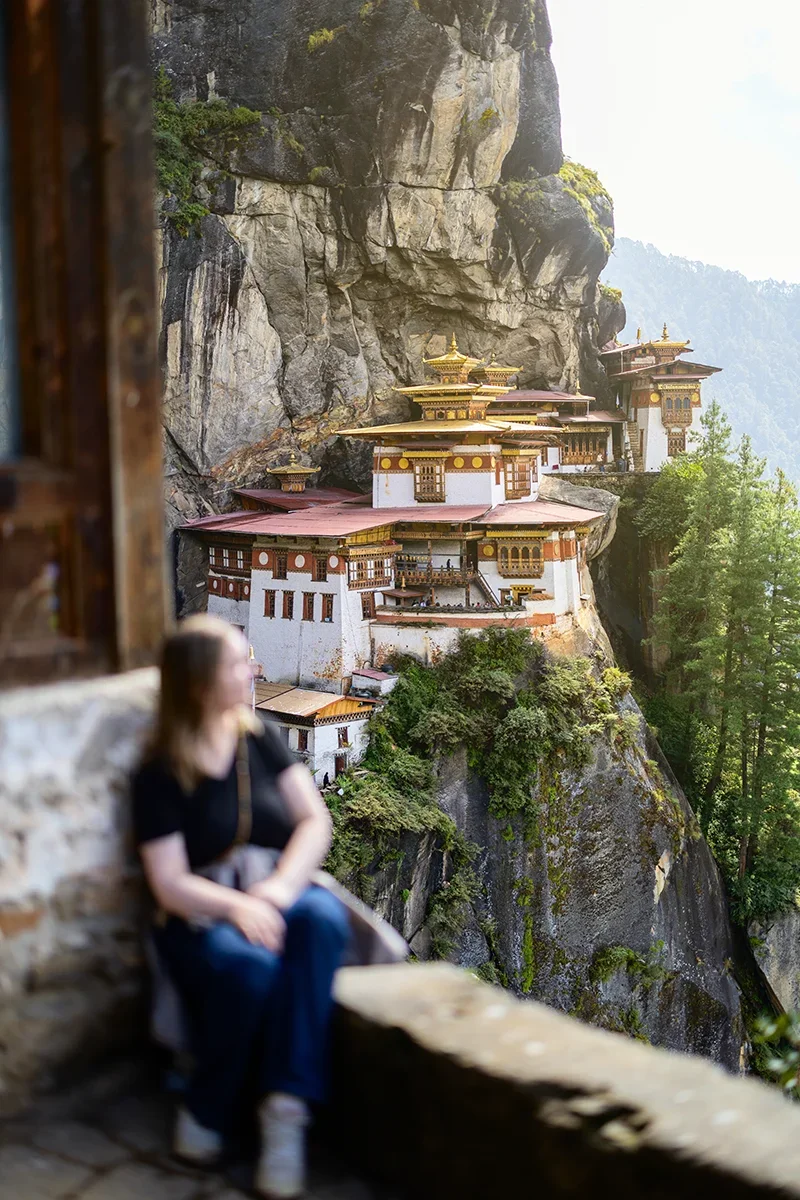
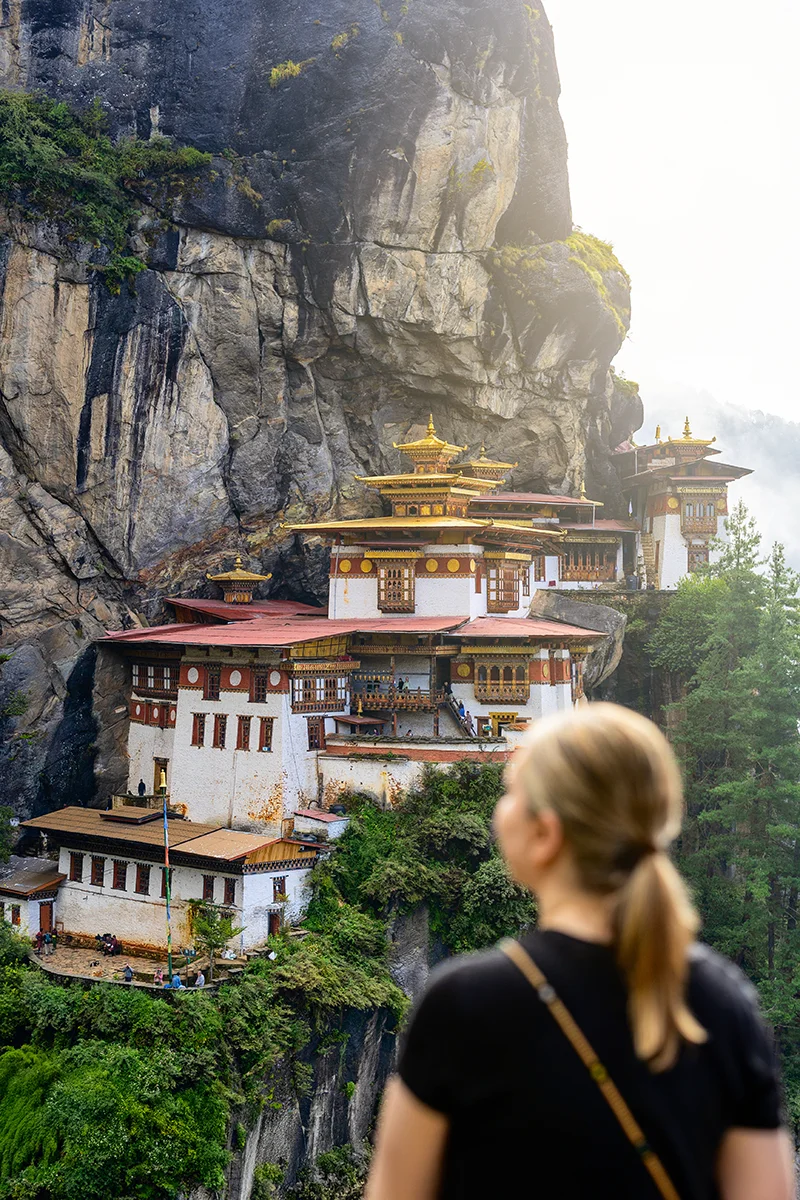
One thing worth knowing for photographers: because the sun rises behind the mountain, the Tiger’s Nest monastery stays in shade through the morning. It’s not until around 11:00 AM that it’s bathed in Himalayan sunshine. By 3:00 or 4:00 PM, the sun drops behind the ridge again.


Section 3: Staircase To Monastery
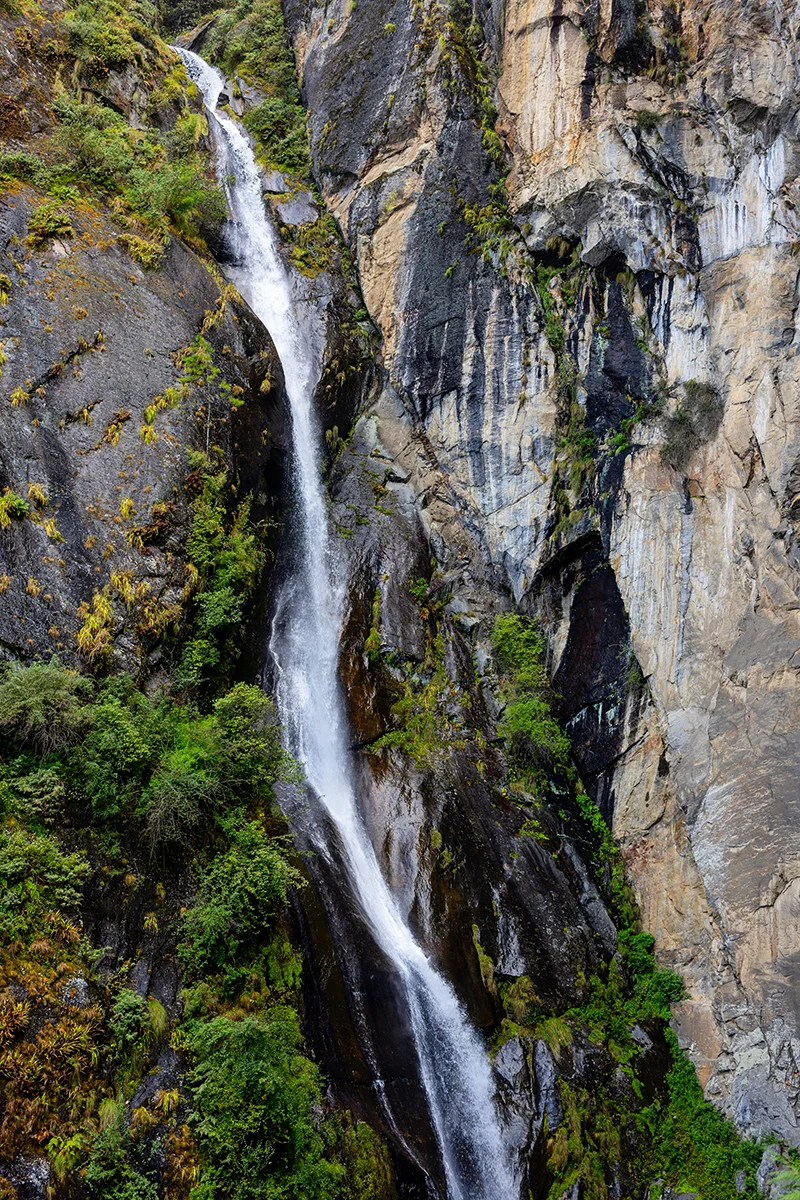
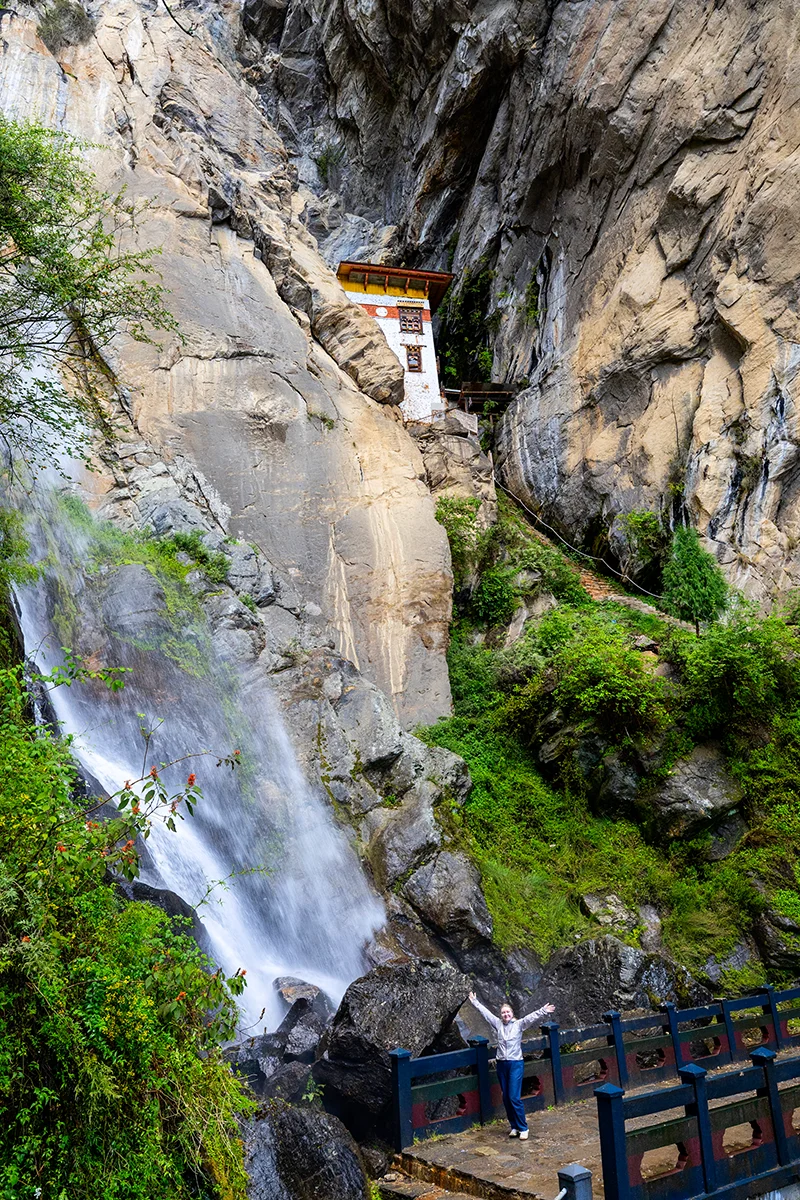
This is the most dramatic part of the hike. From the viewpoint, the trail drops steeply down roughly 700 stone steps into a gorge, crosses a bridge beside a waterfall, then climbs 250 steps back up to the monastery entrance. The descent feels manageable on the way in; it’s those same 700 steps back up on the return that you’ll remember.
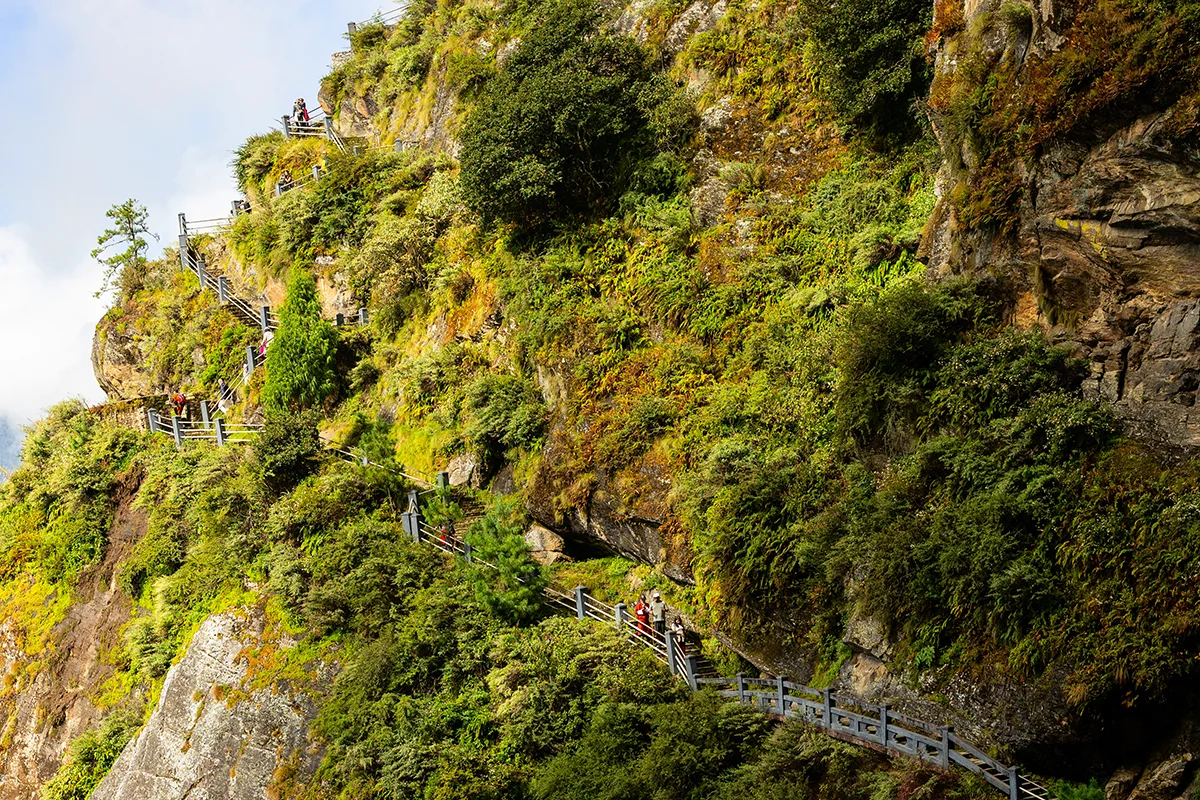
The steps take only a small portion of the overall time, about 15 to 30 minutes. And it’s worth stopping on the bridge to take in the waterfall.
Inside The Monastery
Cameras and phones are not permitted inside the monastery. There are lockers at the entrance where you’ll leave your belongings before going in.
Tiger’s Nest 📍 is a complex of structures spread across different levels, connected by walkways, steep steps, ladders, and bridges. Inside, you’ll find temples decorated with vivid murals depicting Buddhist deities and scenes from Guru Rinpoche’s life, as well as statues, butter lamps, and offerings. The sacred cave where Guru Rinpoche is said to have meditated is accessible as part of the tour – it’s a small, incense-filled space that carries an unmistakable stillness. Plan to spend about an hour exploring the full complex.
From Tiger’s Nest, you can spot the Taktsang Cafeteria far below, which gives you a real sense of how high you’ve climbed. After your visit, you retrace your steps back down to the trailhead.

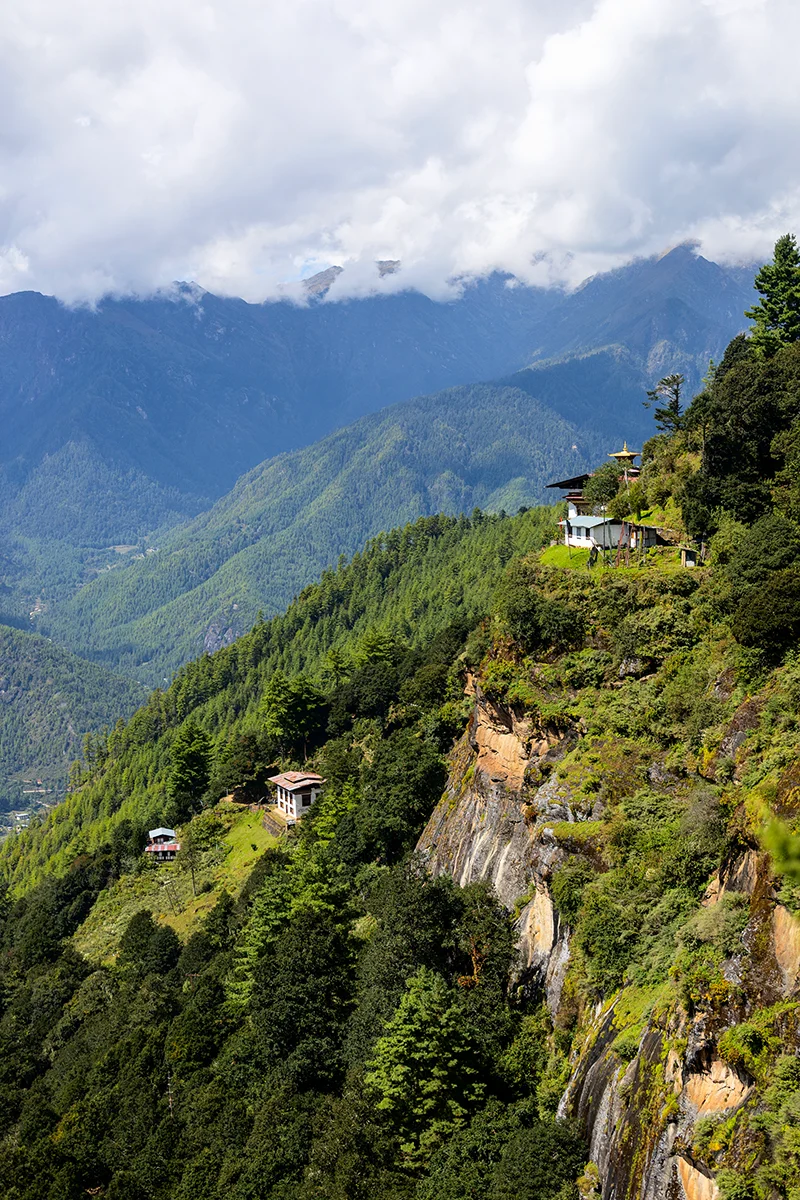
Rare Perspective: Zangdok Pelri Temple
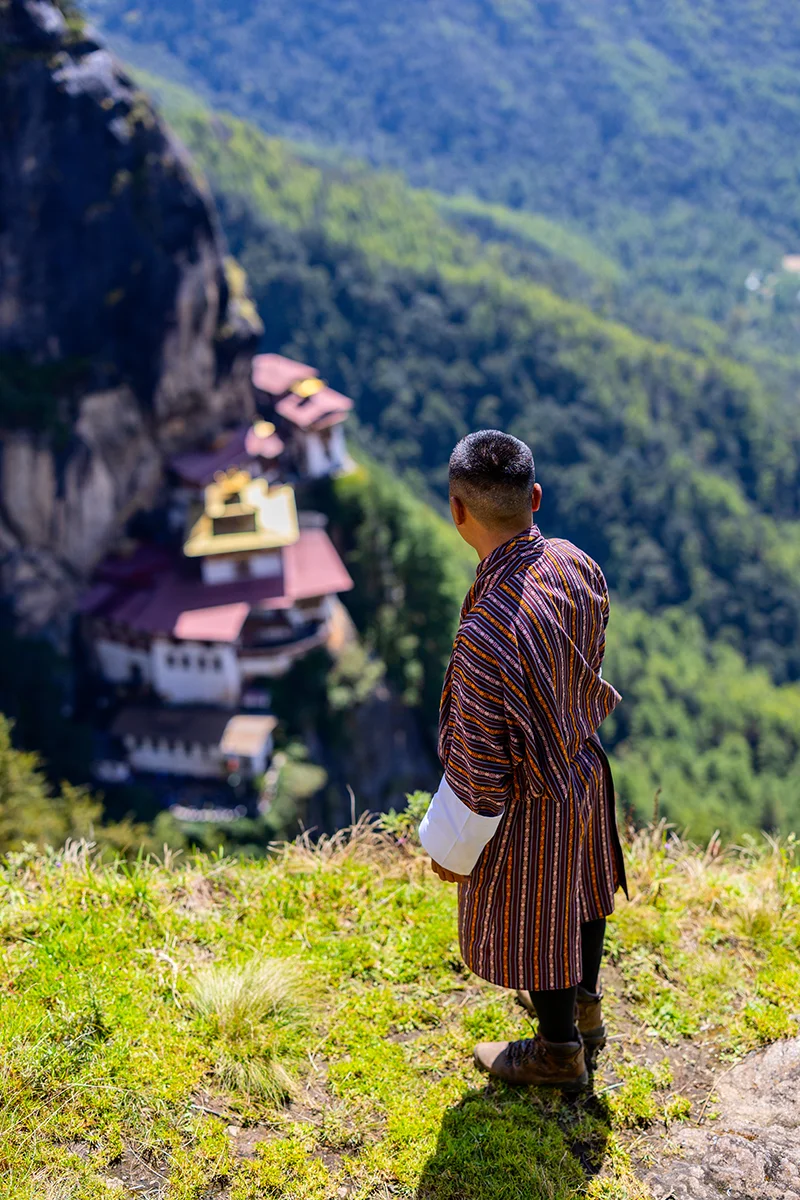
From Tiger’s Nest, you’ll notice a small temple sitting on a hilltop – that’s Zangdok Pelri Temple 📍. It offers something very unusual: a view of Tiger’s Nest from above.
The path begins at a small hut a few minutes from the viewpoint, marked as the birthplace of the 69th Chief Abbot of Bhutan 📍 – there’s a sign, so you won’t miss it. From there, it winds uphill via switchbacks on a dirt trail, completely exposed to sun and wind, with no places to sit and rest along the way. We’d recommend doing this only with a guide – there are very few other visitors heading this way, which means there’s no one to ask if you lose the path.

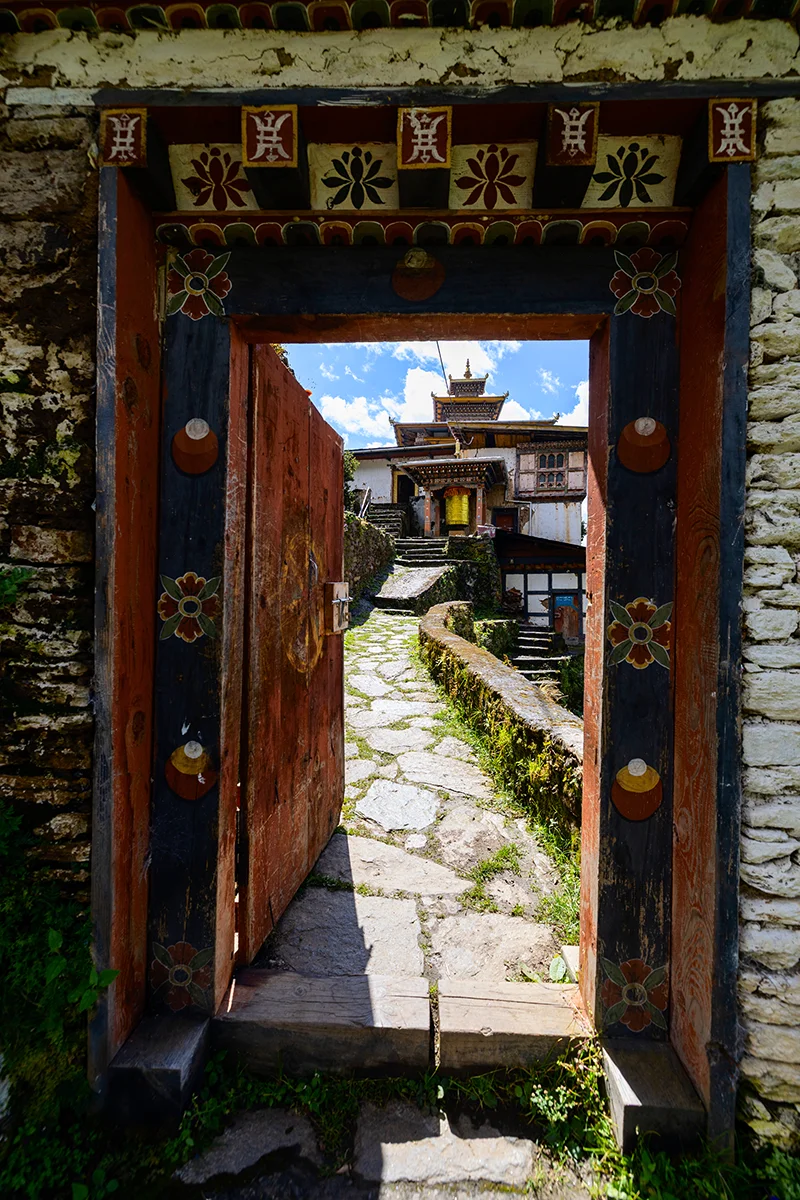

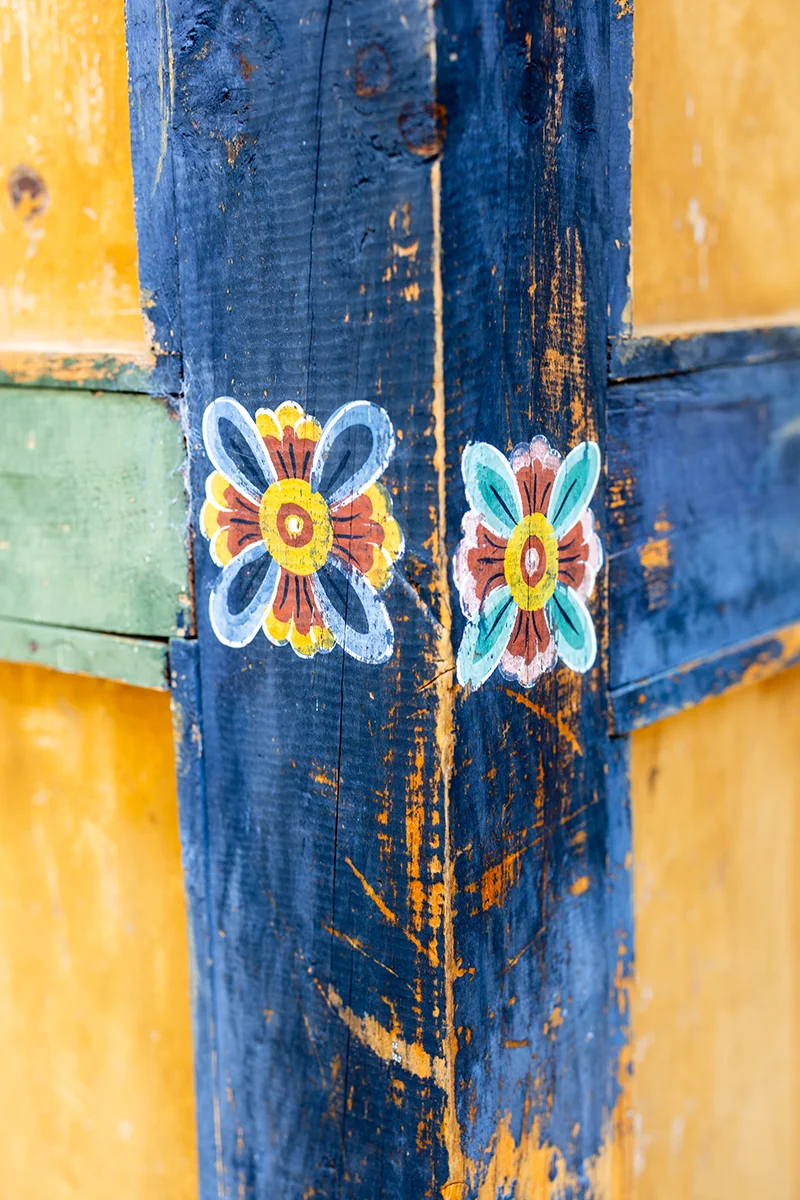
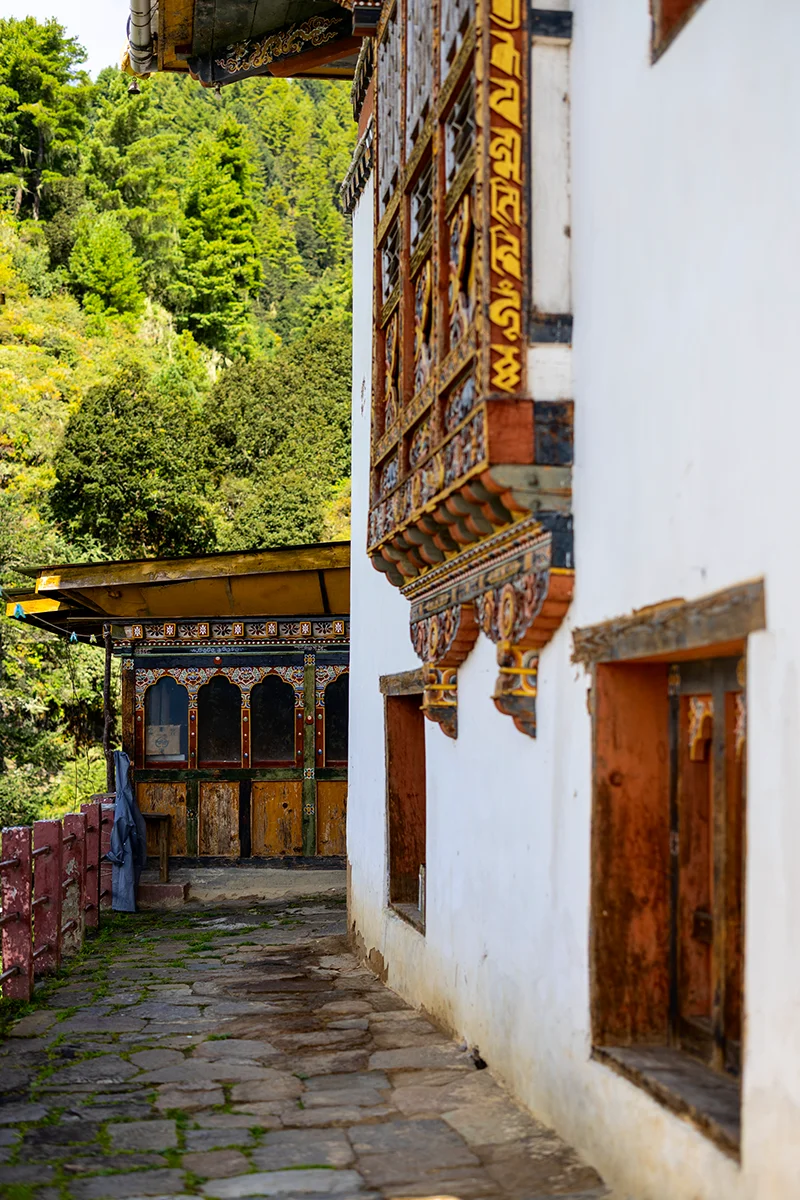
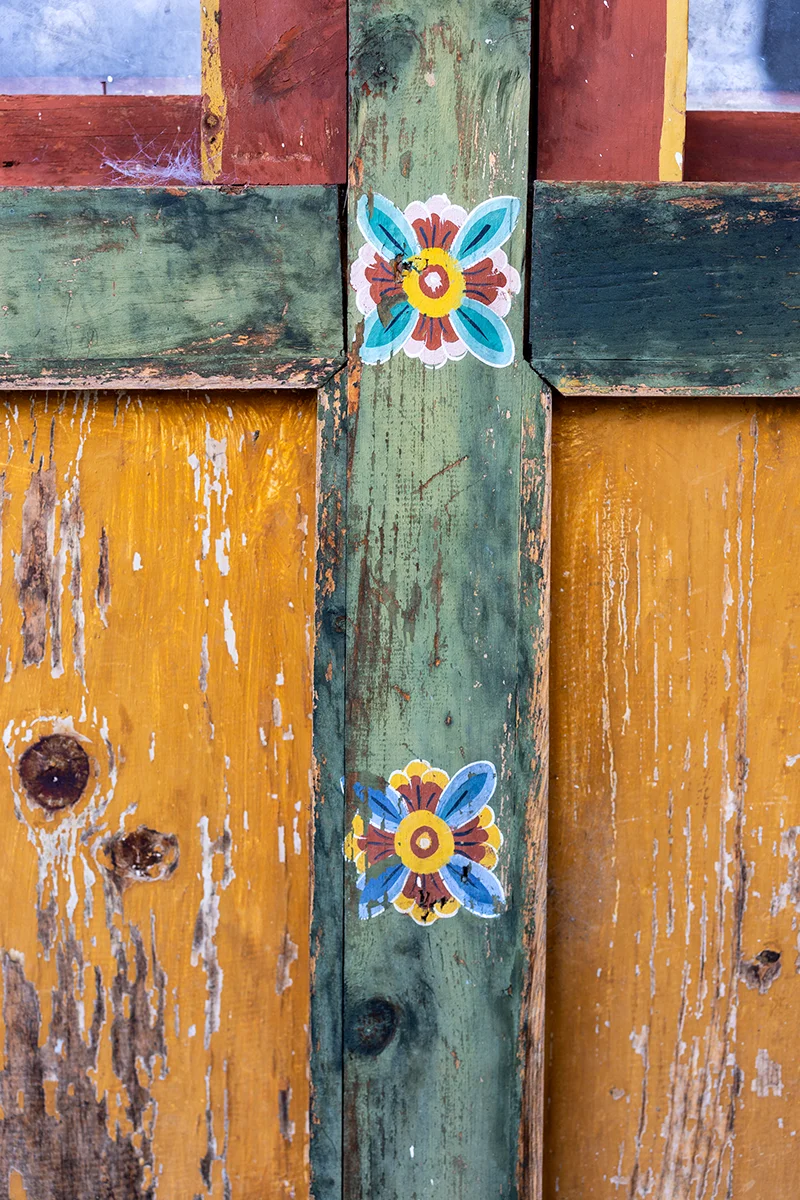
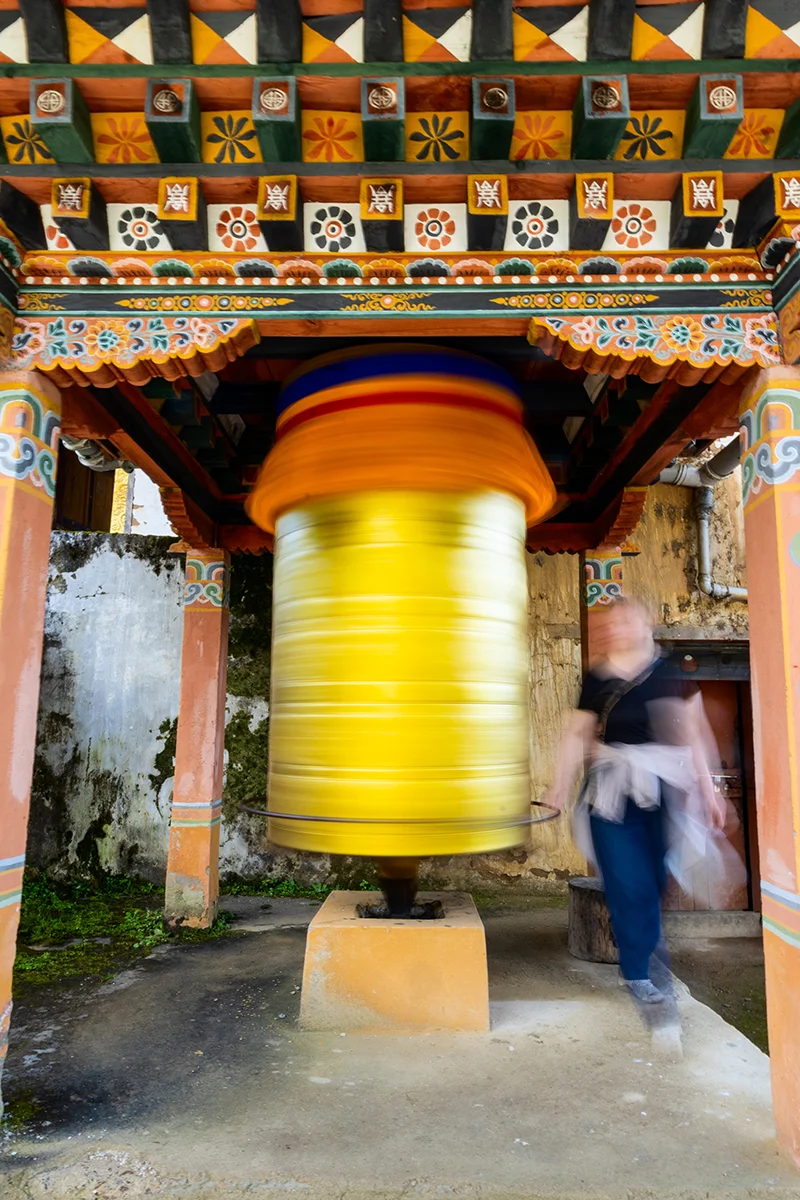
The temple itself is small and built in the same traditional style as other temples in Bhutan – ornate woodwork, a prayer wheel to spin, and a quiet courtyard to explore. When we visited, the temple was closed in the absence of the head monk, so we couldn’t go inside.

But the real draw here is the view: a rarely photographed panoramic angle of Tiger’s Nest nestled against the mountain. There’s a bench to sit and take it all in – it’s easy to lose track of time up here.
This hike adds roughly 100 m (320 ft) of elevation gain and about an hour to the day. The reward is real, though: near-total solitude, a wide panorama of the surrounding valley, and an unusual bird’s eye view of a monastery you’ve just spent the day hiking to.
Tips For The Tiger’s Nest Hike
- Start early. Aim for 6:00-7:00 AM to get ahead of the crowds that build up from mid-morning, and to make the most of cooler temperatures.
- Dress in layers. Temperatures can shift significantly throughout the day. Wear a breathable base layer, a warm mid-layer such as a fleece or sweater, and a waterproof outer shell. For footwear, trail runners or hiking boots with good grip both work well –make sure they’re comfortable and broken in.
- Pack the essentials. Bring at least 1.5 litres of water, energy snacks or bars, sunscreen, and a camera.
- Acclimatize first. Don’t hike on your first day in Bhutan. Scheduling Tiger’s Nest toward the end of your trip gives your body time to adjust and reduces the risk of altitude sickness.
- Stay close to the trailhead. An early start is much easier when you’re not adding a long drive to the morning. Two properties near the base of the trail that we’d point you toward:
Zhiwaling Heritage – the closest luxury hotel to the Tiger’s Nest trailhead, just a 10-minute drive away, with intricate traditional Bhutanese architecture hand-crafted by local artisans.
Taj Paro Resort & Spa – newly opened in 2026, with mountain-facing rooms, beautifully calm grounds, and warm Bhutanese hospitality.